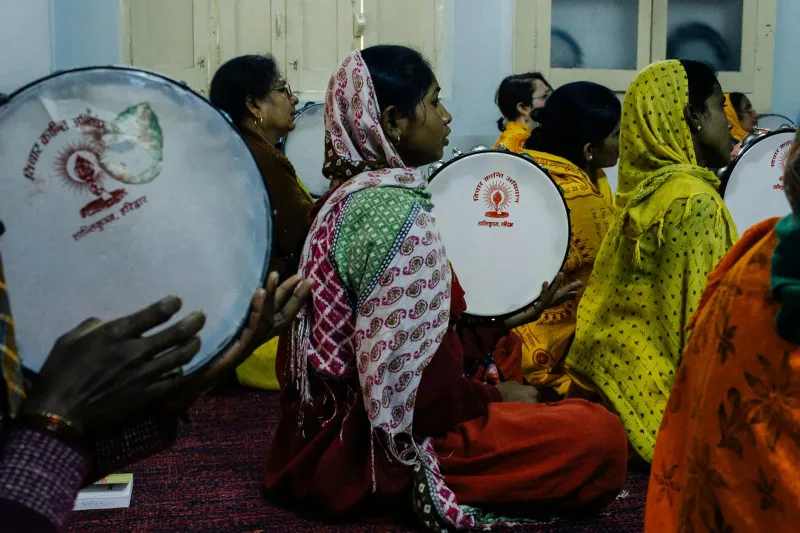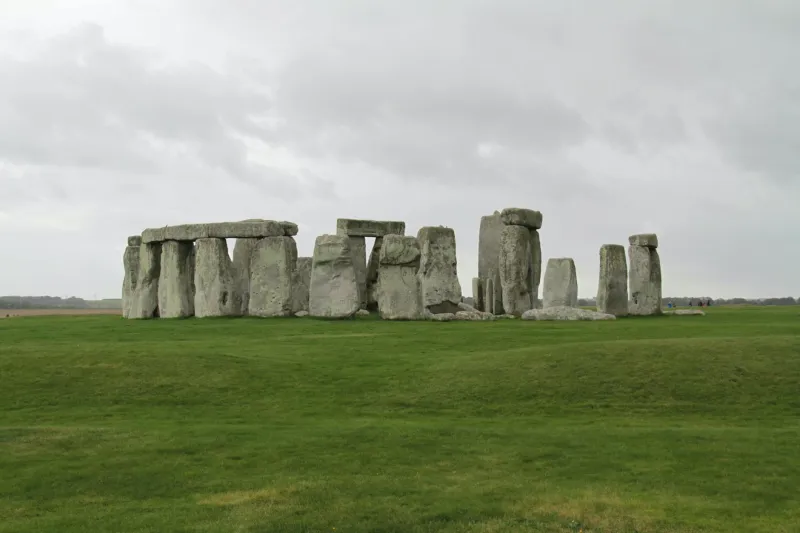
The morning mist clings to the standing stones as a lone fiddle pierces the silence, its melody weaving between granite monoliths that have witnessed five thousand years of human history. This isn't a scene from some romanticised period drama—it's the reality of Britain's growing movement of artists who've chosen the nation's most ancient stages for their contemporary performances.
Beyond the Concert Hall
From the rugged coastlines of Cornwall to the remote islands of Scotland, musicians, storytellers, and theatre companies are increasingly drawn to Britain's prehistoric sites, stone circles, and ancient pathways. What began as isolated experiments by individual artists has evolved into a recognised artistic movement that's challenging traditional notions of where performance belongs.
Take the work of Cornwall-based ensemble Kernow Voices, who've spent the past three years staging dawn performances at stone circles across the South West. Their artistic director, Sarah Penhaligon, explains the draw: "There's something about these spaces that strips away all the artifice. When you're standing among stones that were placed there before the pyramids were built, your performance has to be honest. The landscape demands it."
Similar projects have emerged across the country. In Northumberland, the Hadrian's Wall Theatre Company stages walking performances along the ancient Roman fortification, with audiences following actors who embody the voices of soldiers, settlers, and locals from across the centuries. Meanwhile, in the Scottish Highlands, the collective known as Caledonian Echoes has pioneered what they call "landscape opera," using the natural acoustics of mountain valleys and ancient burial chambers to create immersive musical experiences.
The Pull of Place
What drives artists to abandon purpose-built venues for these challenging outdoor spaces? The answer seems to lie in the unique relationship between Britain's cultural heritage and its physical landscape. Unlike many countries where ancient sites feel divorced from contemporary life, Britain's prehistoric monuments sit embedded in landscapes that remain vibrantly alive.
"You can't separate the music from the place," says Highland piper Morag MacLeod, who regularly performs at stone circles throughout Scotland. "These sites weren't built as museums—they were centres of community life. When we perform there now, we're not breaking with tradition; we're continuing it."
This sentiment echoes through conversations with artists working across different mediums. Theatre director James Weatherby, whose company stages site-specific performances on Dartmoor, argues that the landscape itself becomes a collaborator. "The moor doesn't just provide a backdrop—it actively participates in the performance. Weather, wildlife, the changing light—all of these become part of the artistic dialogue."
Walking the Tightrope
Yet this artistic renaissance hasn't unfolded without controversy. Heritage organisations, local authorities, and conservation groups have raised legitimate concerns about the impact of performances on fragile archaeological sites. The tension between preservation and public engagement has become particularly acute as these events have grown in popularity.
Dr. Elizabeth Hartwell, an archaeologist specialising in prehistoric Britain, acknowledges the complexity: "We're dealing with irreplaceable heritage assets that have survived thousands of years. But we also have to recognise that these sites were created by communities for communities. The challenge is finding ways to honour both their historical significance and their continuing cultural relevance."
Some sites have embraced this challenge more readily than others. English Heritage has developed guidelines for performances at certain properties, while organisations like the National Trust have begun partnering with artists to create events that educate as well as entertain. The key, according to heritage professionals, lies in collaboration rather than confrontation.
Voices from the Ground
Local communities often find themselves at the centre of these debates, and their perspectives reveal the nuanced reality of living alongside ancient heritage. In Orkney, where Neolithic sites dot the landscape like scattered jewels, residents have largely welcomed artistic events that bring new attention to their remarkable archaeological legacy.
"We've lived with these stones all our lives," says Kirkwall resident and traditional singer Isla Sinclair. "They're not museum pieces to us—they're part of our daily landscape. When artists come and perform here, it reminds us why these places are special, why they've endured."
Similar sentiments emerge from communities across Britain, suggesting that the divide between preservation and participation may be less absolute than sometimes portrayed. Many residents appreciate events that showcase their local heritage while bringing economic and cultural benefits to rural areas that might otherwise struggle to attract visitors.
The Future of Ancient Stages
As this movement continues to evolve, questions remain about how to balance artistic ambition with heritage protection. Some advocates argue for the development of formal frameworks that would make it easier for artists to access appropriate sites while ensuring proper safeguards. Others suggest that the current ad-hoc approach, with its emphasis on individual relationships and community consultation, better serves the diverse needs of different locations.
What seems certain is that the desire to connect contemporary artistic expression with Britain's ancient heritage will continue to grow. In an age of digital disconnection and urban alienation, there's something profoundly appealing about experiences that root us firmly in place and time.
Perhaps the real magic of these performances lies not in their novelty, but in their ability to make the ancient feel immediate and the contemporary feel timeless. When a voice rises among standing stones or a story unfolds along a Roman wall, the boundaries between past and present dissolve, leaving audiences with a visceral understanding of their place in the great continuum of British culture.
As one audience member at a recent Dartmoor performance put it: "For ninety minutes, I wasn't just watching a play—I was part of something that connected me to every person who'd ever stood in that spot and looked up at those same stars." In the end, that might be the most powerful argument for why Britain's ancient landscapes deserve to echo once again with living voices.