The Sound of Home
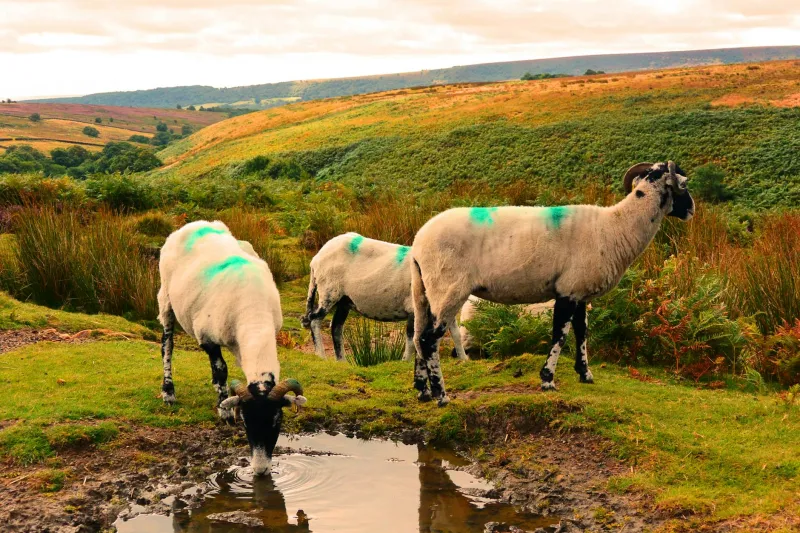
On a grey morning in the Cheviot Hills, twenty-four-year-old Emma Charlton cups her hands around her mouth and releases a series of sharp, ascending notes that slice through the mist. Within seconds, her Border Collie responds, wheeling left to gather a scattered group of Swaledale sheep. But it's not just the dog that understands—the sheep themselves know this ancient vocabulary, passed down through generations of hill farmers who've worked these same slopes for over a thousand years.
"People think it's just whistling," Emma says, watching her flock move like a single organism across the fellside. "But every sound has meaning. Every farm has its own dialect. You can tell which valley a shepherd comes from just by listening to their calls."
Emma represents something remarkable happening across Britain's uplands. Despite predictions that mechanisation and modern farming would silence these traditional communications forever, a new generation of young shepherds is actively learning and preserving what experts now recognise as one of our most endangered forms of intangible heritage.
More Than Words
Dr. Sarah McKenzie, an ethnomusicologist at Newcastle University who has spent five years documenting shepherd traditions across northern England, explains the complexity of what's at stake. "These aren't random sounds," she insists. "They're sophisticated communication systems that encode everything from weather patterns to livestock behaviour. When we lose them, we lose centuries of accumulated knowledge about reading the land."
The whistles themselves vary dramatically between regions. Cumbrian shepherds favour long, melodic phrases that carry across the Lake District's deep valleys, whilst their Welsh counterparts in Snowdonia use shorter, percussive calls suited to the area's acoustic properties. In the Scottish Borders, traditional "hoots" and "yips" create conversations between shepherds working neighbouring hillsides, sometimes miles apart.
But it's not just the functional aspects that matter. Many of these calls incorporate fragments of local ballads, work songs, and even ancient Celtic melodies. Gareth Williams, a third-generation shepherd from the Brecon Beacons, can trace some of his family's calls back to songs his great-grandfather learned in the 1920s.
"There's music in it," Gareth explains, demonstrating a lilting call that sends his dogs racing across a steep slope. "The sheep respond better to melody than harsh sounds. It keeps them calm, keeps them moving steady. My grandfather always said the hills have their own tune—you just have to learn to sing along."
Learning the Language
The revival isn't happening by accident. Across Britain, agricultural colleges, shepherd associations, and even folk music societies are collaborating to document and teach these traditions. The Lake District's Shepherd's Meet, held annually since 1898, now includes workshops specifically for young farmers wanting to learn traditional calls.
Twenty-six-year-old James Morrison travelled from his family's farm in Dumfries and Galloway to attend one such gathering. "I grew up around sheep, but I never learned the old ways," he admits. "My dad used quad bikes and modern handling systems. But when I saw older shepherds working with just their voice and their dogs, I realised what we'd lost."
James now runs informal teaching sessions on his own farm, passing on techniques he's learned from shepherds in their seventies and eighties. "It's not just about being traditional for tradition's sake," he argues. "These methods work. They're sustainable. They connect you to the landscape in ways that machinery never can."
The Sound of Survival
Yet this revival faces significant challenges. Climate change is altering traditional grazing patterns, whilst economic pressures force many hill farms to consolidate or abandon extensive shepherding altogether. The very landscapes that shaped these vocal traditions are themselves under threat.
Megan Davies, who manages a community farm project in mid-Wales, sees the cultural implications clearly. "When we lose small hill farms, we don't just lose livelihoods," she argues. "We lose living libraries of local knowledge. These shepherds carry information about weather patterns, plant cycles, animal behaviour that you can't get from any textbook."
Her project specifically recruits young people interested in traditional farming methods, teaching everything from drystone walling to shepherd's whistles. "The response has been incredible," she reports. "There's a real hunger among young people to reconnect with these skills."
Echoing Forward
Perhaps most encouraging is how these traditions are adapting to contemporary realities. Social media groups now share recordings of traditional calls, whilst smartphone apps help new shepherds learn regional variations. Young farmers are creating hybrid techniques that combine ancestral knowledge with modern understanding of animal psychology and landscape management.
Back in the Cheviots, Emma Charlton reflects on what drives her commitment to these ancient practices. "When I'm out here at dawn, calling across the hills the same way shepherds have done for centuries, I feel connected to something bigger than just farming," she says. "It's like the landscape itself is speaking through you."
As her voice echoes across the fellside—part whistle, part song, part conversation with the land itself—it carries more than instructions for sheep and dogs. It carries the sound of a culture refusing to be silenced, of young people choosing to become custodians of traditions that define not just how we work the land, but how we belong to it.
In an age of increasing urbanisation and technological mediation, these young shepherds offer something precious: proof that the most ancient forms of communication between humans and landscape can still find new voices, new purposes, new reasons to endure.