The Sound of Ancient Combat
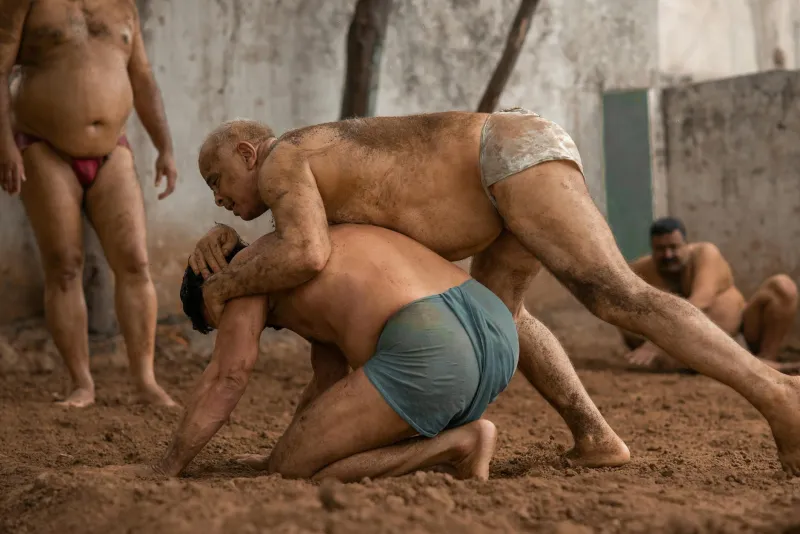
The thud of bodies hitting canvas echoes through Redruth Community Centre on a Tuesday evening, accompanied by the distinctive calls of "Hale!" and "Best!" that have punctuated Cornish wrestling matches for over a thousand years. Here, beneath fluorescent lights that cast harsh shadows across worn mats, a tradition that once drew crowds of thousands to clifftop tournaments fights for its very survival.
Cornish wrestling – or 'wrasslin' in the old tongue – predates the Norman Conquest. Archaeological evidence suggests variations of the sport were practised by Celtic tribes long before Romans set foot on British soil. Unlike its theatrical American namesake or the ground-based grappling of other martial arts, Cornish wrestling is defined by its jacket-grip style and the absolute requirement that both wrestlers remain standing throughout the contest.
"It's not just about throwing someone down," explains Dave Menneer, whose family has been involved in Cornish wrestling for five generations. "It's about honour, technique, and maintaining a connection to something that makes Cornwall distinctly Cornwall." Menneer runs one of only seven active wrestling clubs remaining in the county, down from over forty just fifty years ago.
The Grip That Defines a Culture
The rules of Cornish wrestling are deceptively simple yet profoundly specific. Wrestlers must maintain their grip on each other's jackets throughout the match – lose your hold and you forfeit. Victory comes from throwing your opponent to the ground whilst maintaining your own footing, a feat that requires not just strength but an intimate understanding of leverage, timing, and the subtle art of reading your opponent's intentions through their jacket.
These canvas jackets, traditionally made by local tailors to exacting specifications, have become symbols of the sport's authenticity. Each wrestler's jacket tells a story – patched and re-patched, stained with decades of sweat and effort, passed down through families like heirlooms. "My jacket belonged to my grandfather," says Sarah Tremayne, one of the few female wrestlers keeping the tradition alive. "When I put it on, I'm not just preparing for a match – I'm connecting with generations of Cornish people who fought to keep their culture alive."
Challenges in the Digital Age
The statistics paint a sobering picture. In 1970, Cornish wrestling boasted over 300 active participants across Cornwall. Today, that number has dwindled to fewer than 80, with the average age steadily climbing. The sport that once served as a rite of passage for young Cornish men now struggles to attract participants under thirty.
"We're competing with PlayStation, social media, and a thousand other distractions," admits John Polglaze, chairman of the Cornwall Wrestling Association. "Young people today don't necessarily see the value in learning something their great-grandfathers did. They want instant gratification, not the years of training it takes to master our techniques."
The geographical challenges are equally daunting. Cornwall's scattered population and limited transport links make it difficult for young wrestlers to attend regular training sessions. Clubs have closed in Bodmin, Newquay, and St Austell, leaving vast swathes of the county without access to coaching or competition.
Seeds of Revival
Yet beneath these challenges, green shoots of hope are emerging. The growing sense of Cornish identity – evidenced by increased support for Cornish language education and the rising popularity of Celtic festivals – has created new opportunities for traditional sports.
"There's definitely been a shift," observes Dr Emma Carrick, a cultural historian at Exeter University who has studied Cornwall's sporting heritage. "Young Cornish people are increasingly interested in what makes their culture unique. They're learning Kernewek [Cornish language], attending Gorsedh ceremonies, and yes, some are discovering wrestling."
The Cornish Wrestling Association has adapted, introducing school demonstration programmes and partnering with heritage organisations to showcase the sport at cultural events. Recent appearances at the Royal Cornwall Show and Lowender Peran festival have sparked renewed interest, with several teenagers expressing interest in taking up the sport.
Champions of Continuity
At the heart of this revival effort are families like the Tremaynes of Camborne, who have produced wrestlers for seven consecutive generations. "It's not just a sport for us," explains patriarch Bill Tremayne, now in his seventies but still capable of demonstrating classic throws. "It's who we are. When I teach my grandson the 'flying mare' or the 'back heel,' I'm passing on more than technique – I'm giving him his heritage."
Similar dedication drives the work of clubs in Liskeard, St Columb, and Wadebridge, where volunteer coaches invest countless hours in preserving not just the physical techniques but the cultural context that gives Cornish wrestling its meaning. They organise tournaments, maintain equipment, and most importantly, serve as living links to an unbroken chain of tradition stretching back into prehistory.
The Weight of Legacy
As Cornwall grapples with questions of identity in an increasingly globalised world, the fate of its wrestling tradition carries symbolic weight far beyond sport. The techniques passed down through generations – the 'inside click,' the 'outside stroke,' the perfectly timed 'buttock' – represent more than athletic moves. They embody a way of thinking about strength, honour, and community that emerged from Cornwall's unique landscape and history.
"If we lose Cornish wrestling, we lose something irreplaceable," warns Menneer. "Not just the sport itself, but the values it represents – respect for tradition, commitment to community, the understanding that some things are worth preserving simply because they're ours."
Whether Cornwall's ancient wrestling tradition will survive into the next generation remains an open question. But in village halls across the duchy, where the sound of canvas jackets rustling and feet shuffling across mats still echoes through Tuesday evenings, the fight continues – both on the wrestling mats and for the soul of Cornish culture itself.