The Face That Refuses to Fade
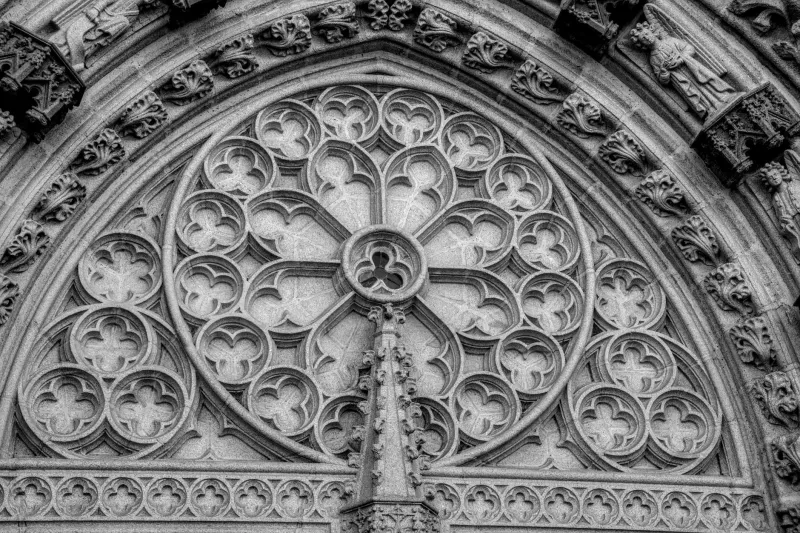
Walk into any medieval church across Britain and you'll likely find him lurking in the shadows—carved into misericords, peering down from roof bosses, or emerging from the foliage of stone capitals. The Green Man, with leaves sprouting from his mouth, eyes, and ears, represents one of our most persistent yet enigmatic folk symbols. But step outside those ancient walls and you'll discover he's far from confined to dusty ecclesiastical corners.
From the swinging signs of country pubs to the elaborate chalk figures carved into hillsides, from Morris dancing masks to contemporary street art in Manchester's Northern Quarter, the Green Man's leafy countenance continues to proliferate across Britain's cultural landscape. The question isn't whether this symbol has survived—it's why it refuses to die.
Medieval Mysteries and Modern Meanings
The scholarly consensus places the Green Man's emergence in British stone carving around the 11th century, coinciding with the Norman conquest and the great wave of church building that followed. Yet his origins remain wonderfully murky. Some trace his lineage to Roman foliate heads, others to Celtic vegetation deities, while a few bold theorists suggest he represents Christianity's uneasy accommodation with older, wilder faiths.
"The beauty of the Green Man is his ambiguity," explains Dr. Sarah Whitfield, a medieval art historian at Durham University. "He's simultaneously pagan and Christian, threatening and protective, ancient and eternally renewable. That's precisely why he's proved so adaptable."
This adaptability has served him well. While other medieval symbols faded into historical curiosity, the Green Man has shape-shifted through the centuries, appearing in Tudor gardens, Victorian pub signs, and Arts and Crafts movement designs. Each era has found something different in his leafy features—fertility, wildness, environmental consciousness, or simply the enduring appeal of a face that bridges human and natural worlds.
The Carvers Keeping Faith
In a workshop tucked behind the Cotswold village of Chipping Campden, master carver Tom Nicholson chips away at a piece of Hornton stone, coaxing a Green Man from the honey-coloured surface. His hands move with the confidence of three decades' practice, but his eyes hold the concentration of someone engaged in something approaching ritual.
"Every Green Man is different," he explains, pausing to brush stone dust from the emerging features. "The medieval carvers understood that. No two are alike because no two trees are alike, no two seasons identical. You're not just carving stone—you're carving the idea of growth itself."
Nicholson's workshop represents a quiet renaissance in traditional stone carving, driven partly by cathedral restoration projects but increasingly by private commissions for gardens, memorials, and new buildings seeking to root themselves in older traditions. His order books are full, testament to the Green Man's enduring pull on the contemporary imagination.
"People want that connection to something deeper," he reflects. "In our digital age, there's something profoundly grounding about a symbol that's literally rooted in earth and stone."
Festival Faces and Street Art Saints
The Green Man's contemporary resurrection extends far beyond traditional crafts. At Clun Green Man Festival in Shropshire, hundreds gather each May to celebrate with processions of leaf-crowned figures, while London's annual Green Man Festival in Southwark transforms urban streets into temporary forests of costumed revellers.
Meanwhile, street artists have embraced the symbol with particular enthusiasm. In Bristol, a magnificent Green Man mural by local artist Inkie sprawls across a warehouse wall, his features formed from intertwining vines that seem to pulse with urban energy. Similar works appear from Glasgow to Brighton, suggesting the symbol speaks as powerfully to concrete jungles as ancient woodlands.
"The Green Man is the perfect symbol for our environmental moment," argues folklore researcher Marcus Sedgwick. "He represents nature not as something separate from human culture, but as something that emerges from within it. He's not the noble savage—he's nature as culture, culture as nature."
Rooted in Tomorrow
Perhaps the Green Man's greatest trick has been his ability to mean different things to different people while never losing his essential mystery. To medieval Christians, he might have represented the resurrection or the flourishing of faith. To Victorian romantics, he embodied the sublime power of nature. To contemporary pagans, he's a direct link to pre-Christian spirituality. To environmental activists, he's a powerful symbol of humanity's interconnection with the natural world.
What unites all these interpretations is a recognition that the Green Man represents something essential about British culture—our complex, sometimes contradictory relationship with the landscape that shaped us. He reminds us that beneath our ordered gardens and managed countryside lies something wilder, older, and ultimately ungovernable.
As climate change and environmental degradation dominate contemporary discourse, the Green Man's message feels more urgent than ever. He suggests that our salvation lies not in conquering nature but in recognising our fundamental kinship with it. In his leafy features, we see not just an ancient symbol but a mirror reflecting our deepest hopes and fears about our place in the natural order.
The Green Man's many faces—carved in stone, painted on walls, worn in procession—continue to multiply across Britain because they answer a need that transcends any single faith or philosophy. In a world increasingly disconnected from natural rhythms, he offers the radical proposition that we are not separate from the wild but expressions of it. His leaves will keep growing, his faces keep emerging, as long as we need reminding of that fundamental truth.