The Ritual of Renewal
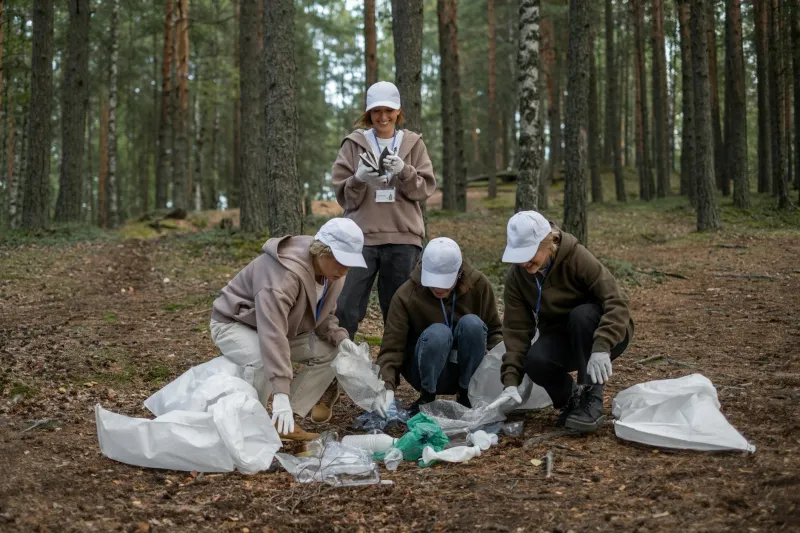
On a scorching Saturday morning in July, thirty-odd volunteers gather at the foot of the Cerne Abbas Giant, armed with trowels, scrapers, and an almost religious sense of purpose. They've come from across Dorset—retired teachers, local farmers, university students, families with children in tow—united by a shared commitment to keep one of Britain's most enigmatic hill figures visible for another year.
"People think these things just exist," says Margaret Thornton, who's been organising the Giant's annual cleaning for over two decades. "They don't realise that without us, he'd be completely overgrown within twenty years. The chalk would disappear under grass, brambles, whatever wants to grow there. He'd become just another hill."
The Cerne Abbas Giant, with his prominent club and even more prominent anatomy, is perhaps Britain's most famous hill figure, but he's just one of dozens scattered across the chalk downs of southern England. From the Uffington White Horse in Oxfordshire to the Long Man of Wilmington in Sussex, these ancient carvings survive only because communities have returned, generation after generation, to scrape them clean.
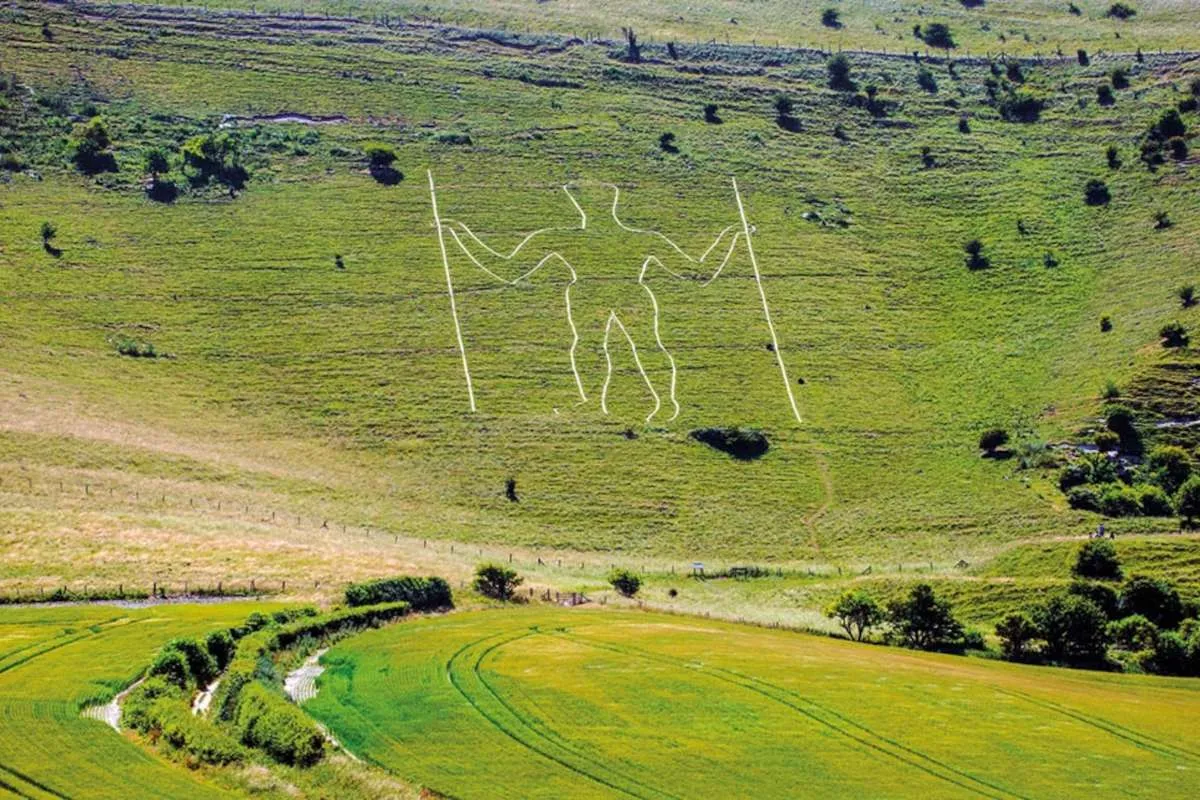 Photo: Long Man of Wilmington, via geographical.co.uk
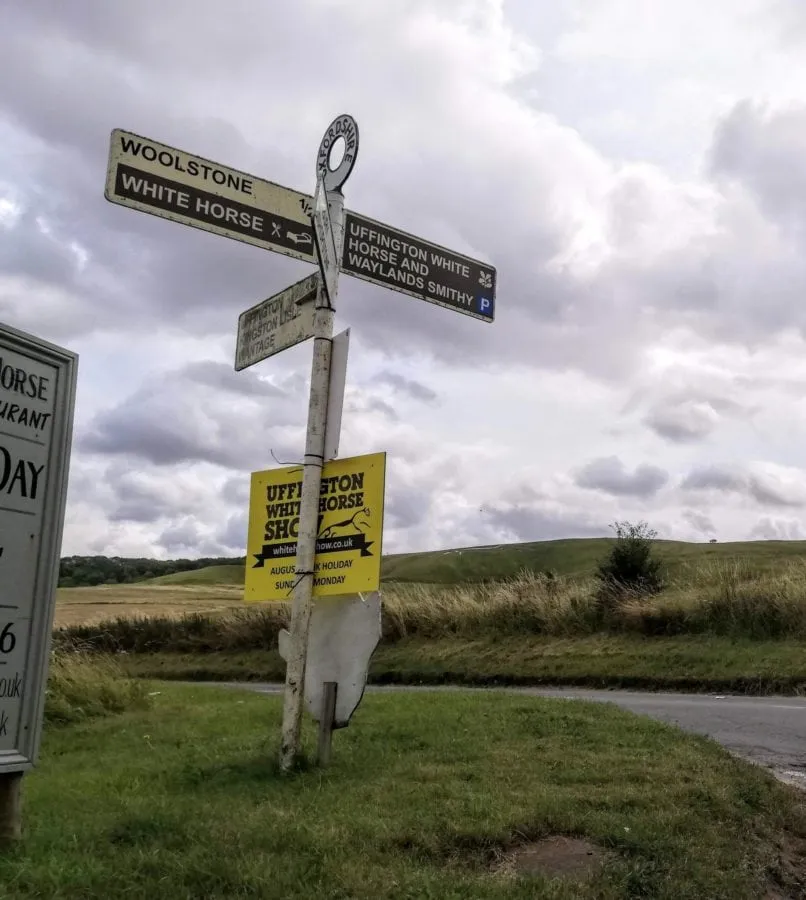 Photo: Uffington White Horse, via xyuandbeyond.com
The Weight of Tradition
The act of maintaining hill figures is itself a tradition as old as the figures themselves. Historical records show that the Uffington White Horse has been cleaned continuously for over a thousand years, with the work originally organised by local manors as part of their feudal obligations. What began as compulsory labour has evolved into voluntary devotion, but the essential task remains unchanged: scraping away the accumulating soil and vegetation to reveal the white chalk beneath.
"There's something almost ritualistic about it," reflects David Parker, who leads the volunteer group caring for the Westbury White Horse. "You're literally following in the footsteps of people who've been doing this same work for centuries. Sometimes we find old tools left behind by previous generations—bits of iron scrapers, worn smooth by countless hands."
The physical demands of the work haven't changed much either. Volunteers spend hours on hands and knees, carefully scraping away grass roots and accumulated soil without damaging the chalk surface beneath. It's backbreaking work, often conducted in blazing sun or driving rain, but the groups that undertake it speak of a deep satisfaction that goes beyond simple maintenance.
Mysteries in the Chalk
Part of what drives these volunteer guardians is the enduring mystery surrounding the figures themselves. Most hill figures have no definitive creation dates or known creators. The Long Man of Wilmington might be prehistoric, medieval, or even 17th-century. The Cerne Abbas Giant could be Romano-British, Saxon, or a relatively recent creation from the 1600s. Archaeological evidence is sparse, and the figures themselves offer few clues.
"That's what makes the work feel important," explains Sarah Collins, who helps maintain several lesser-known figures in Wiltshire. "We're preserving something we don't fully understand, but that clearly mattered enough to people in the past that they kept it alive for centuries. We're part of an unbroken chain stretching back to whenever these things were first carved."
The uncertainty extends to the figures' original meanings. Were they territorial markers, religious symbols, astronomical calendars, or simply artistic expressions? The White Horse of Uffington, which recent research dates to the Bronze Age, might represent a goddess, commemorate a military victory, or mark a sacred landscape. The ambiguity only adds to their power.
The Science of Survival
Modern conservation has brought scientific rigour to what was once purely intuitive work. Archaeologists now understand exactly how hill figures survive and what threatens them. Chalk figures work because they exploit the difference between chalk and soil: the white chalk reflects light while the dark soil above absorbs it, creating the contrast that makes the figures visible from a distance.
But this system is inherently unstable. Wind-blown seeds, earthworm activity, and natural erosion constantly deposit soil on the chalk surface. Within a few years of abandonment, grass takes root. Within decades, scrubland develops. Eventually, the figures disappear entirely, leaving only subtle earthworks visible to trained archaeologists.
"We've studied abandoned hill figures using ground-penetrating radar," explains Dr. Martin Bell, who researches ancient landscapes at Reading University. "You can see their outlines in the subsurface archaeology, but they're completely invisible to the naked eye. Once the cleaning stops, the clock starts ticking."
This knowledge has made the work of volunteer groups more urgent and more precise. They now understand that over-zealous scraping can damage the chalk surface, while insufficient cleaning allows vegetation to establish permanent root systems. Finding the right balance requires both scientific understanding and the accumulated wisdom of generations of cleaners.
Community and Belonging
For many volunteers, the annual cleaning has become a cornerstone of community identity. Villages organise their social calendars around cleaning days. Local pubs lay on special meals for volunteers. Families pass down involvement from parents to children, creating personal connections that span generations.
"My grandfather brought me to clean the horse when I was eight," remembers John Fletcher, now in his sixties and chair of the Uffington White Horse preservation group. "His grandfather brought him. We've got photos going back to the 1920s showing the same families doing the same work. It's not just about maintaining the horse—it's about maintaining our connection to this place."
The work creates bonds that extend beyond the cleaning itself. Volunteer groups often become focal points for broader community activities: fundraising for local causes, organising heritage walks, lobbying for better protection of ancient sites. The shared labour of maintenance builds social capital that benefits entire communities.
Threats Old and New
While the basic threat of vegetation encroachment remains constant, hill figures face new challenges in the 21st century. Climate change is altering growth patterns, with some plants thriving in conditions that would have killed them in previous decades. Increased visitor pressure—often driven by social media interest—can damage fragile chalk surfaces through erosion and trampling.
"We're seeing plants we've never had to deal with before," notes Collins. "Species that would have died in a hard frost are now surviving winters and establishing themselves in the chalk. We're having to learn new techniques, new timing for our cleaning cycles."
Urban development poses a different kind of threat. Several hill figures have been lost to housing estates or road construction. Others survive but in landscapes so altered that their original context has been destroyed. The maintenance work continues, but the figures become isolated monuments rather than integrated parts of living landscapes.
The Future of the Figures
Despite these challenges, the volunteer groups maintaining Britain's hill figures remain optimistic. New members join each year, often bringing fresh energy and perspectives to ancient tasks. Social media, while creating some problems, also helps recruit volunteers and raise awareness of the figures' vulnerability.
"Young people especially seem to understand the importance of this work," observes Thornton. "They get that these figures represent a connection to the past that you can't find anywhere else. They want to be part of keeping that connection alive."
As climate change and development pressure intensify, the work of these volunteer guardians becomes increasingly vital. They're not just maintaining ancient monuments—they're preserving a form of landscape art that represents one of humanity's oldest impulses: the desire to mark the earth with meaning, to create symbols that will outlast their creators.
Every summer morning when volunteers gather with their scrapers and trowels, they're participating in a tradition that stretches back centuries and forward into an uncertain future. In their patient, repetitive labour lies the hope that these mysterious figures will continue to watch over Britain's hills for centuries to come, their chalk outlines bright against the green downs, their meanings as enigmatic and compelling as ever.