The Sound That Time Nearly Forgot
In a converted barn outside Hebden Bridge, the air fills with a sound that's both utterly familiar and mysteriously foreign. It's the shimmer of struck strings, the resonance of seasoned wood, and something indefinably ancient that makes your spine straighten with recognition. Sarah Whitfield raises her hammers again, and the dulcimer beneath her fingers sings with the voice of old England.
"People hear it for the first time and they go very quiet," she explains, her hands dancing across the trapezoid frame. "There's something about the attack and decay of each note that reaches right into you. It's not like a piano or a guitar – it's more primal somehow."
The hammer dulcimer – that most tactile and hypnotic of instruments – is experiencing a quiet renaissance across Britain. Once as common in Georgian alehouses as fiddles are in Irish sessions today, the dulcimer disappeared from our musical landscape so completely that most folk enthusiasts couldn't identify one if it bit them. Yet in workshops from the Scottish Borders to the Cornish coast, a scattered community of makers and players is bringing this forgotten voice back to life.
From Street Corners to Silence
The dulcimer's British story is one of spectacular rise and mysterious fall. Archaeological evidence suggests wire-strung instruments arrived here with medieval traders, but it was during the 18th and 19th centuries that the hammer dulcimer truly flourished. Street musicians carried them from fair to fair, their portable nature and penetrating tone perfect for cutting through crowd noise.
"They were absolutely everywhere," explains Dr. Marcus Thornfield, whose research at the University of Sheffield has uncovered dulcimer references in everything from parish records to music hall programmes. "Itinerant players, pub sessions, even drawing room entertainment for the genteel classes. The dulcimer was as British as Morris dancing or wassailing."
So what happened? The usual suspects played their part: industrialisation scattered rural communities, gramophones replaced live music, and two world wars decimated folk traditions. But the dulcimer faced a particular challenge – unlike fiddles or whistles, it required specialist knowledge to build and maintain. When the last generation of makers died out in the early 1900s, the tradition nearly died with them.
Hands That Remember
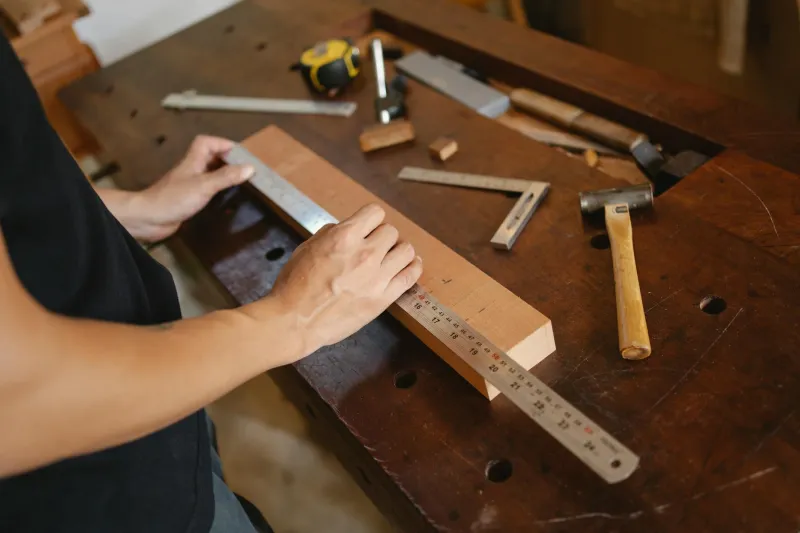
Nearly, but not quite. In his Gloucestershire workshop, Tom Brennan runs calloused fingers along a dulcimer's maple frame, checking for the perfect tension that will make it sing. He's one of perhaps a dozen craftspeople across Britain who've dedicated themselves to reviving the lost art of dulcimer making.
"I found my first one in a junk shop in Stroud," he recalls. "Half the strings were missing, the bridges were warped, but when I managed to get a tune out of it, I was hooked. Spent the next five years teaching myself how to build them properly."
Brennaan's instruments bear little resemblance to mass-produced dulcimers from abroad. He sources his timber from local woodlands – sycamore for the soundboard, oak for the frame, cherry for the bridges. Each dulcimer takes three months to complete, with wood seasoning alone accounting for half that time.
"People ask why I don't just import the parts or use modern materials," he says, adjusting a newly-fitted tuning pin. "But this isn't about efficiency. It's about keeping alive a conversation between British wood and British music that's been going on for centuries."
New Voices, Ancient Resonance
That conversation is being renewed in unexpected places. In Cardiff, the Taff Valley Dulcimer Circle meets monthly in a community centre, mixing traditional Welsh airs with contemporary compositions. In Edinburgh, folk duo The Striking Hours has built a following by weaving dulcimer melodies through experimental soundscapes. Even in London's competitive folk scene, players like Jenny Cartwright are finding audiences hungry for the instrument's distinctive voice.
"There's something about the dulcimer that speaks to people who feel disconnected from their roots," Cartwright observes. She's just finished a set at Cecil Sharp House, her dulcimer's ethereal tones still hanging in the air. "In a world of synthesisers and samples, here's an instrument that's completely acoustic, completely handmade, completely honest. You can't fake it."
The revival isn't confined to traditional repertoire either. Contemporary composers are discovering the dulcimer's potential for everything from ambient soundscapes to neo-folk fusion. The instrument's unique timbral qualities – that distinctive attack followed by a singing sustain – lend themselves to both ancient ballads and modern experimentation.
The Ripple Effect
Perhaps most significantly, the dulcimer revival is creating connections that extend far beyond music. Makers like Brennan regularly host workshops, teaching basic construction techniques to anyone interested. Players organise informal sessions in village halls and community centres, often drawing curious locals who've never heard the instrument before.
"It's not just about preserving the past," reflects Sarah Whitfield, packing away her hammers after another evening session in Hebden Bridge. "It's about creating space for the kind of music-making that brings people together. When someone picks up hammers for the first time and manages to get a tune out of the dulcimer, there's this moment of pure joy. That's what we're really reviving – not just an instrument, but a way of connecting with music that's immediate and communal."
The hammer dulcimer may never again echo from every British street corner, but its quiet return suggests something deeper than mere nostalgia. In an age of digital overwhelm, perhaps we need instruments that demand our full attention, that connect us physically to the act of making music. Perhaps we need sounds that carry the memory of our landscape in their very grain.
As the last notes fade in that Hebden Bridge barn, the silence feels different somehow – not empty, but expectant. The dulcimer's song may have been interrupted, but it was never truly lost. And now, struck from stone and string once more, it's finding its way back home.