The Workshop's Secret Language
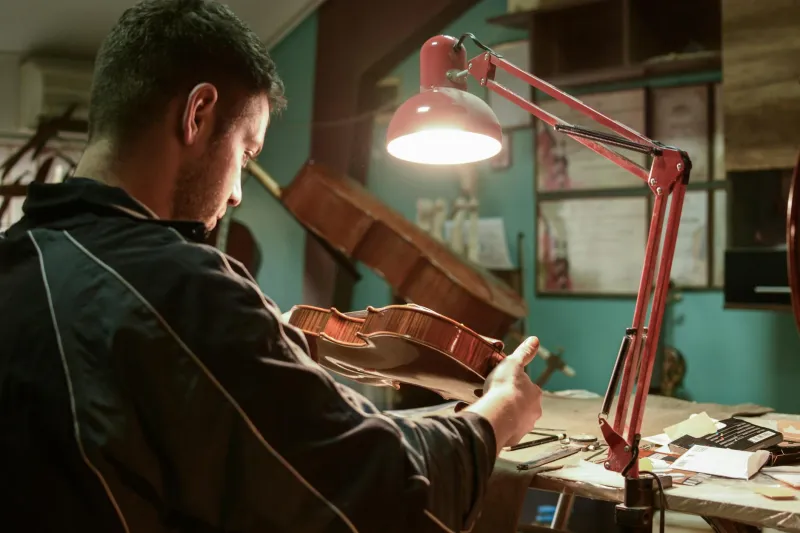
In a converted barn outside Kelso, the air smells of pine shavings and centuries-old varnish recipes. David MacLeod runs his thumb along a piece of Alpine spruce, listening to what the wood tells him. "This one's got a voice," he says, holding the plank to the light. "You can hear it before you even start cutting."
MacLeod is part of a quiet revolution happening across Britain—a renaissance in traditional fiddle-making that's seeing craftspeople return to methods their great-grandfathers would recognise. From tiny workshops in the Scottish Borders to converted railway arches in Bristol, a new generation of luthiers are hand-building instruments using techniques passed down through apprenticeships, salvaged notebooks, and the kind of intuitive knowledge that can't be googled.
Beyond the Machine Age
Whilst factory-made violins flood the market at £50 a piece, these makers are swimming against the commercial tide. A handmade fiddle from one of Britain's traditional workshops takes between three and six months to complete, with prices starting around £800 and climbing well into the thousands for instruments built by master craftsmen.
"People ask me why bother," says Sarah Chen, who learned her trade in a workshop beneath London's railway arches before setting up her own practice in Bath. "You can buy a decent student violin online for the price of a night out. But there's something about an instrument that's been shaped by human hands, tuned by human ears. It carries intention."
Chen specialises in what she calls "heritage builds"—fiddles constructed using wood sourced from historic British buildings. Her latest project incorporates timber from a 17th-century Devon farmhouse, each plank carrying its own story of seasonal change and human habitation.
The Alchemy of Sound
The traditional British fiddle differs subtly from its continental cousins. Regional variations developed over centuries, influenced by everything from local wood availability to the specific demands of different musical traditions. A Highland fiddle, built for the sweeping melodies of strathspeys and reels, requires different tonal qualities than an instrument destined for the intricate ornamentation of Northumbrian smallpipes accompaniment.
"The varnish alone is a three-month process," explains Tom Whitworth, whose Shropshire workshop has become a pilgrimage site for traditional musicians across Europe. "Seven thin coats, each one hand-rubbed and cured. My recipe came from my mentor's mentor—goes back to the 1890s. Some of the ingredients aren't even legal anymore."
Whitworth's notebooks read like medieval alchemy texts: references to "dragon's blood" resin, amber dissolved in turpentine, and mysterious additives that transform liquid into the golden patina that defines a properly aged instrument.
Apprentices in an Ancient Art
The knowledge transfer happens slowly, deliberately. Unlike modern trades with their formal qualifications and standardised curricula, fiddle-making still relies on the ancient apprentice system. Students spend years learning to read wood grain like a map, understanding how moisture content affects resonance, developing the muscle memory required to carve a scroll by hand.
"I've got three apprentices currently," says MacLeod. "Takes about seven years before they're ready to put their own name inside an instrument. People think it's just about the woodwork, but there's acoustics, metallurgy for the fittings, even a bit of chemistry for the varnishes. You're not just making a tool—you're creating something that will outlive you."
The Player's Perspective
For traditional musicians, the relationship with their instrument transcends the merely functional. Fiddler Mairi Campbell, whose recordings have helped define contemporary Scottish folk music, has played the same MacLeod fiddle for over two decades.
"It's not just about sound quality, though that matters enormously," she explains. "When you know your instrument was built by someone who understands the music, who's heard the tunes you'll play, there's a connection there. The fiddle becomes a partner rather than just a tool."
Campbell's instrument bears the subtle scars of thousands of sessions—tiny dents from enthusiastic bow work, wear patterns that map her playing style, a patina that speaks of decades spent in smoky pub sessions and draughty village halls.
Tradition Meets Innovation
Whilst these makers honour historical techniques, they're not museum pieces. Modern understanding of acoustics informs their work, and sustainable sourcing has become increasingly important. Several workshops now specialise in "urban harvest" timber—wood reclaimed from demolished buildings or storm-felled trees from city parks.
"I built a fiddle last year from a London plane tree that came down in the 2018 storms," says Chen. "Three hundred years old, grown in Regent's Park. The musician who commissioned it wanted something that carried London's story."
The Future of an Ancient Craft
As traditional music experiences its own renaissance—with folk festivals proliferating and session culture thriving—demand for quality handmade instruments continues to grow. But the makers face challenges beyond mere economics. Finding suitable wood becomes increasingly difficult, traditional apprenticeships compete with university courses, and the patient, methodical nature of the craft sits uneasily with contemporary expectations of instant gratification.
"Sometimes I wonder if we're the last generation," admits Whitworth, whose waiting list currently stretches three years. "But then a young person walks into the workshop, picks up a piece of maple, and asks how long it takes to learn. That's when you know the tradition will survive."
In workshops across Britain, the ancient dialogue between maker and wood continues. Each shaving curled from the plane, each careful adjustment to the sound post, represents not just craftsmanship but cultural continuity—the determination to ensure that future generations will have instruments worthy of the music they'll create.