The Weight of Stone in Young Hands
There's something almost sacred about watching an apprentice dry stone waller place their first stone. The hesitation, the careful consideration of weight and angle, the moment when understanding clicks — it's like witnessing someone discover they can speak a language they never knew existed.
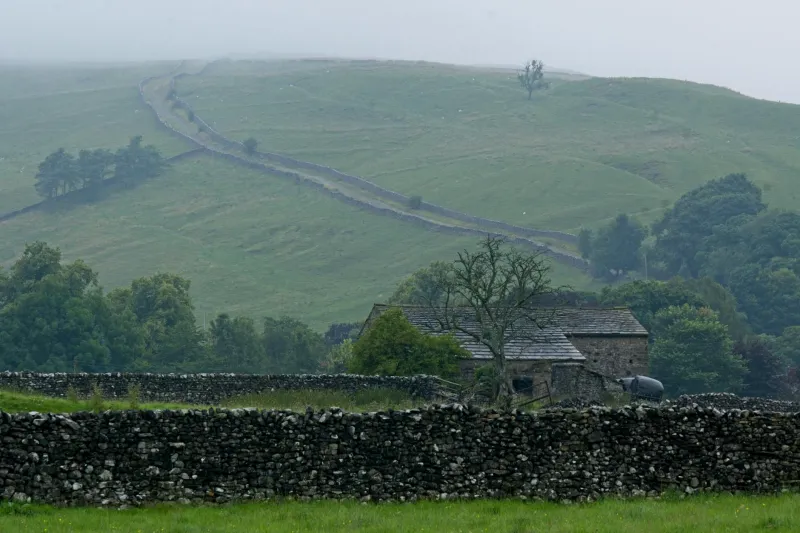
Across Britain's uplands, from the Yorkshire Dales to the Scottish Borders, this ancient dialogue between human hands and local stone is being renewed by a generation who might have been expected to turn their backs on such earthy, laborious work. Yet here they are, learning to read the grain of limestone, the split of sandstone, the stubborn character of granite — skills that seemed destined for the history books just decades ago.
Beyond the Romantic View
It's tempting to romanticise dry stone walling as some mystical craft, but spend time with the Dry Stone Walling Association's certified instructors and you'll quickly discover it's as much about physics as poetry. These walls — built without a drop of mortar — rely on principles of gravity, friction, and an intimate knowledge of how stones want to sit together.
"People think it's about finding the perfect stone," explains Master Craftsman Sarah Whitfield, who's been teaching the craft for over twenty years across Cumbria's fell country. "But it's really about understanding what each stone can give you. Some want to be foundations, others are natural copestones. The skill is in listening."
This listening extends beyond individual stones to the landscape itself. In Yorkshire, wallers work primarily with limestone, creating the iconic pale boundaries that stripe the dales. Travel to the Lake District, and the volcanic rocks demand different techniques entirely. Move north to the Scottish Borders, and the local sandstone presents its own challenges and opportunities.
The New Guardians
What's remarkable about the current revival isn't just the numbers — the DSWA now certifies around 200 new wallers annually — but the diversity of people drawn to the craft. Former office workers, recent graduates, career changers in their fifties, all finding something in this most fundamental of building arts that speaks to a deeper need.
Twenty-four-year-old James Morrison left his job in digital marketing to train as a waller in the Peak District. "There's something about working with your hands, about creating something that will outlast you," he reflects, pausing from rebuilding a boundary wall near Castleton. "These walls have been here for centuries. Some of the stones I'm using were probably placed by someone's great-great-grandfather."
This sense of continuity runs deep in the walling community. Traditional techniques are passed down not through textbooks but through demonstration, correction, and the gradual development of what wallers call 'stone sense' — an intuitive understanding of how rocks want to behave.
More Than Boundaries
To walk through Britain's stone wall country is to read the history of the land itself. These aren't just field boundaries; they're archaeological records written in local stone. Medieval field systems, Parliamentary Enclosure walls from the 18th and 19th centuries, Victorian improvements — each era has left its signature in the way stones are selected, shaped, and placed.
The walls themselves have become habitat, creating the distinctive ecosystems of Britain's uplands. Slow worms shelter in the foundations, birds nest in the gaps, lichens colonise the surfaces. A well-built dry stone wall isn't just a human artefact; it's a living part of the landscape.
This ecological role has given new urgency to preservation efforts. As traditional walls collapse through neglect or inappropriate repair with concrete, entire habitats disappear. The new generation of wallers aren't just craftspeople; they're environmental custodians, maintaining corridors of biodiversity that thread through Britain's farmed landscape.
The Certification Path
The DSWA's certification system — from Initial through Advanced to Master Craftsman — ensures standards while preserving regional variations. Each level demands not just technical skill but understanding of local materials, traditional methods, and appropriate applications.
Watch a certification assessment and you'll see candidates judged not just on the structural integrity of their work, but on their sensitivity to local stone, their understanding of traditional patterns, and their ability to create walls that sit naturally in the landscape.
"It's not about imposing a standard template," notes DSWA instructor Michael Henderson, who teaches across the Scottish Borders. "It's about understanding the conversation between stone and place that's been going on here for generations."
Future Foundations
As climate change and environmental awareness reshape how we think about landscape management, dry stone walling offers lessons in sustainability that feel increasingly relevant. These walls require no manufactured materials, use only local stone, and can be dismantled and rebuilt as needs change.
The craft also represents something harder to quantify but equally valuable — a direct, physical connection to place and tradition in an increasingly virtual world. For the young apprentices learning to read stone and landscape, it's perhaps this grounding that matters most.
In their careful placement of each stone, they're not just building walls; they're rebuilding the ancient contract between human skill and the living landscape, ensuring that Britain's most intimate architectural tradition continues to evolve, stone by patient stone.