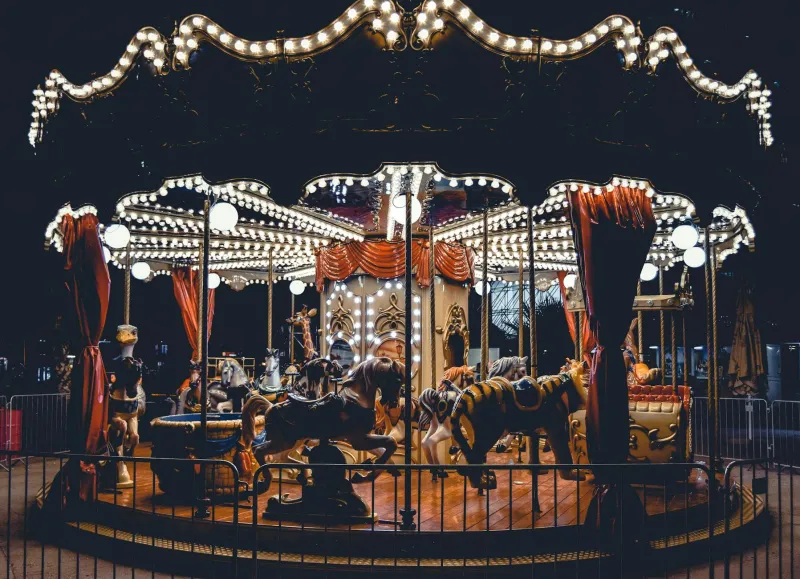
The first thing you hear isn't the screams from the waltzers or the barkers calling punters to the coconut shy. It's the music—that distinctly British fairground sound that somehow manages to be both nostalgic and thrilling at once. But listen closer, beyond the familiar carnival melodies, and you'll catch something else entirely: the ghost of an ancient musical tradition that's been travelling these islands for longer than anyone can remember.
The Music Makers of the Road
Long before Spotify playlists and festival line-ups, Britain's travelling fairs served as one of the country's most democratic musical venues. Every market town, every village green, every piece of common land that could accommodate a few rides became a temporary concert hall where traditional melodies mixed with the latest popular tunes.
"People don't realise that fairgrounds were essentially mobile music venues," explains Sarah Whitworth, whose family has been in the showman business for four generations. "My great-grandfather could play seventeen different instruments, and he wasn't unusual. You had to be able to entertain yourself and others during those long winter months when the fair was laid up."
The Whitworth family's collection of photographs tells the story: fiddles and melodeons tucked between tent poles, mouth organs passed around campfires, and always, somewhere in the background, the mechanical symphony of the fairground organs grinding out their endless repertoire of popular airs and traditional tunes.
Steam, Brass and Sacred Melodies
The great fairground organs—those magnificent steam-powered orchestras that could fill a field with sound—weren't just crowd-pleasers. They were repositories of musical memory, their brass pipes and wooden drums programmed with everything from hymn tunes to music hall favourites, folk melodies to the latest dance crazes.
"Each organ had its own personality, its own repertoire," says Dr Michael Harding, who's spent the last decade documenting fairground music for the National Fairground Heritage Trust. "Some specialised in sacred music—you'd get 'Abide With Me' floating across a Sunday evening fair. Others were all about the popular songs of the day. But they all carried traditional melodies too, often in arrangements you wouldn't hear anywhere else."
These weren't museum pieces playing dusty old tunes. The organs evolved constantly, their repertoires updated as new songs caught the public imagination. A melody that started life in a Northumberland pub might find its way onto the streets of Birmingham via a fairground organ, then travel on to Wales or Scotland, picking up variations and embellishments along the way.
The Circuit of Song
The travelling fair circuit created its own musical ecosystem. Families would meet at the same locations year after year—Nottingham Goose Fair, Hull Fair, Glasgow Green—sharing not just business gossip but songs, tunes, and stories. Children grew up learning melodies from families they'd see perhaps twice a year, creating a musical network that spanned the entire country.
"There were songs that belonged to the fairground world," remembers Tommy Fletcher, whose grandfather ran a set of gallopers in the 1920s. "Not just the music from the organs, but the songs we'd sing ourselves. Some were versions of traditional ballads, others were completely original. They told our stories—the hard winters, the good pitches, the characters we'd meet."
Many of these songs have never been written down. They lived in the memory of the fairground community, passed from parent to child like the painted horses and brass rings of the rides themselves. Now, with many traditional showmen's families leaving the business, that oral tradition faces an uncertain future.
Racing Against Time
The urgency is real. The last generation of showmen who grew up in the truly traditional fairground world—sleeping in living wagons, following ancient circuits, maintaining the old customs—are reaching retirement age. With them goes not just practical knowledge about maintaining steam engines and fairground organs, but an entire musical culture.
The Heritage Lottery Fund has recognised the crisis, funding several projects to record oral histories and preserve mechanical instruments. The National Fairground Heritage Trust's mobile recording studio has been visiting fairgrounds across the country, capturing not just the sounds of the organs but the stories and songs of the people who operated them.
"We're not trying to turn fairgrounds into museums," insists Harding. "They're living, breathing businesses that need to evolve. But we can't let that evolution erase centuries of musical tradition."
The Sound of Tomorrow
Some younger showmen are finding ways to honour their musical heritage while embracing modern technology. The Robinson family, who operate rides across the Midlands, have digitised their grandfather's collection of fairground organ music, making it available online while still using traditional steam organs at selected events.
"It's about finding balance," explains James Robinson. "People still love that authentic fairground sound, but they also want to hear contemporary music. The trick is knowing when to fire up the steam organ and when to plug in the speakers."
When the Music Stops
As you wander through any modern fairground, surrounded by the familiar chaos of lights and laughter, spare a thought for the musical tradition that once travelled with these rides. In the rumble of generators and the electronic melodies of modern attractions, you can still catch echoes of something older—the sound of a community that made music wherever it went, turning every patch of common ground into a temporary concert hall.
The wagons may have given way to modern lorries, and the steam organs might be silent more often than not, but the spirit that created Britain's fairground music tradition endures. Whether it survives another generation depends on whether we recognise its value before the last notes fade into memory.