The Salt-Blessed Dawn
In the grey light before sunrise, when the harbour walls still weep with night mist, something ancient stirs in Britain's fishing villages. It's not just the tide turning or the first gulls crying overhead—it's the whisper of rituals that have blessed these waters for a thousand years.
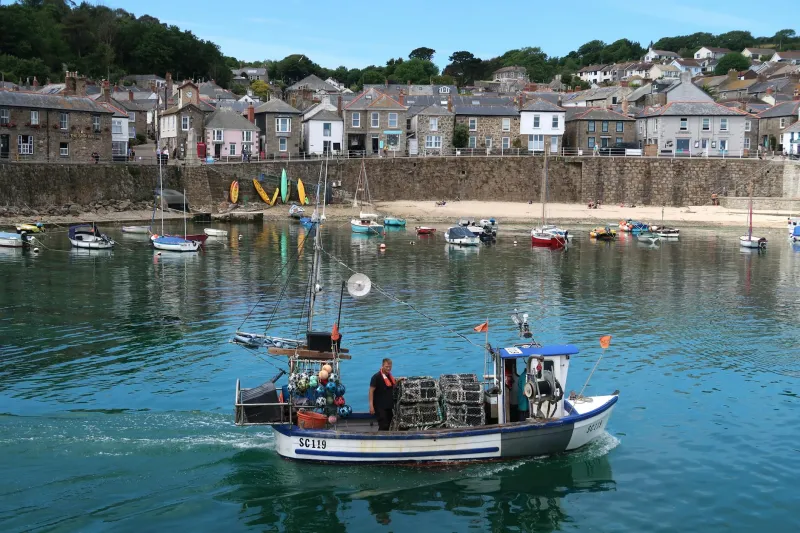
Down in Mousehole, where granite cottages huddle against Atlantic storms, old fisherman Tom Jenkyn still touches the bow of his boat three times before casting off. "My grandfather did it, his grandfather before him," he says, hands weathered as driftwood. "You don't mess with what keeps you safe out there."
This is the hidden heartbeat of Britain's coastal communities—a world where superstition and survival dance together like partners in an ancient reel. Where the blessing of boats isn't quaint folklore but living practice, woven into the DNA of places where the sea gives and takes in equal measure.
Songs of the Herring Lasses
Travel north to the Scottish east coast, and you'll find different rhythms but the same deep current of tradition. In Fraserburgh and Peterhead, the herring girls once worked to songs that turned brutal labour into something approaching art.
"Caller herrin', caller herrin', one a penny, two a penny," the old song goes, but behind those simple words lay complex harmonies that helped women gut fish for sixteen hours a day. Their voices rose above the stench and silver scales, creating community out of hardship.
Moira MacLeod, now in her eighties, learned these songs from her mother. "We'd start before dawn and finish when our hands couldn't hold the knives anymore," she recalls. "But the singing made us sisters. It gave us strength when our backs were breaking."
Today, the Doric Heritage Society works to preserve these work songs, understanding that they carry more than melody—they hold the memory of how communities survive.
The Blessing Waters
Cornwall's coastal parishes still gather each spring for the blessing of the boats, though fewer vessels bob in harbours that once bristled with masts. In St Ives, the ceremony draws tourists now, but for the remaining fishing families, it remains deadly serious.
Reverend Sarah Penhaligon has conducted these blessings for fifteen years. "People think it's charming tradition," she says, "but I see the faces of the fishermen's wives. They know what the sea can do. These rituals aren't quaint—they're armour against uncertainty."
The ceremony follows patterns older than Christianity itself. Holy water meets salt spray, ancient Cornish words mingle with Latin prayers, and flowers scattered on the tide carry hopes for safe return.
Guardians of Memory
Across Britain's coastline, a quiet army of heritage workers, local historians, and community groups fights to preserve these maritime traditions. They understand what's at stake when the last native speaker of a fishing dialect dies, or when the final boat blessed by generations of the same family is sold to developers.
In Whitby, the Folk Heritage Archive has collected over 200 hours of recordings from former fishermen and their families. Project coordinator James Hartwell explains their urgency: "These aren't museum pieces. They're living traditions that shaped entire communities. When they disappear, we lose part of our national soul."
The archive captures everything from weather lore passed down through generations to the specific knots used for different fishing grounds. Each recording is a thread in Britain's maritime tapestry.
Tides of Change
Modern fishing bears little resemblance to the community-centred life of previous centuries. GPS has replaced stars for navigation, sonar finds the fish that intuition once located, and health and safety regulations govern waters once ruled by superstition alone.
Yet the old ways persist in unexpected places. Young fishermen in Brixham still won't sail without their lucky stone, and in Lowestoft, the annual Sea Festival draws families whose names have worked these waters for centuries.
"The sea hasn't changed," says marine archaeologist Dr Elizabeth Fowler. "It's still dangerous, still unpredictable. That's why these traditions survive—they address something fundamental about our relationship with forces beyond our control."
The Song Continues
Perhaps the most remarkable aspect of Britain's maritime traditions is how they adapt while remaining true to their essence. In fishing communities across Scotland, traditional work songs are being taught in primary schools. Children who may never gut a herring learn the rhythms that sustained their great-grandmothers.
In Cornwall, young musicians like Kresen Kernow are weaving fishing shanties into contemporary folk performances, ensuring ancient melodies find new audiences. Their music carries the salt tang of authenticity while speaking to modern ears.
As evening falls over Britain's harbours, the old rituals continue in countless small acts. A fisherman's wife scanning the horizon for familiar sails. A blessing whispered over mending nets. Children learning to read the sky for weather signs their ancestors knew by heart.
These are the dry stones of Britain's coastal heritage—weathered by time and tide but holding firm against the storms of change. In their endurance lies proof that some traditions run deeper than fashion, connecting us to rhythms as old as the sea itself.