White Clay and Working Lives: The Pipe-Makers Writing Britain's Hidden Social History
The Archaeology of the Everyday
Dr. Sarah Henshaw kneels in a muddy trench beside the Thames, her trowel scraping carefully through centuries of London silt. What she's hunting for isn't Roman pottery or medieval coins, but something far more humble: the broken stems of clay pipes, thousands upon thousands of them, discarded by generations of ordinary Londoners who paused for a smoke between shifts.
 Photo: Dr. Sarah Henshaw, via dyn.mktgcdn.com
"People think of archaeology as treasure hunting," she says, holding up a delicate white fragment no longer than her thumb. "But these pipes tell us more about how ordinary people actually lived than any golden brooch ever could."
Across Britain, from Edinburgh's closes to Plymouth's quays, archaeologists are uncovering what might be the most comprehensive record of working-class social life ever assembled. Clay pipes, it turns out, were the ultimate disposable luxury of their age — cheap enough for a dock worker to afford, fragile enough to break regularly, and distinctive enough in their manufacture that each fragment can be traced to its maker, its decade, sometimes even its specific tavern.
Masters of the White Earth
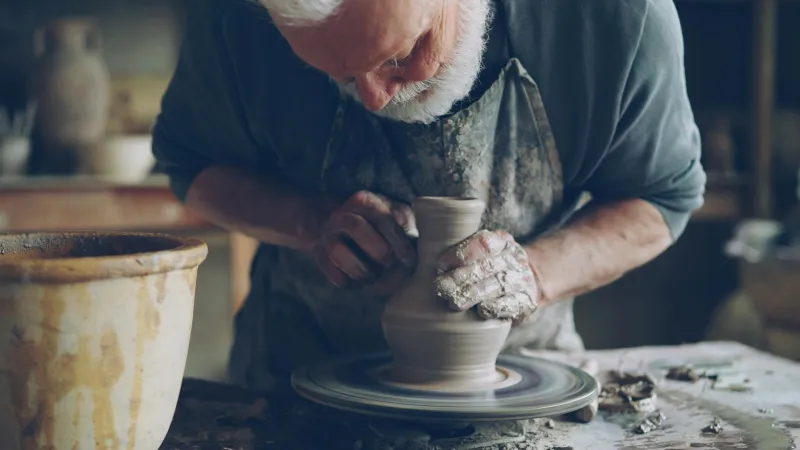
In a workshop tucked behind Broseley's high street, Peter Hammond shapes clay with the same wooden tools his great-grandfather used a century ago. The Shropshire town was once the epicentre of Britain's pipe-making trade, its kilns smoking day and night to supply the nation's tobacco habit.
 Photo: Peter Hammond, via sites.psu.edu
"Each pipe-maker had their own stamp," Hammond explains, pressing a tiny metal die into the bowl of a freshly formed pipe. "When archaeologists find these marks, they can tell you not just when and where it was made, but often who was smoking it and why they were there."
The process hasn't changed since the 1600s. Local clay — the white, fine-grained earth that gives these pipes their distinctive colour — is wedged to remove air bubbles, then pressed into brass moulds that have been passed down through generations of craftsmen. A thin wire draws out the stem, creating the narrow bore through which smoke travels. After drying, the pipes are fired in kilns that reach temperatures of over 1000 degrees.
Hammond is one of perhaps a dozen traditional pipe-makers left in Britain, serving a market that consists mainly of re-enactors, museums, and the occasional archaeologist seeking authentic replicas. But his work serves a deeper purpose than mere historical curiosity.
Reading the Social Map
What emerges from archaeological digs is a detailed map of how communities formed, traded, and socialised across Britain. Pipe stems found in a Cornish fishing village bear the marks of London makers, suggesting trade routes that historians had only guessed at. Fragments discovered in Scottish Highland bothies reveal that even the most remote communities were connected to wider networks of commerce and culture.
"A clay pipe was often the first manufactured object that ordinary people owned," explains Dr. Henshaw. "Before mass production, before consumer culture as we know it, there was the pipe."
The social rituals around pipe smoking created spaces for community that transcended class boundaries. In taverns from the Highlands to the West Country, men and women would gather around shared bowls of tobacco, pipes passing from hand to hand in ceremonies that archaeologists now recognise as foundational to British pub culture.
Archaeological evidence suggests that pipe smoking was remarkably democratic. Fragments found in the grounds of grand houses are often identical to those discovered in workers' cottages, suggesting that the same makers supplied entire communities regardless of social standing.
The Language of Clay
Modern pipe archaeology has developed its own sophisticated vocabulary. The thickness of a stem can date a pipe to within a decade — stems grew progressively thinner as manufacturing techniques improved. The shape of a bowl reveals not just aesthetic preferences but practical considerations: smaller bowls when tobacco was expensive, larger ones as prices fell.
Decorative elements tell even richer stories. Pipes bearing Masonic symbols cluster around ports and industrial towns where lodge culture flourished. Those stamped with political slogans map the spread of radical ideas through working communities. Religious imagery appears most frequently in regions where nonconformist traditions were strong.
"Every pipe is a small autobiography," says Hammond, examining a 300-year-old stem discovered during renovation work on a Shropshire pub. "This one's been repaired with lead wire — someone cared enough about it to fix it rather than throw it away. That tells you something about both the pipe and its owner."
Smoke Signals from the Past
As Britain's remaining pipe-makers continue their quiet work, they're not just preserving an ancient craft but maintaining a crucial link to understanding how our ancestors actually lived. Each hand-thrown pipe connects modern Britain to centuries of shared ritual, community gathering, and the simple pleasure of pausing for a smoke at the end of a long day.
The clay pipes emerging from today's workshops may lack the archaeological significance of their predecessors, but they carry forward something equally valuable: the knowledge of how ordinary objects can become extraordinary repositories of human experience. In an age of digital connection, there's something profoundly moving about this most analogue of crafts — earth shaped by hand, fired in flame, and used in the timeless ritual of communal pause.
For Dr. Henshaw and her fellow archaeologists, every broken stem is a voice from the past. For craftsmen like Hammond, every new pipe is a bridge to the future. Together, they ensure that Britain's white clay legacy continues to tell its stories, one fragment at a time.