Sacred Scripts and Living Colour: The Illuminators Awakening Britain's Medieval Soul
The Alchemy of Earth and Light
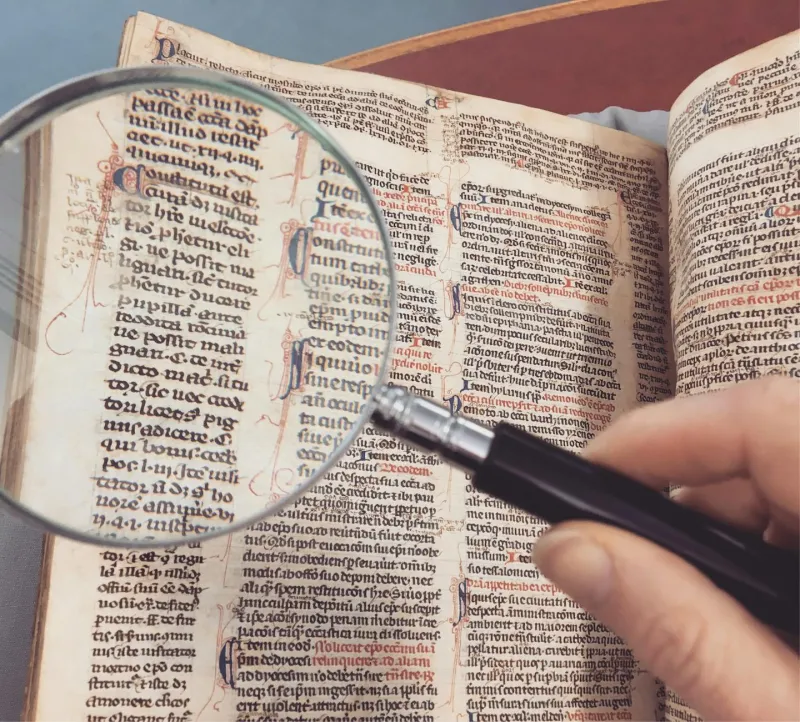
In a converted stone barn on the edge of Exmoor, Patricia Lovett grinds lapis lazuli with a glass muller, the ancient stone releasing its celestial blue grain by grain. The technique hasn't changed since medieval scribes created the illuminated manuscripts that survive as Britain's most spectacular cultural treasures. What has changed is the motivation: where once monks laboured to glorify God, today's illuminators work to reclaim something equally sacred — the direct transmission of knowledge from hand to hand across centuries.
"When you grind your own ultramarine from genuine lapis, you understand why medieval artists called it 'blue gold'," Patricia explains, her fingers stained with pigment that costs more per gram than silver. "Every particle carries history. The stone came from Afghanistan, just as it did 800 years ago. The technique came from generations of craftspeople who refused to let this knowledge die."
Patricia is part of a quiet renaissance happening across Britain. In workshops from the Scottish Highlands to the Cornish coast, contemporary illuminators are studying medieval manuscripts not as museum curiosities but as technical blueprints, learning to prepare vellum, mix pigments, and form letters that connect them directly to the scribes who created the Lindisfarne Gospels, the Book of Kells, and hundreds of lesser-known but equally extraordinary works.
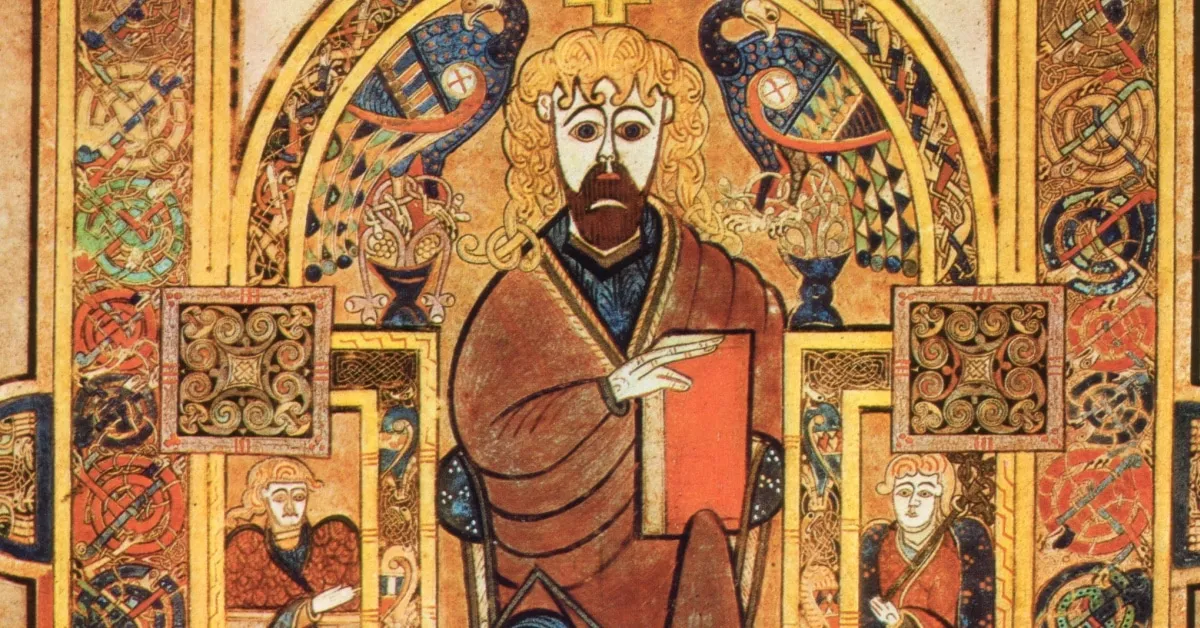 Photo: Book of Kells, via mymodernmet.com
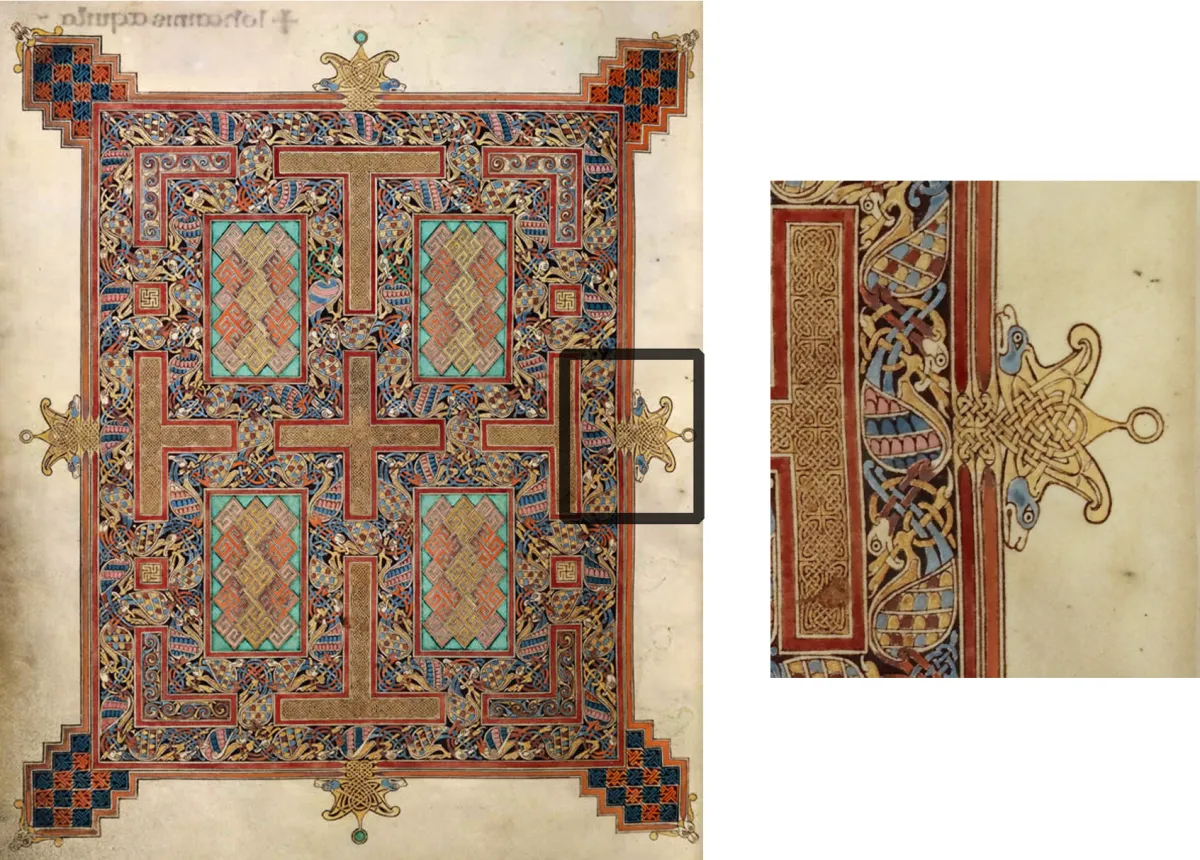 Photo: Lindisfarne Gospels, via smarthistory.org
Scripts That Remember
In Edinburgh's Old Town, calligrapher Morag MacLeod works by candlelight, forming Insular majuscules with a quill cut from a goose feather. The script she's practicing — the distinctive letterforms of early British Christianity — hasn't been taught in formal schools for half a millennium. Yet under her careful hand, the ancient letters flow with the same grace that illuminated the great gospel books of Northumbria.
"Each script carries the DNA of its culture," Morag explains, pausing to trim her quill with a knife that would be familiar to any medieval scribe. "Insular script developed in isolation, in the monasteries of Ireland and northern Britain. It's angular where Roman scripts are curved, compressed where they're expansive. It speaks of a different relationship to the written word — more intimate, more sacred."
Morag learned her craft through years of studying manuscript facsimiles, slowly decoding the techniques that medieval scribes took for granted. She makes her own ink from oak galls and iron, prepares her parchment using lime and lunellum, and cuts her quills according to instructions preserved in 9th-century manuscripts.
"People ask why I don't just use modern materials," she says, holding up a page of text that glows with the warm light of hand-ground pigments. "But the materials are part of the message. When you write with a quill on vellum with ink you've made yourself, you're having a conversation with every scribe who ever did the same thing. The knowledge passes through your hands, not just your mind."
The Geography of Colour
In the Welsh Marches, artist David Jones has spent a decade mapping Britain's palette — the indigenous colours that medieval illuminators would have known intimately. His workshop shelves hold jars of earth collected from specific locations: ochre from the Forest of Dean, umber from the Yorkshire Dales, vermillion from the mercury mines of Almadén that supplied medieval Europe.
"Every region has its signature colours," David explains, mixing a warm brown from clay gathered near Offa's Dyke. "Medieval illuminators didn't have access to global supply chains. They used what the local landscape provided, plus the precious imported pigments they could afford. The result was a palette that spoke of place as much as purpose."
David's work involves both archaeology and alchemy. He studies medieval treatises on pigment preparation, then experiments with local materials to recreate colours that have been lost for centuries. A particular shade of green might require crushing malachite from a Welsh copper mine, mixing it with egg yolk and honey according to a recipe preserved in a 12th-century monastery manual.
"When you make ultramarine from lapis lazuli, you understand why it was reserved for the Virgin Mary's robes," he says, showing a manuscript page where celestial blue seems to glow from within. "When you make vermillion from cinnabar and mercury, you appreciate why red was the colour of power and passion. The materials themselves carry meaning."
Living Heritage, Modern Purpose
What drives these contemporary illuminators isn't antiquarian nostalgia but a conviction that certain forms of knowledge can only be transmitted through direct practice. In an age of digital reproduction, they argue, the physical act of creating illuminated manuscripts connects us to ways of seeing and thinking that no screen can replicate.
"We live in a culture that's forgotten how to make things beautiful by hand," reflects Patricia, working on a commission that will take six months to complete. "Medieval illumination wasn't just decoration — it was a way of honouring knowledge itself. Every letter was an act of devotion, whether to God or to the text or to the craft itself."
The contemporary illumination movement encompasses diverse practitioners: calligraphers preserving endangered scripts, artists exploring the spiritual dimensions of letter-forms, historians documenting techniques that academic study alone cannot preserve. What unites them is a belief that certain forms of cultural knowledge exist only in the intersection of hand, eye, and material.
The Rebellion of Slowness
In a world of instant communication and digital reproduction, illumination represents a radical act of slowness. A single page might require weeks to complete: preparing the vellum, mixing pigments, planning the layout, forming each letter with microscopic precision. The process itself becomes a form of meditation, connecting the practitioner to rhythms of work that predate industrialisation.
"There's something subversive about spending three days on a single capital letter," admits Morag, working on a contemporary poem rendered in 8th-century script. "In a culture obsessed with speed and efficiency, illumination insists that some things are worth doing slowly, carefully, with complete attention."
The revival of illumination also raises questions about cultural ownership and transmission. These practitioners study techniques developed in medieval monasteries, but they apply them to contemporary texts, personal projects, and secular commissions. The result is neither pure preservation nor complete innovation, but something more complex: a living tradition that honours its sources while adapting to contemporary needs.
Scribes for the Future
As Britain's illumination revival enters its second generation, practitioners are beginning to establish formal teaching networks. Weekend workshops introduce beginners to basic techniques, while longer apprenticeships preserve the deeper knowledge that can only be transmitted through years of practice.
"We're not trying to recreate the Middle Ages," explains David, mixing a green that seems to capture the essence of Welsh hillsides. "We're trying to preserve ways of working that connect us to the best of our cultural past while serving contemporary purposes. Every manuscript we create is both an act of preservation and an act of creation."
The manuscripts emerging from today's illuminators may lack the historical significance of their medieval predecessors, but they serve an equally important purpose: they prove that certain forms of cultural knowledge can survive the digital age, that beauty can still be created by hand, and that the conversation between past and present can continue through the most ancient of media — pigment on vellum, light captured in colour, knowledge transmitted through the eternal dance of hand and eye and heart.
In workshops across Britain, that conversation continues. Each carefully formed letter, each hand-ground pigment, each page that glows with the warm light of traditional materials represents a small victory for cultural continuity. The illuminators of contemporary Britain may work in isolation, but their collective effort ensures that one of our most beautiful traditions will continue to evolve, adapt, and inspire for generations to come.