Walking Wool: How the Dales' Wandering Knitters Refused to Sit Still
The Rhythm of Moving Needles
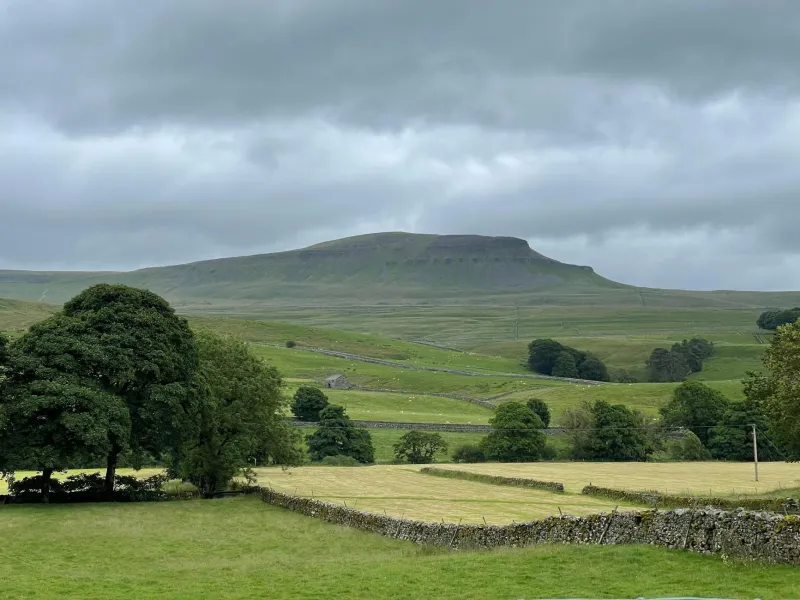
Along the ancient drove roads that wind through Dentdale, a peculiar sound echoes against the limestone walls: the soft click-click-click of knitting needles in motion. But these aren't fireside crafters working in cosy parlours. They're the Wednesday Walking Knitters, a group of eight locals who've revived one of the Yorkshire Dales' most distinctive traditions — the art of knitting while moving.
"People think we're mad until they try it," laughs Helen Middleton, a retired teacher from Sedbergh who leads the group. "But once you get the rhythm — left foot, knit, right foot, purl — you realise this is how it was always meant to be done. Sitting still to knit is actually the weird bit."
She's not wrong. For over 400 years, the Dales were home to a remarkable phenomenon: entire communities of 'walking knitters' who turned every journey into productive craft time. Shepherds knitted while following flocks across the fells. Children knitted on their way to school. Courting couples knitted together as they strolled the village lanes. Even horses were trained to stop when they heard needles drop.
When Every Step Was a Stitch
The tradition emerged from economic necessity. In the 16th and 17th centuries, hand-knitted stockings were one of Britain's most valuable exports, and the Dales — with their abundant wool and scattered farmsteads — became the industry's heartland. But unlike urban workshops where knitters sat at benches, rural families had to fit their craft around the demands of farming life.
"Time was precious, and sitting still was a luxury most people couldn't afford," explains Dr. Marie Hartley, whose research into Dales social history has documented the walking knitters extensively. "So they learned to knit while doing everything else — walking to market, herding sheep, visiting neighbours. It wasn't just efficient; it became a whole way of life."
The technique required special skills. Knitters wore leather 'sheaths' or 'sticks' at their waists to hold one needle steady, leaving both hands free to manipulate the yarn and working needle. Children learned to knit before they could properly walk, starting with simple garter stitch while toddling around the farmyard.
By the 18th century, the sight of entire families knitting their way across the landscape had become synonymous with the Dales. Visitors wrote wonderingly of seeing "every person, male and female, from the age of five to the age of eighty" working wool as they walked. Markets in Kendal and Richmond would fill with hundreds of knitters, their needles clicking in unconscious unison as they traded wool and gossip.
The Industrial Interruption
The tradition began to fade with the Industrial Revolution. Factory-made stockings undercut hand-knitted goods, and improved transport meant fewer long walks to market. By the early 20th century, walking knitters had become a curiosity, then a memory, then almost a myth.
"My grandmother could knit a sock while walking to Hawes and back — ten miles over rough ground — and never drop a stitch," remembers 82-year-old William Sunter from Askrigg. "But she never taught me. Said there was no point, the world had moved on. I wish I'd insisted."
It's this sense of loss that drives today's revival. Small groups have formed in Dent, Richmond, Grassington, and beyond — not as historical re-enactment, but as living practice. They're discovering that walking knitting offers something modern life often lacks: a way to be productive, social, and physically active simultaneously.
Finding the Rhythm Again
At the Dent Village Hall on a grey February morning, the Wednesday Walking Knitters are teaching newcomers the basics. The learning curve is steep — most people struggle to walk and chew gum simultaneously, let alone manipulate yarn while navigating rough terrain.
"It's about finding your personal rhythm," explains group member Janet Thornton, a former textile worker from Sedbergh. "Some people knit on every step, some every other step. Some prefer uphill stretches where they're moving slowly, others find the rhythm easier on flat ground. But once it clicks — and it does click — you'll never want to sit down to knit again."
The group uses traditional techniques where possible. Several members have commissioned replica knitting sheaths from local woodworkers, carved from Dales ash and worn on leather belts. They work with wool from local flocks, often undyed, in the natural greys and browns that characterised Dales knitting for centuries.
"We're not trying to be living museums," insists Helen Middleton. "We use modern patterns, synthetic yarns if we want to. But there's something about connecting with that tradition — feeling the same rhythm our great-grandmothers felt, seeing the same landscape they saw while their needles moved."
The Social Science of Moving Craft
What's striking about the walking knitters is how naturally the social aspects of the tradition reassert themselves. Groups develop their own rhythms and customs. Conversations flow differently when hands are busy and eyes are on the path ahead. Complex emotional discussions seem easier when you're not making eye contact, when there's a shared focus on the work.
"There's something about the combination of movement, craft, and conversation that creates a unique social space," observes anthropologist Dr. Rebecca Foster, who's been studying the revival groups. "People share things they might not in a sitting circle. The physical rhythm seems to create emotional rhythm too."
The tradition also breaks down age barriers in ways that surprise participants. Children as young as eight walk with knitters in their seventies, the shared challenge of coordination creating unexpected bonds.
"Young Tom here can outpace all of us on the hills, but he's still learning to keep his tension even while walking," says Janet Thornton, nodding to 12-year-old Tom Braithwaite, the group's youngest regular member. "And I might be slow on the climbs, but I can help him with his cable patterns. We need each other."
Beyond Nostalgia
For all their connection to the past, the walking knitters are addressing very contemporary concerns. In an age of sedentary lifestyles and social isolation, the tradition offers a unique solution: exercise that's social, productive, and mentally engaging.
"I started coming because my doctor said I needed more exercise," admits group member Margaret Fawcett. "But I'd tried walking groups, and they were either too fast or too chatty or too competitive. This is different. The knitting gives you something to focus on besides the exertion. And you come home with something to show for your walk besides tired feet."
The revival is spreading beyond the Dales. Groups have formed in the Scottish Borders, where similar traditions once existed, and even in urban areas where the walking takes place in parks rather than on fell paths.
Stitching Communities Together
Perhaps most importantly, the walking knitters are discovering that their revival isn't just about preserving a craft technique — it's about rebuilding forms of community that modernity has fractured.
"In the old days, everyone in the valley was connected by trade, by shared work, by the rhythm of the seasons," reflects Helen Middleton as the group sets off on a February afternoon, needles already clicking in the cold air. "We've lost a lot of that. But when we walk together like this, when we share skills and stories and the simple pleasure of making something useful while moving through this beautiful landscape — I think we're finding our way back to something important."
The path ahead winds through Dentdale towards the market town of Sedbergh, the same route generations of knitters have walked before them. But these aren't historical re-enactors playing dress-up. They're neighbours and friends, young and old, keeping alive a tradition that proves some of Britain's most beautiful handicrafts were never meant to be created in isolation.
As their needles catch the weak winter sunlight and their voices carry across the empty fells, they're writing a new chapter in an old story — one stitch, one step, one shared moment at a time.