One Jig, Five Counties: A Tune Goes Walkabout Through Britain's Pub Sessions

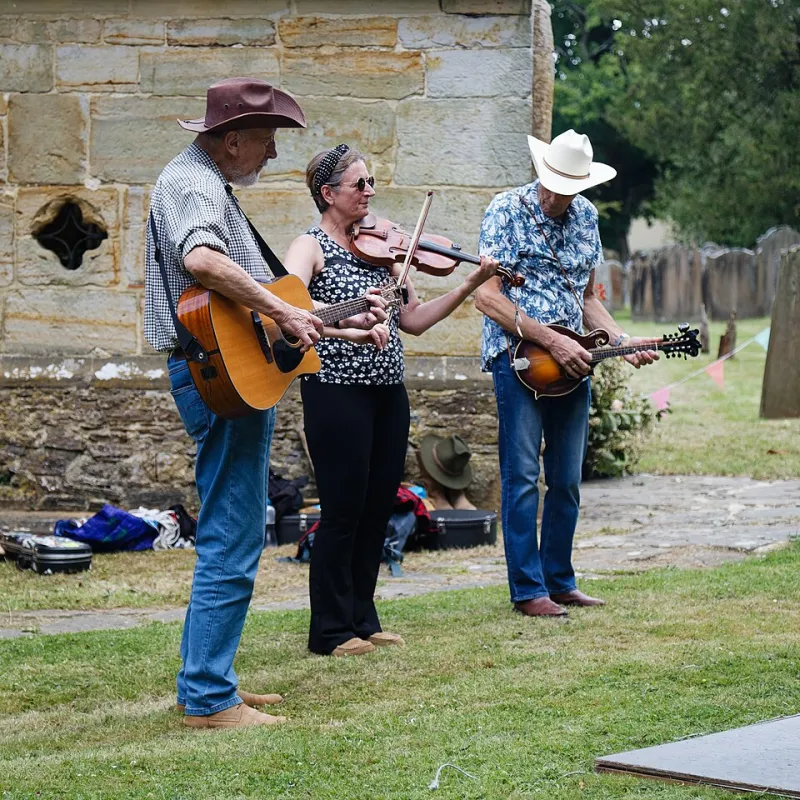
Photo: Aditya.tiga, CC BY-SA 4.0, via Wikimedia Commons
The Experiment
Every session player has a tune that follows them around. Mine — for the purposes of this experiment — is a standard jig in G that I won't name, because the name doesn't matter. What matters is that it's played in nearly every corner of these islands, and it comes out sounding like a different creature depending on the postcode.
So I took it walkabout. Five counties, five sessions, one tune. Here's what happened.
Stop One: A pub in County Clare's English Cousin, London
Start in the smoke, because that's where traditions go to meet each other. In a North London session, the jig arrives fast, bright, with an Irish accent but a cosmopolitan ear — bouzouki underneath, a box player pushing the tempo, somebody suggesting a B-part variation from a recording they heard last week. The tune is treated as common property, constantly renovated. Nobody's sure who learned it from whom, and nobody cares.
Stop Two: Northumberland
Up in the north-east, at a session in a pub with a fire that means it, the same jig slows down and grows a spine. The local players give it the pipers' treatment: decorated, deliberate, every note given room to speak. There's a smallpipe on the next bench, and the tune suddenly sounds like it was written for hills. The tempo debate is settled by the fiddler simply playing it slower until everyone gives in.
Stop Three: The Scottish Borders
Cross the line and the jig gets dressed for a dance. The Borders session plays for the room, not for itself — the rhythm locks into something you could strathspey-step to, and the accordion player is watching the dancers' feet, not the music. Here the tune isn't a tune so much as a service. It does its job, it gets a round of applause, it stands aside.
Stop Four: The West Country
In a Devon pub where the ceiling beams predate the railway, the jig picks up a west-country lilt — a swung, unhurried bounce that drives morris dancers mad with pleasure. A side of dancers is in that night, and the tune becomes accompanying percussion for hankies and sticks. The session and the dance aren't separate events here. They never were.
Stop Five: Yorkshire
The last night, in a Pennine village pub, the jig gets the full brass-adjacent treatment — a brass band player moonlighting on whistle gives it harmonies, the tempo settles into something stubborn and steady, and the room sings the last eight bars unasked. In Yorkshire, apparently, the tune belongs to everyone, and everyone sings whether they know the words or not.
What the Walkabout Proves
Same eight bars. Five personalities. That's the whole argument for the pub session, if you needed one: it's the only folk institution where the repertoire is genuinely alive, mutated nightly by whoever turns up, at whatever level, for free, with no ticket, no stage and no门槛 to entry beyond buying a pint and keeping quiet during the slow airs.
Festivals are wonderful. Archives are vital. But the session is where tradition actually breathes — weekly, unglamorous, open to the fourteen-year-old with a new whistle and the eighty-year-old who learned the tune from a man who's now in the archive. One jig, five counties, and every version true. Long may it run.