A Shout That Carries: The Volunteers Who Still Cry the Town's News
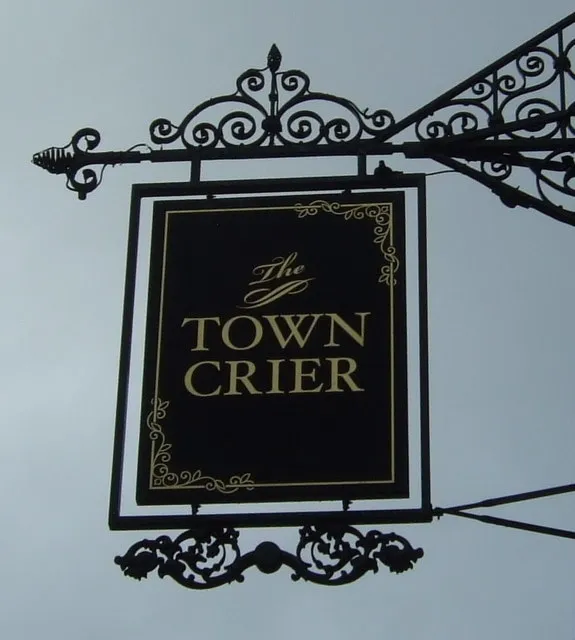
Photo: JThomas , CC BY-SA 2.0, via Wikimedia Commons
The first thing to understand about town crying is that it is not shouting. Shouting is what happens when the microphone fails. Crying is a technique, and like most techniques it looks effortless only because someone spent years being told their diction was mushy.
'You project from the diaphragm, you place the words at the back of the square, and you let the bell do the summoning,' says one crier, who has been doing it for eleven years and still warms up in the car. 'The bell is not decoration. The bell is the whole reason people stop.'
Three oyez and a proper breath
The word comes from the Old French oiez — hear ye — and it is traditionally said three times, which gives the crowd a moment to finish their conversations and turn round. Then comes the cry itself: an opening, a body, a closing, usually a mention of the monarch, and if it's a competition, a strict cap on length — typically around 125 words, which is far shorter than most people imagine until they try to write one.
Because that is the craft. Anyone can bellow. The work is in the writing.
A good cry has to rhyme without sounding like a greetings card, has to land a piece of actual information, has to be intelligible to someone standing by the war memorial with the wind against them, and — this is the part that separates the good criers from the merely loud — has to be entirely inoffensive to whoever is standing next to them in the procession. A cry that gets a laugh at the mayor's expense is a cry that will not be invited back.
The kit, and what it costs
A working crier's kit runs to a bell, a coat, a hat, and a pair of shoes sensible enough for cobbles. The bell is brass, heavy enough to be heard but light enough to hold at shoulder height for twenty minutes, and it is the item criers talk about the way other people talk about cars. Some are inherited. Some are twenty years old and dented. One crier describes polishing hers on Christmas Eve as 'the last chore before the good bit'.
The coat is usually red or blue with gold trim, and it is usually made by someone local, and it is usually a bit too warm for June.
Towns fund it in different ways. Some criers are formally appointed by a council and paid a small honorarium. Many more are volunteers who turn up because they were asked once, enjoyed it, and never stopped. The role has been revived rather than preserved in most places: a town that lost its crier in the 1930s often got one back in the 1970s or 1990s, usually for a charter fair or a millennium event, and then discovered it wanted to keep them.
The competitive circuit
There is a whole season of it. Two national bodies — the Ancient and Honourable Guild of Town Criers and the Loyal Company of Town Criers — both run championships, and there are regional competitions, invitationals and the occasional international gathering, with criers travelling from as far as Canada and Australia to stand in a marquee and be judged on clarity, diction, volume, content and confidence.
It is more competitive than the costume suggests. Competitors time their cries to the second. They test rhymes on long-suffering spouses. They think hard about which vowel will carry across a car park. The judging is done by people who know exactly how hard it is to be both loud and comprehensible, and the standard at the top end is genuinely high.
But the circuit also functions as a professional network. Criers swap engagements, cover for each other, lend coats, and pass on the accumulated knowledge of a trade that has no formal training route. Apprenticeships happen in car parks after competitions.
What a cry is actually for
Most working criers are not at competitions. They're at market days, Christmas light switch-ons, Dickensian weekends, charter fairs, remembrance parades, and the opening of things.
The remembrance engagements are the ones they describe differently. A cry read out before a silence has to do a very particular job, and several criers say they rewrite those several times, and never send them to anyone for approval, and never accept a fee.
At the other end of the scale is the local headline stuff: road closures, charity runs, the return of the market, a shop's centenary, a school's anniversary. A crier will tell you that the phone notification has not killed any of this. If anything, the opposite. A push alert is easy to ignore. A bell and a person in a tricorn hat is not.
The recruitment problem, and why it might not be one
The honest concern in crier circles is age. A lot of the coat-wearers are retired, and there aren't always people queuing behind them. Some towns have gone a decade with nobody in the role.
The counter-argument is that the job has always been part-time and always been voluntary, and that the people who do it now were also once people who had never considered it. The way in, according to almost everyone asked, is embarrassingly simple: find out who your town's crier is, offer to carry the bell, and be available on a Saturday.
Then learn to breathe properly, write something that rhymes and doesn't libel anyone, and remember the three most important words in the trade.
Oyez. Oyez. Oyez.