Brewing the Drowned Country: How Fenland Ales Taste of England's Lost Wilderness
The Taste of Deep Time
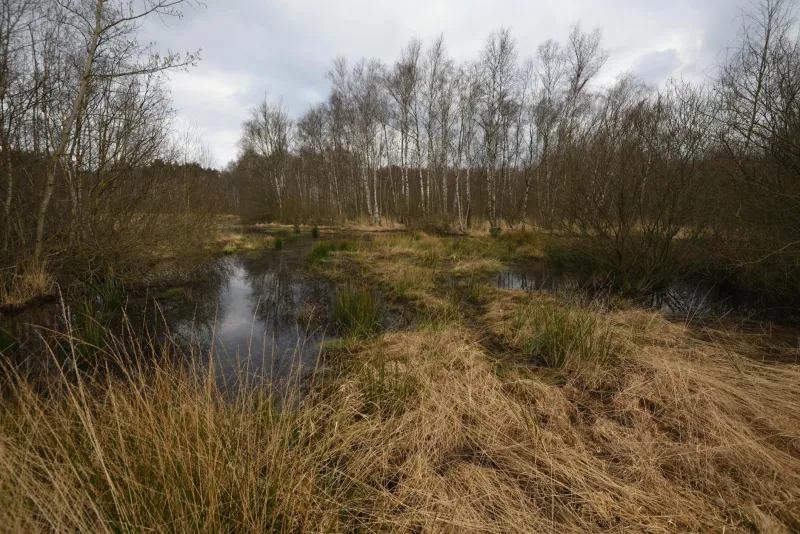
On a grey March morning in the Cambridgeshire fens, brewer Tom Hutchinson wades through knee-deep water in what most people would consider wasteland. He's searching for bog myrtle, its resinous leaves barely visible above the flood. To the casual observer, this looks like agricultural failure — a field that forgot to drain properly. To Hutchinson, it's a glimpse of what England lost.
"This is what it all looked like once," he says, carefully harvesting the aromatic plant that will flavour his next batch of Fenland Bitter. "Before the Dutch engineers, before the steam pumps, before we decided that wet was worthless. This was wilderness — vast, wild, and absolutely alive."
Hutchinson is part of a remarkable movement across the East Anglian fens, where a handful of small breweries are creating ales that deliberately taste of a landscape most people think is gone. Using foraged bog plants, heritage barley varieties, and brewing techniques that predate industrial agriculture, they're bottling something more complex than beer — they're fermenting memory itself.
The Draining of England's Last Wilderness
To understand what these brewers are attempting, you need to grasp what the fens once were. Before the great drainage schemes of the 17th and 18th centuries, this was England's largest wetland — a vast inland sea that flooded and receded with the seasons, supporting extraordinary biodiversity and unique human communities.
The fen dwellers were a people apart, living on islands of higher ground, harvesting wildfowl and fish, cutting sedge and reed. They had their own culture, their own economy, even their own brewing traditions based on the plants that thrived in the waterlogged soil.
"When they drained the fens, they didn't just change the landscape," explains Dr Sarah Mitchell, an environmental historian at Cambridge. "They erased an entire way of life, a whole ecosystem, centuries of accumulated knowledge about how to live with water rather than against it."
The transformation was radical and irreversible. Millions of acres of wetland became some of England's most productive farmland, but at a cost that's only now being fully understood. The drained peat soils are shrinking, releasing vast quantities of stored carbon. The pumps that keep the land dry consume enormous amounts of energy. And the rich biodiversity of the wetlands survives only in fragments.
Foraging the Memory of Water
It's against this backdrop that a new generation of fenland brewers has emerged, united by a shared fascination with what was lost and a determination to taste it again. They're not attempting historical recreation — the original fen ales are gone forever, their recipes lost with the communities that made them. Instead, they're creating something new that draws inspiration from the deep past.
At Wicken Fen, one of the few remaining patches of undrained fenland, brewer Emma Cartwright forages ingredients that would have been commonplace three centuries ago. Meadowsweet for its honey-like sweetness, marsh rosemary for its bitter complexity, bog myrtle for its resinous, gin-like aromatics.
"Each plant tells a story about this landscape," she explains, sorting through her harvest. "Meadowsweet only grows where the water table is high. Bog myrtle needs acidic soil that you only get in undrained peat. When you taste these flavours, you're tasting the chemistry of the wetlands themselves."
The brewing process requires patience and experimentation. Unlike hops, which have been cultivated for brewing for centuries, these wild plants behave unpredictably. Their potency varies with season and weather, their flavours shift depending on when and how they're harvested.
Heritage Grains and Ancient Rhythms
The plant foraging is only part of the story. Several fenland brewers are also working with heritage barley varieties that were common before industrial agriculture standardised crop selection. These older grains often produce lower yields but offer more complex flavours and better adaptation to local conditions.
At Burwell Brewery, master brewer James Norfolk grows his own barley using varieties that haven't been commercially cultivated for decades. "Modern barley is bred for efficiency — high yield, disease resistance, uniform ripening," he explains. "But the old varieties were bred for flavour, for character, for specific local conditions."
The difference is apparent in the finished beer. Where modern ales tend towards clean, consistent flavours, these heritage grain brews offer something earthier, more variable, more connected to place and season. They taste, quite literally, of where they come from.
The Politics of Landscape and Memory
Behind the foraging and brewing lies a deeper argument about how we relate to landscape and history. These brewers aren't just making unusual beer — they're making a case for alternative ways of thinking about land use, biodiversity, and cultural memory.
"Every pint is a kind of protest," argues environmental campaigner David Bellamy, who has worked with several fenland breweries. "It's saying that there are other ways to value landscape than pure productivity. That wildness has worth. That some things shouldn't be 'improved' out of existence."
The timing isn't coincidental. As climate change makes the current system of fen drainage increasingly unsustainable, there's growing interest in rewilding parts of the landscape. Some of the most innovative conservation projects are experimenting with controlled flooding, allowing selected areas to revert to wetland.
These brewers are part of that conversation, offering a taste of what rewilding might mean — not just ecologically, but culturally and economically. They prove that wild landscapes can have commercial value without being tamed.
Tasting the Future of the Past
The fenland brewing movement remains small — a handful of producers making perhaps a few hundred barrels a year between them. But their influence extends far beyond their output. They've inspired foragers, historians, and conservationists. They've created new markets for heritage grains and wild plants. Most importantly, they've demonstrated that the past doesn't have to stay buried.
"We're not trying to turn back the clock," insists Tom Hutchinson, back in his brewery after a morning's foraging. "We can't undo the drainage, can't bring back the old fen communities. But we can remember them. We can honour them. And maybe, in small ways, we can learn from them."
As climate change and biodiversity loss force us to reconsider our relationship with the natural world, these brewers offer something precious: proof that memory has flavour, that landscapes live on in unexpected ways, and that sometimes the most radical act is simply remembering what we chose to forget.
In every glass of their bog myrtle bitter or meadowsweet ale lies a question: what else have we lost in our rush to improve the world? And what might we gain by learning to taste the past?