Shuttle and Silence: The Home Weavers Holding Harris Tweed Together
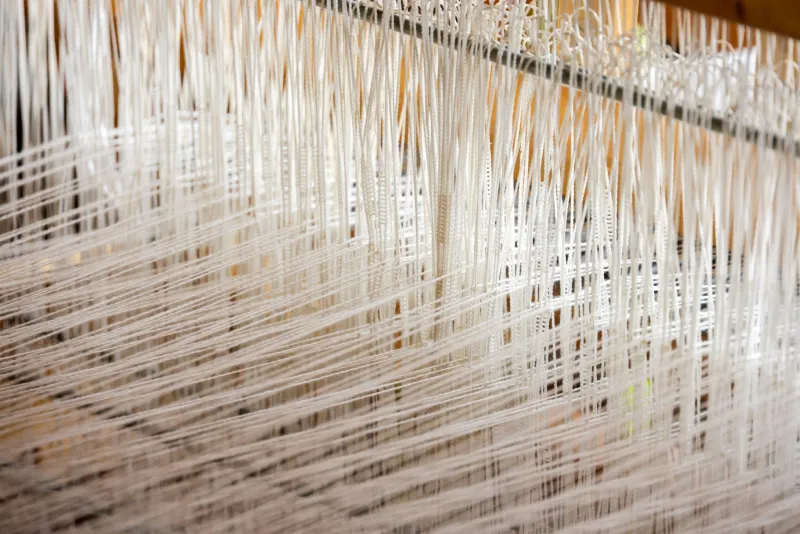
The loom is the size of a small car. It sits in what was once a bedroom, or sometimes a converted shed attached to the gable end of a blackhouse, or occasionally — in the case of one weaver we visit outside Tarbert — in a purpose-built annexe that smells permanently of lanolin and machine oil. Outside, the Atlantic does what the Atlantic does. Inside, the clatter of the pedals and the rhythmic throw of the shuttle create a sound that has defined life on these islands for generations.
This is Harris Tweed country. And this — a private home, a private loom, a private act of making — is the only place in the world where genuine Harris Tweed can legally be woven.
Written Into Law
Few British textiles carry the legislative weight of Harris Tweed. The Harris Tweed Act 1993 is precise to the point of poetry: cloth must be handwoven by the islanders of the Outer Hebrides in their own homes, from pure virgin wool dyed and spun on the islands. The famous Orb trademark — administered by the Harris Tweed Authority — is stamped only on cloth that meets every condition. No factory floor qualifies. No mainland mill can carry the mark. It is, in effect, a law that enshrines a domestic act as the foundation of an industry.
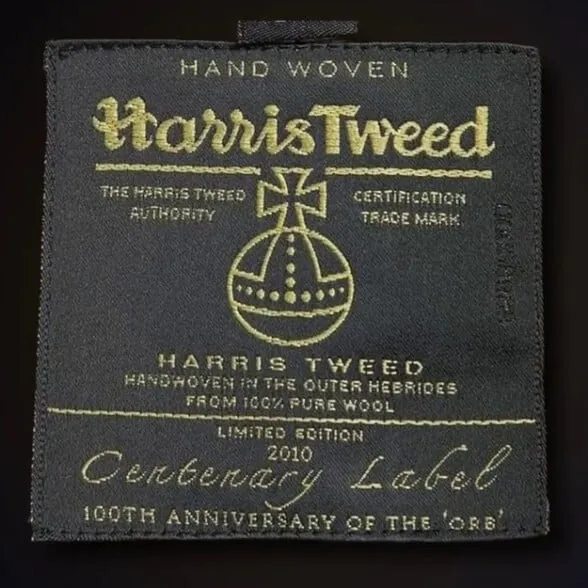 Photo: Harris Tweed Authority, via www.gentlemansgazette.com
 Photo: Outer Hebrides, via images.squarespace-cdn.com
The Authority inspects every bolt. Inspectors travel the island roads, visiting weavers at home, checking metres and quality before the stamp is applied. It's a system that would seem faintly absurd if it weren't so obviously working — Harris Tweed exports have grown significantly over the past decade, with fashion houses from Tokyo to Milan paying premium prices for cloth that carries the Orb.
But beneath the export figures, there's a quieter story. The number of active home weavers has been falling for years. At the tradition's post-war peak, there were over 700 weavers registered across Lewis, Harris, North Uist, Benbecula and South Uist. Today, the figure is somewhere between 100 and 130, depending on who's counting and how active 'active' needs to be.
The Weavers Themselves
Màiri MacLeod has been weaving since she was in her twenties, learning from her father, who learned from his. Her loom — a Hattersley domestic, the standard workhorse of the trade — takes up most of her spare room in a village outside Stornoway. She works roughly three days a week, weaving to commission from one of the three remaining Harris Tweed mills that supply yarn and collect finished cloth.
'It's piecework, always has been,' she says, without complaint. 'You get paid per metre. You work at your own pace. It suits some people very well and others not at all.'
The economics are the honest complication nobody in the industry quite likes to discuss in public. Weavers are self-employed, responsible for their own looms, their own maintenance costs, their own heating bills in some of the windiest buildings in Europe. The rate per metre has improved in recent years, but it remains modest for skilled work. For younger islanders weighing a career in weaving against employment in Stornoway's service sector, the sums don't always add up.
Donald Mackay, 34, is one of the youngest full-time weavers on the island. He came to it sideways — a stint working for a mill in a logistical role, then a growing fascination with the cloth itself, then a second-hand Hattersley and a steep learning curve. 'People assume it's simple because it's traditional,' he says, with some feeling. 'It's not simple. Getting the tension right, reading the pattern cards, keeping consistent across a full bolt — it takes years to do well.'
He's optimistic, though carefully so. The demand is real. The problem is supply — of weavers willing to make the commitment, of young people who see a future in a cold room with a mechanical loom.
Landscape Woven In
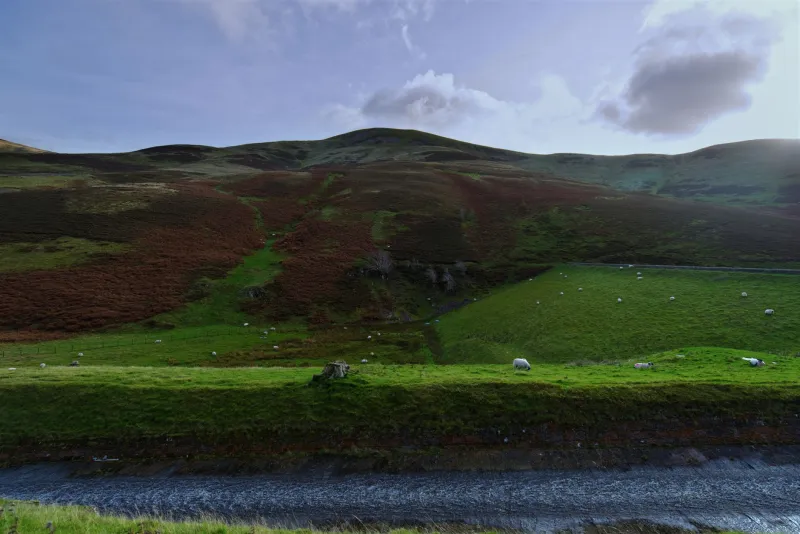
There's a reason the cloth looks the way it does. Harris Tweed's characteristic palette — the heathers, the bracken browns, the sea-greys, the occasional shocking flash of lichen yellow — was historically derived from the landscape itself. Early dyeing used local plants: tormentil root, crotal lichen scraped from stone, iris root. The colours weren't chosen for fashion; they were the colours that happened to be available on a treeless Atlantic island.
Modern production uses commercial dyes, but the palette remains anchored to the land. Mills work with designers to produce colourways that reference the Hebridean environment with a consistency that feels almost instinctive. It's one reason the cloth resonates so strongly with buyers who've never set foot on Lewis — there's something in the colour that reads as elemental, as genuinely from somewhere.
For the weavers, that connection to place is not abstract. Several we speak to describe the work in terms that are inseparable from where they live. The sound of the loom against the wind. The light changing on the loch through the window. The way the cloth accumulates, metre by metre, through the short winter days.
What Survives When the Weavers Go
The Harris Tweed Authority is not complacent. Apprenticeship schemes exist. Mills invest in promotion. The legal protection is robust. But a protected designation of origin only protects what's already there — it can't conjure new weavers from thin air, or make a cottage loom competitive with a laptop and a broadband connection as a career proposition.
What's at stake isn't just cloth. It's a particular model of production that has no real parallel in British manufacturing — genuinely distributed, genuinely domestic, genuinely tied to specific people in specific places doing specific skilled work. The Harris Tweed cottage is not a heritage exhibit or a tourist attraction. It's a working unit of an actual industry, and its disappearance would leave a gap that no amount of clever branding could fill.
Màiri MacLeod finishes a run of dark green twill and begins resetting the pattern cards for the next commission. The loom clatters back into life. Outside, the wind picks up off the Minch.
'People say the tradition is dying,' she says, not pausing her work. 'People have been saying that since my father's time. We're still here.'
For now, the shuttle still moves. The Orb still gets stamped. And somewhere on a rain-grey island, in a room that smells of wool and time, the cloth keeps coming off the loom.