The Smell of the Moss: Britain's Last Peat Cutters and the Land They're Fighting to Remember
The Smell of the Moss: Britain's Last Peat Cutters and the Land They're Fighting to Remember
Ask anyone who grew up with a peat fire and they'll tell you the same thing first: the smell. Not the smell of burning — though that's distinctive enough, low and sweet and nothing like wood smoke — but the smell of the fresh-cut block, lifted from the moss on a cool spring morning. Something between wet earth and old weather. Something that gets into your clothes and stays there.
That smell is increasingly rare in Britain. The hand-cutting of peat, once an unremarkable feature of upland and wetland life across Scotland, northern England, Wales, and parts of the West Country, has become — almost without anyone quite intending it — one of the most contested cultural practices in the country.
A Fuel Shaped by Place
To understand what's at stake, you need to understand what peat cutting actually was, in cultural terms, before it became an environmental controversy. In the Flow Country of Caithness and Sutherland, in the blanket bogs of Lewis and Harris, in the mosses of Lancashire and the Levels of Somerset, the annual peat cut was a communal event as structured and as socially significant as any harvest. Families held customary rights — often unwritten, passed through generations by practice rather than paperwork — to specific sections of the moss. The work was collective: neighbours helped neighbours, the day was long, and the stacked peats drying in their distinctive rows were a measure of a household's readiness for winter.
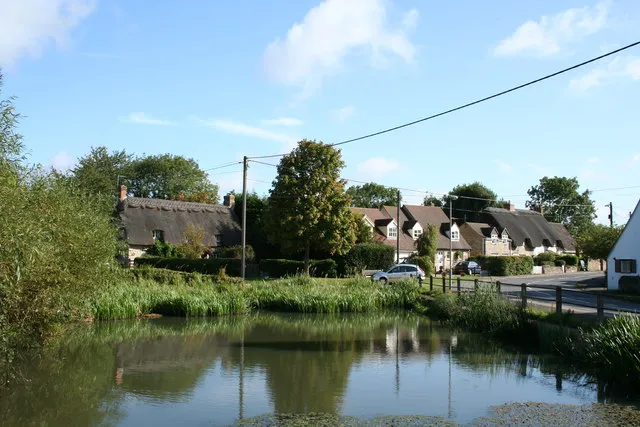
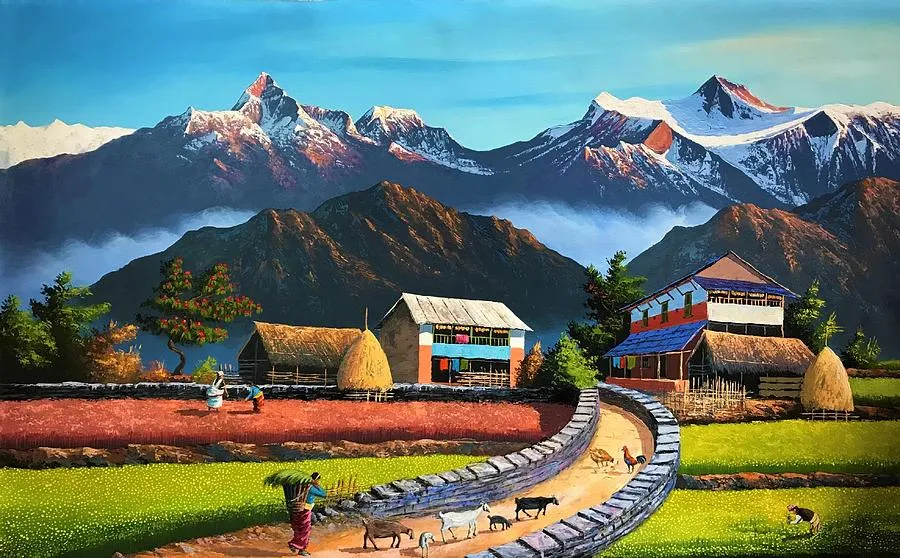 Photo: Somerset Levels, via images.fineartamerica.com
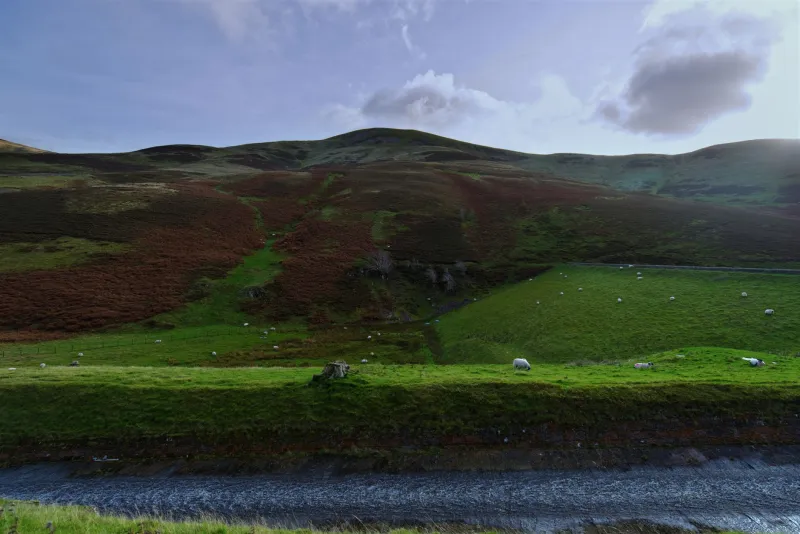
 Photo: Flow Country, via pics.filmaffinity.com
Peat wasn't simply fuel. It was a preservative — the bogs have given us butter buried for centuries, bodies preserved in extraordinary detail, tools and textiles that would have rotted in any other ground. It was a building material, a source of medicinal compounds, a cultural reference point so embedded in upland life that entire vocabularies developed around it. In Scots Gaelic alone, the lexicon of peat — the different types, the stages of cutting and drying, the tools and their uses — runs to dozens of terms with no easy English equivalent.
The Squeeze From Both Sides
The pressure on hand-cutting has come from two directions simultaneously, which is part of what makes the current situation so difficult to navigate.
From the environmental side, the science is unambiguous: intact peatlands are among the most significant carbon stores in the British landscape. A healthy raised bog or blanket moss locks away carbon accumulated over millennia. Disturb it — whether by hand-cutting, commercial extraction, drainage for agriculture, or any other means — and that carbon begins to release. In a period of climate emergency, the case for leaving peat undisturbed is scientifically compelling.
Rewilding projects across the uplands have added another dimension. Organisations working to restore degraded peatland are, in many cases, doing genuinely important conservation work. But the geography of rewilding and the geography of traditional peat rights overlap considerably, and the communities whose ancestors shaped those mosses over centuries don't always feel that their knowledge or their attachment to the land has been part of the conversation.
From the cultural side, the loss of hand-cutting rights feels, to those who hold them, like something more than an inconvenience. It feels like the erasure of a way of being in a particular place — a severing of the relationship between a community and its landscape that has no easy replacement.
The Last Cutters
In a small number of locations, hand-cutting still continues, protected by ancient common rights or simply by the determination of families who have not stopped. On the Isle of Lewis, where the peat fire remains a living reality rather than a nostalgic memory for some households, the debate about rights and restrictions has a particular intensity. The communities here are not performing tradition for an audience. They are, or were until very recently, simply doing what their families have always done.
 Photo: Isle of Lewis, via c8.alamy.com
An elderly crofter in Uig, whose family has cut the same section of moss for as long as anyone can remember, is quietly precise about what's being lost. "It's not about the fuel, not really, not anymore. It's about knowing the land. Every cut tells you something about the year, about the ground. You stop cutting, you stop reading it."
That phrase — stop cutting, stop reading — captures something that cultural historians have been trying to articulate for years. Traditional land practices are not simply economic activities that can be replaced by cleaner alternatives. They are epistemologies: ways of knowing a landscape through physical engagement with it, accumulated across generations and impossible to reconstruct from the outside.
Conservationists and the Cultural Argument
To their credit, some of the organisations most active in peatland restoration have begun to grapple seriously with this dimension. NatureScot and the RSPB have both engaged with communities in the Flow Country around questions of traditional rights and cultural continuity. The conversations are not always easy, and the power imbalances are real — a national conservation body carries a great deal more institutional weight than a crofting township — but the dialogue is happening.
Some cultural historians argue that the binary between conservation and tradition is itself a false one. Properly managed hand-cutting, they suggest, at a scale consistent with the historical norm, may be less damaging to peat hydrology than the drainage and agricultural improvement that has caused the majority of Scotland's peatland degradation. The argument is contested, but it points toward a more nuanced conversation than the current regulatory framework tends to allow.
What's harder to quantify, but no less real, is the cultural cost of prohibition. When a practice disappears from a community, the knowledge embedded in it doesn't retire gracefully into archive boxes. It evaporates. The vocabulary goes first, then the physical skills, then the memory of what the moss smelled like when you lifted the first block of spring.
What Gets Preserved
There's an uncomfortable irony running through all of this. The same bogs that are now being protected as carbon stores and wildlife habitats are the bogs that have preserved, in extraordinary detail, the material culture of the communities that worked them. The ancient butter, the bronze tools, the wooden trackways: all of it held in the peat, waiting. The moss preserves what it receives.
What it cannot preserve is the living knowledge of the people who understood it best. That requires continuity of practice, not just continuity of landscape. And continuity of practice requires something that no amount of rewilding funding can provide: the permission, and the space, for communities to remain in a working relationship with the land that shaped them.
The smell of a fresh-cut peat block is not, in the end, a trivial thing. It is the smell of a particular way of knowing where you are.