Still Waters, Deep Roots: The People Bringing Britain's Village Ponds Back From the Brink
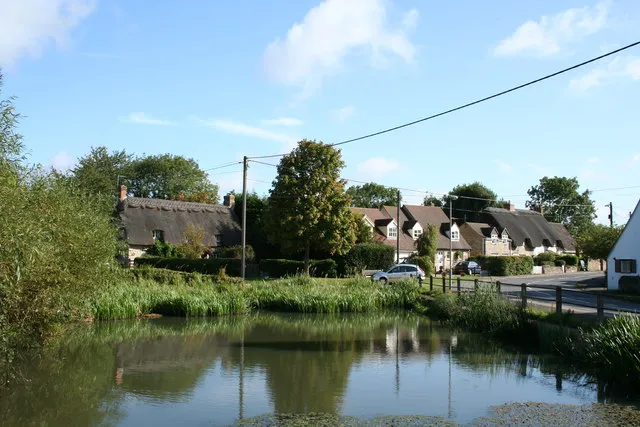
Photo: Roger Sweet , CC BY-SA 2.0, via Wikimedia Commons
Still Waters, Deep Roots: The People Bringing Britain's Village Ponds Back From the Brink
You'd be surprised how many village ponds are hiding in plain sight. Walk into almost any English settlement old enough to have a church, and somewhere beneath the tarmac of a car park, under the compacted earth of a turned green, or choked into invisibility beneath decades of dumped garden waste and encroaching scrub, there's very likely a pond. Or rather, there was.
Britain once had somewhere in the region of a million ponds. That figure has roughly halved since the Second World War. In some counties the losses are even more dramatic — surveys in parts of the Midlands suggest that over seventy percent of historic ponds have vanished in the past century. What went with them wasn't merely a wetland habitat, though the ecological cost of that alone has been severe. What went with them was a particular kind of civic memory.
The Pond as Parish Institution
To understand why this matters, you need to think about what the village pond actually was before modernity rendered it inconvenient. It was infrastructure, first and foremost — the place where livestock were watered, where cart wheels were soaked to tighten their iron rims, where the village fire engine filled its tank. It was also, in the practical way of pre-industrial communities, a social node. People gathered at the pond because the pond was where you had to go.
And because people gathered there, the pond accumulated meaning. Seasonal customs attached themselves to it. In some communities, Plough Monday processions ended at the pond, with mock-drownings of those who'd been slack over Christmas. Midsummer rituals involving water were commonplace across the British Isles, and the local pond was often their focal point. Children were warned away from the edges with stories of water spirits — Jenny Greenteeth in the north, Peg Powler along the Tees — a folk safety system that doubled as mythology.
None of that, of course, showed up on the planning applications that approved their infilling.
Quiet Restorations
In the village of Long Compton in Warwickshire, a group of volunteers spent the better part of two years clearing what had become an impenetrable tangle of bramble and elder from what the oldest residents remembered as the village pond. What they found beneath it was intact — the clay-lined bowl still held its shape, the old stone edging still in place. Last spring, after careful ecological preparation, it held water again for the first time in decades.
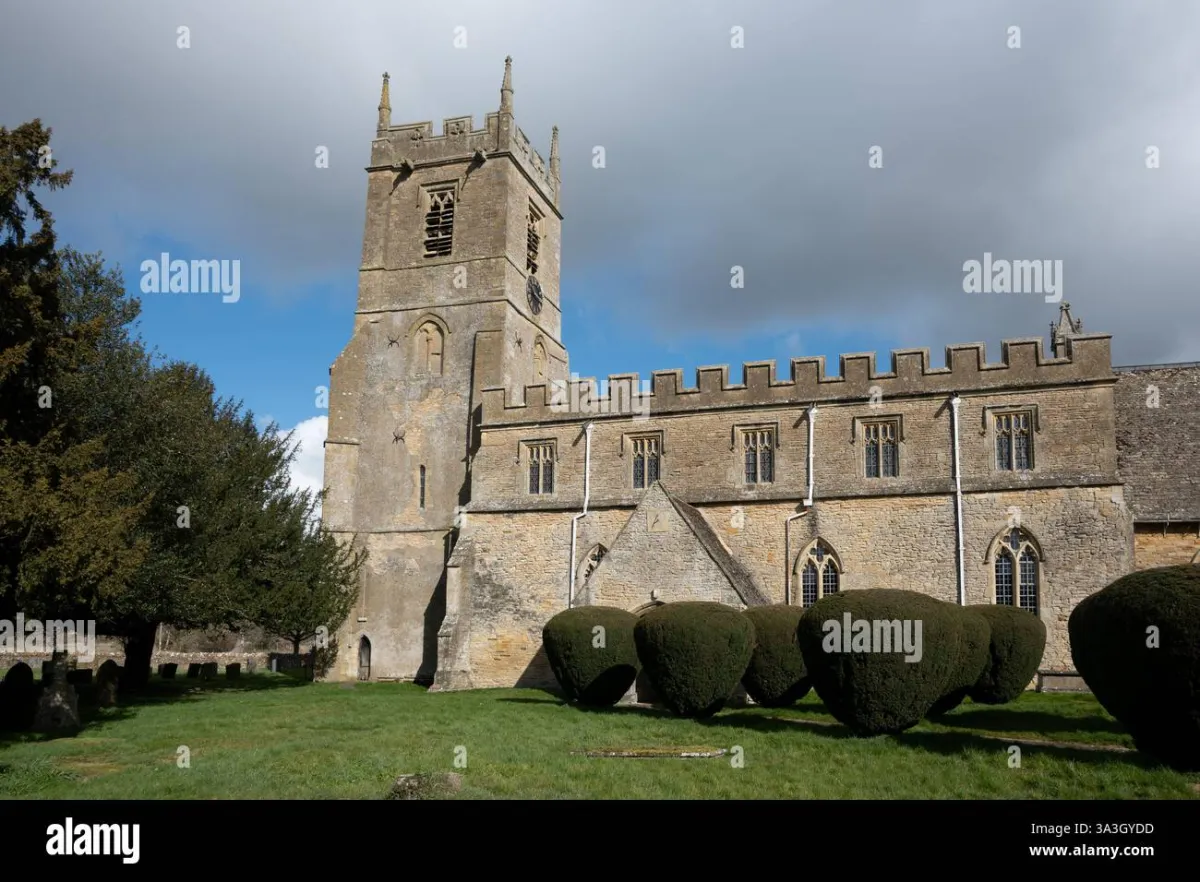 Photo: Long Compton, via c8.alamy.com
"There was a moment when it filled," says parish councillor and project co-ordinator Ruth Whitmore, "and a couple of the older folk came out to look at it, and one of them just said, 'There it is.' Like it had come back from somewhere rather than being built."
That sense of return rather than creation is something you hear repeatedly from people involved in pond restoration work. The Pond Conservation Trust — now merged into the broader work of Freshwater Habitats Trust — documented hundreds of such projects across England and Wales, and the pattern is consistent: communities don't feel they're making something new. They feel they're uncovering something that was already there, waiting.
The ecological benefits are rapid and striking. Within a single season, restored ponds typically attract great crested newts, water voles, damselflies, and a suite of aquatic plants that have struggled to find footholds elsewhere in intensively managed landscapes. But the human dimensions of restoration are equally compelling.
Water as Archive
Folk historians have long understood that water features accumulate cultural sediment in ways that other landscape elements don't. Dr Alison Greaves, who researches vernacular landscape traditions at a university in the East Midlands, argues that ponds functioned as what she calls "community calendars" — their seasonal states marked time in ways that were legible to everyone in the settlement.
"The pond froze, and that meant something. It flooded, and that meant something. The ducks arrived, the newts came out. These weren't just observations — they were part of how communities understood where they were in the year. When the pond goes, that calendar disappears with it."
She points to the survival of pond-related customs in communities where the water itself has persisted — the well-dressing traditions of Derbyshire, which occasionally extend to pond-blessing ceremonies; the Hocktide rituals of Hungerford in Berkshire, which involve a ceremonial perambulation of the town's water features. Where the pond survives, the custom often does too. Where the pond was filled, the custom usually vanished within a generation.
Folk musicians have noticed the connection from the other direction. Singer and song-collector Dave Prentice, who has spent years documenting water-related folk songs across the English Midlands, finds that restored ponds often become spontaneous gathering points for informal music-making. "There's something about water that makes people want to sing near it," he says. "Always has been. You get a pond back in a village, and within a couple of years there's usually some kind of music happening around it. I don't think that's a coincidence."
What Gets Lost in the Draining
Not everyone is sentimental about it. Some parish councils view pond restoration with the weary pragmatism of bodies that already have too many competing demands on too little money. Maintenance costs are real. Liability concerns around open water in public spaces are real. And in some communities, the social memory of the pond has faded sufficiently that its restoration feels like someone else's project — a heritage enthusiast's hobby rather than a community priority.
The most successful restoration projects tend to be the ones that manage to reactivate that sense of communal ownership early. Working bees that bring together different generations. Oral history sessions where older residents share their memories of the pond before it was lost. Events timed to seasonal rhythms — a midsummer gathering, a winter bird count — that begin to rebuild the calendar function the pond once served.
In Pembridge in Herefordshire, the restored market pond now hosts an annual community event that combines ecological monitoring with folk music and storytelling. It started small — a handful of people, a couple of musicians, a local historian with a folder of old photographs. Last year it drew over two hundred people from the village and surrounding parishes.
"People are hungry for this," says one of the event's organisers. "They want somewhere to gather that isn't a car park or a supermarket. They want somewhere that means something. The pond does that. It always did."
The water remembers, even when we've forgotten. And the communities that are choosing to remember alongside it are discovering that restoration, in the deepest sense, is rarely just about the landscape.