Bronze, Bell and the Long Silence: Inside Britain's Last Bell Foundries
Bronze, Bell and the Long Silence: Inside Britain's Last Bell Foundries
The floor of a working bell foundry is not what you'd expect. There's no theatrical glow of open furnaces, no constant roar of industrial heat. Between pours, it's a workshop like any other — metal dust in the air, worn tools hanging on familiar hooks, a kettle that's seen better days. What's different is the weight of things. Not just the physical weight of the bells themselves, some of which will tip the scales at several tonnes, but the accumulated weight of what they represent: centuries of parish life, of Sunday mornings and harvest festivals, of warning and welcome and grief.
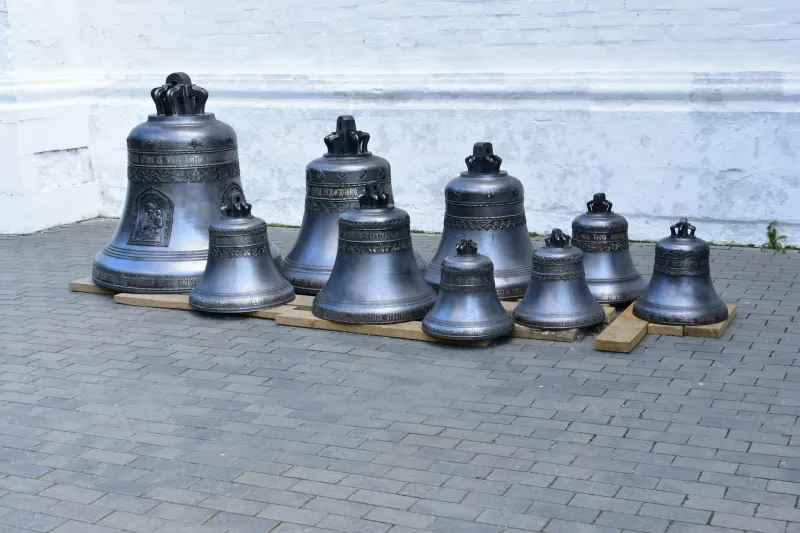
Britain has more medieval church bells in active use than any other country in the world. Some of the bells hanging in English towers today were cast in the fourteenth century. They have rung through plagues, civil wars, coronations, and Blitzes. They are among the most continuously functional artefacts of the medieval period still in everyday use — and the number of people who know how to make, tune, and hang them is frighteningly small.
A Craft Measured in Centuries
Bell founding is one of those trades that looks, from the outside, like it ought to have been automated long ago. The reality is more interesting. While some elements of modern foundry work have been refined by better metallurgy and improved acoustic measurement, the fundamental process — alloying copper and tin, casting into a mould, and then painstakingly tuning the profile until the bell sounds right — is essentially unchanged since the high medieval period.
The alloy itself, known as bell metal, is a specific blend of roughly 77 per cent copper to 23 per cent tin. Get the ratio wrong and the bell will sound dead, or crack, or never quite find its voice. The shape of the bell — its profile, its thickness at the crown and the waist and the sound bow — determines the harmonic relationships between its partials: the hum note, the prime, the tierce, the quint, the nominal. A good bell isn't just in tune with itself; it needs to be in tune with every other bell in the ring it will join. Achieving that through a combination of casting accuracy and post-cast turning on a lathe, guided by ear as much as instrument, takes years of accumulated knowledge to do consistently.
"You can measure everything," says one of the founders at a surviving English foundry, who has been in the trade for over three decades. "And you do measure everything. But there's still a moment when you know by listening whether it's right. That knowledge isn't in a manual. It's in your ear, and it came from someone else's ear before that."
The Parishes That Depend on Them
For the communities whose towers house these bells, the relationship with a foundry is not a commercial transaction so much as a form of custodianship. When a bell cracks — as they occasionally do, even after centuries of service — the parish doesn't simply order a replacement. There are conversations about the history of the ring, about whether the cracked bell can be recast using its own metal, about whether the tuning of the new bell will match the survivors. It's a process that can take years and cost tens of thousands of pounds raised through village fêtes, appeals, and the stubborn generosity of communities that understand, even if they can't always articulate it, that their bells are part of who they are.
In a Suffolk village where a ring of six had been silent for eleven years following a cracked tenor, the restoration recently completed by one of the surviving foundries was marked by a service that filled the church to overflowing. "People came who hadn't been to a church service in decades," the tower captain recalls. "It wasn't really about religion, or not only about that. It was about the sound coming back. The village sounding like itself again."
That phrase — a village sounding like itself — is one that comes up repeatedly in conversations around bell ringing and bell founding. Each ring of bells is specific to its tower. The tuning, the combination of notes, the particular acoustic character of the space: these things accumulate into something that becomes, over generations, inseparable from the identity of a place. When a peal falls permanently silent, something genuinely irreplaceable is lost.
The Ringing Tradition
The craft of the foundry exists in dialogue with the separate but deeply connected tradition of change ringing — the uniquely British practice of ringing bells in mathematically structured sequences. England has around 5,000 rings of bells suitable for change ringing, and the community of ringers who maintain these towers and practise their complicated art every week is one of the country's most enduring examples of voluntary cultural custodianship.
Many ringers will go their whole lives without visiting a foundry, but they are acutely aware of the dependence. The bells they ring were made by someone who understood what they would be used for, and the future of their towers depends on there being someone who still does. The Ringing World — the bellringers' trade journal, published without interruption since 1911 — regularly carries anxious editorials about the dwindling number of foundries and the concentration of specialist knowledge in fewer and fewer hands.
 Photo: The Ringing World, via s3.studylib.net
What Survives, and Why
The honest answer to why the remaining foundries have survived while others closed is a complicated mixture of family commitment, specialist reputation, and the sheer difficulty of entering a market that requires decades of accumulated skill to serve properly. There are no shortcuts into bell founding. You cannot learn it from a course or a YouTube channel. It is transmitted through proximity and practice, which means the survival of the craft depends on people choosing to dedicate professional lives to it at a time when artisanal trades offer uncertain financial reward.
What's striking, visiting a working foundry, is the absence of crisis in the atmosphere. The founders are busy. Orders come in. The apprentices — where they exist — are learning. The bells, when they come off the lathe and are struck for the first time, still ring with that particular quality that has been making the hairs stand up on the backs of human necks for seven hundred years.
Somewhere in a Suffolk tower, six bells are ringing changes on a Tuesday evening. The tenor was recast three years ago. It sounds, the locals will tell you, exactly right.