Common Ground: The Stubborn Fight to Save Britain's Village Greens
Common Ground: The Stubborn Fight to Save Britain's Village Greens
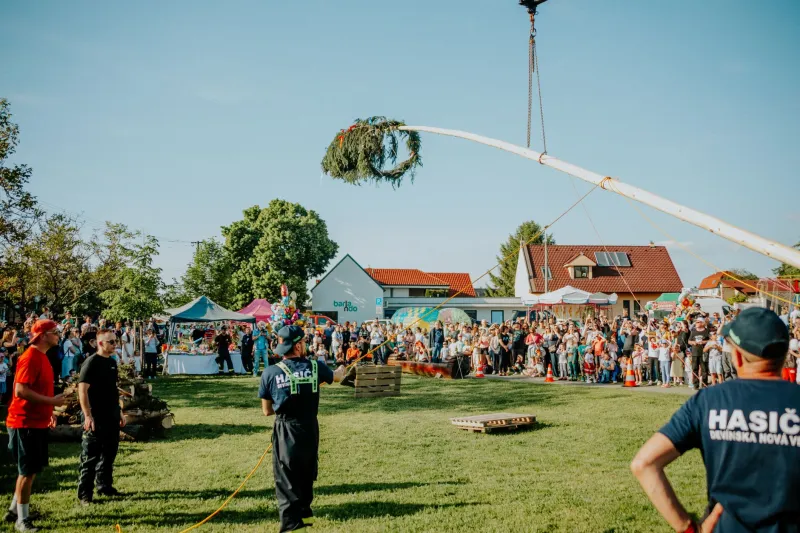
There's a particular quality to the light on an English village green in early May. The grass is still carrying the memory of winter — a bit rough at the edges, slightly uneven underfoot — and yet something about the space itself feels expectant, as though it knows what's coming. The maypole will go up. The bunting will appear. Someone will argue about the positioning of the coconut shy.
But that light, and that expectation, isn't guaranteed anymore. Across England and Wales, village greens are under pressure in ways that would have been unthinkable to the communities that shaped them over hundreds of years. Development schemes, neglect, and the quiet erosion of common rights have placed some of the country's most historically significant open spaces in genuine jeopardy. And yet — and this is the remarkable part — people keep fighting back.
What a Green Actually Is
It's worth being clear about what we're talking about, because "village green" is one of those phrases that gets used loosely. In legal terms, a green registered under the Commons Act 2006 carries specific protections: no building, no fencing, no interference with the public's right to use it for lawful sports and pastimes. That protection sounds robust. In practice, it requires someone to enforce it.
The registration process itself has become a battleground. Communities seeking to protect threatened open spaces can apply to their county council to have land registered as a village green, but the criteria are demanding — you need to demonstrate that local people have used the land freely and informally for at least twenty years. Gathering that evidence requires dedication: witness statements, old photographs, parish records, the memories of elderly residents coaxed into statutory declarations.
In Surrey, a campaign to register a stretch of open land on the edge of a commuter village drew on everything from cricket scorebooks to a school's annual sponsored walk route. The application took three years. It succeeded. The developer who had earmarked the site for a housing scheme moved on. The cricket continues.
The Welsh Marches: Reclaiming What Was Always Yours
In the borderlands between England and Wales, the story takes a slightly different shape. Here, the concept of the common — land held collectively and used by right — runs deep in both legal tradition and cultural memory. Several communities in Herefordshire and Shropshire have spent the past decade working to restore commons that had fallen into effective private control through decades of fencing, grazing agreements gone wrong, and simple inattention.
One parish councillor in a village near Ludlow describes the moment she realised their common had been quietly fenced off on three sides over twenty years. "Nobody had noticed it happening in one go, because it hadn't happened in one go. A post here, a wire there. And then one day you look at it and think — hang on, this isn't ours anymore. Except it is. It always was."
The legal route back was slow and expensive, involving the Commons Registration Authority and, eventually, a planning inspector's hearing. But the community won. On the first weekend after the fences came down, someone organised a picnic. Then a folk session. Then, inevitably, a discussion about whether to bring back the annual fair.
Cricket, Fairs, and the Memory the Grass Holds
This is where the cultural dimension becomes impossible to separate from the legal one. Village greens aren't simply open spaces — they are repositories of repeated collective action. The same games, the same gatherings, the same seasonal rhythms, performed on the same ground across generations. That repetition is precisely what gives them their peculiar emotional weight.
Cricket is perhaps the most potent example. Village cricket on a proper green — not a recreation ground, not a sports field, but the actual common space at the heart of a settlement — carries a symbolic charge that goes well beyond the sport itself. It's an assertion of continuity, a physical argument that the community still exists and still claims its ground. When a green is lost to development or simply falls out of use, the cricket often goes with it. Getting the cricket back, conversely, can be the first step in a wider reclamation.
The same is true of fairs. The right to hold a fair on a registered green is ancient, sometimes traceable to a royal charter, and its exercise keeps the legal protection alive in a very practical way. Several communities have deliberately revived dormant fair traditions precisely to reinforce their claim to the space. It's pragmatic and it's joyful, which is a combination Britain tends to do rather well.
The People Doing the Work
Behind every successful green registration or commons reclamation, there are usually one or two individuals who have become, through sheer stubbornness, amateur experts in a highly technical area of law. They are not, as a rule, solicitors or planners. They are retired teachers, farmers, pub landlords, and enthusiastic amateur historians who have taught themselves the Commons Act, the case law, and the procedural requirements because nobody else was going to.
The Open Spaces Society, founded in 1865 and the oldest conservation body in Britain, provides support and advice to many of these campaigns. Their caseworkers describe a consistent pattern: a community that has been vaguely aware of a threat for years, a triggering moment that galvanises action, and then a period of intense, unglamorous work that requires people to show up repeatedly over months or years.
"It's not romantic," admits one OSS adviser. "It's statements of evidence and planning hearings and a lot of waiting. But when it comes through, and the green is registered, and the first thing the village does is put on a fête — that's something."
The Ground Beneath the Celebration
Maypoles are going up again on greens that haven't seen one in decades. Midsummer bonfires are returning to commons where the fires went cold a generation ago. These aren't simply heritage tourism exercises — they are communities making a deliberate choice to reinhabit their shared spaces, to give them back their original function as the place where collective life is performed and renewed.
The village green, at its best, is a democratic space in the most literal sense: a place where everyone has an equal right to be, regardless of what they own or who they know. In a country where public space is increasingly managed, monetised, and monitored, that quality feels more important, not less. The grass might be a bit rough at the edges. The maypole might lean slightly. The argument about the coconut shy will definitely happen.
None of that matters. What matters is that the ground is still there, and the people on it still know whose it is.