Circle Songs and Borrowed Rooms: Inside the Folk Clubs That Forged Britain's Musical Soul
The Geography of Song
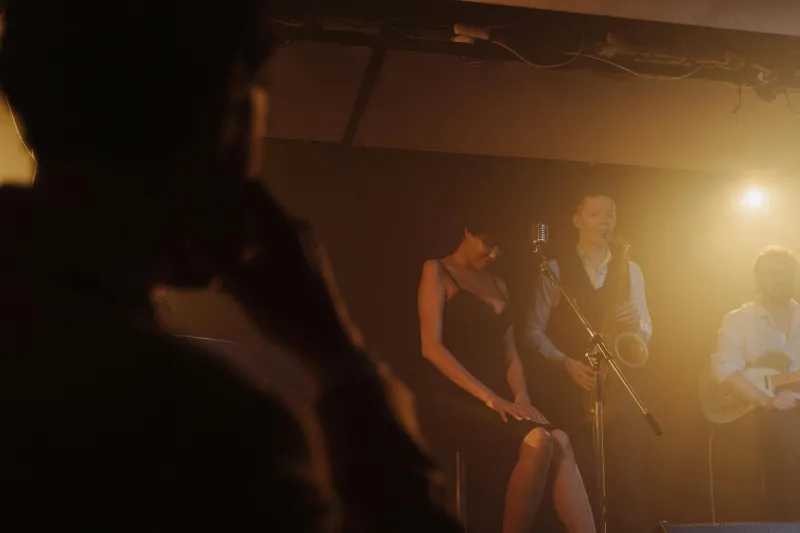
Every Thursday evening at seven-thirty sharp, the upstairs room of The Crown in Islington transforms into something approaching sacred space. Chairs arranged in a rough circle, a single microphone on a stand, a jar marked 'for the singer' on a small table. This is Islington Folk Club, and it has been gathering like this, week after week, for over forty years.
 Photo: Islington Folk Club, via play-lh.googleusercontent.com
"The format hasn't changed since we started," explains club organiser Margaret Thornton, adjusting the ancient PA system with practised efficiency. "Floor singers get ten minutes, featured guests get longer. No talking during performances, no mobile phones, and everyone – everyone – gets listened to with respect."
This modest room, with its faded carpet and borrowed furniture, represents one node in a network that once stretched across Britain like neural pathways, connecting industrial cities to rural villages, established performers to complete beginners, ancient songs to contemporary voices. The folk club movement didn't just preserve British musical traditions – it created the spaces where those traditions could evolve and find new life.
Post-War Voices, Industrial Stages
The modern British folk club emerged in the 1950s from the same cultural ferment that produced CND, kitchen-sink drama, and the New Left. In cities like Manchester, Glasgow, and Birmingham, young people were discovering that their grandparents' songs – work songs, protest songs, ballads of love and loss – spoke to contemporary concerns with startling relevance.
"The folk revival wasn't nostalgia," insists Roy Palmer, folk historian and former organiser of Birmingham's Jug o' Punch club. "It was young people in industrial cities realising that folk songs addressed issues they were facing – economic uncertainty, social change, questions about identity and belonging."
The clubs provided something that commercial venues couldn't: intimate spaces where traditional songs could be performed without amplification, where regional accents were assets rather than obstacles, where the line between performer and audience remained deliberately blurred.
In Manchester's Free Trade Hall basement, the Ballads and Blues club launched careers while preserving Lancashire mill songs. Glasgow's Clutha Folk Club, meeting in a church hall in the Gorbals, became a crucible for Scottish traditional music. These weren't concert venues – they were laboratories for cultural preservation and innovation.
 Photo: Free Trade Hall, via wallpapers.com
The Democracy of the Floor
Perhaps the folk club's most radical feature was its commitment to democratic participation. The 'floor singers' – anyone willing to stand up and perform – were as important as the featured guests. This created a unique cultural ecosystem where established performers shared stages with complete beginners, where ancient ballads sat alongside contemporary compositions, where regional traditions could cross-pollinate.
"I started as a floor singer at Blackfriars Folk Club in Newcastle in 1967," remembers Kathryn Tickell, the renowned Northumbrian piper. "I was fifteen, terrified, but desperate to share the tunes I'd learned from my father. The club gave me my first audience, my first experience of how music can create community."
 Photo: Kathryn Tickell, via admin.inspiration.detail.de
The clubs' egalitarian ethos extended beyond performance opportunities. Many operated as cooperatives, with members sharing organisational duties, venues changing hands when landlords grew tired of weekly folk gatherings, communities of singers following their clubs from pub to pub across decades.
Preserving the Endangered Song
While commercial recording focused on chart potential, folk clubs became repositories for musical traditions that might otherwise have vanished. Singers brought songs learned from grandparents, discovered in regional archives, or collected from the last traditional performers in rural communities.
"The clubs were where we kept the old songs alive," explains Peta Webb, who has been running folk clubs in the Southwest for over thirty years. "Not as museum pieces, but as living traditions. Singers would learn a ballad from a recording or a book, but then they'd adapt it, add verses, change the melody slightly. The songs stayed alive because they kept changing."
This process of preservation through performance created a unique form of cultural transmission. Songs that scholars had archived as historical curiosities found new life in folk club circles, often emerging with subtle changes that reflected contemporary concerns while maintaining their essential character.
The Circuit That Built Careers
By the 1960s and 70s, a network of folk clubs stretched across Britain, creating an informal circuit that allowed performers to develop their craft while building audiences. Musicians could spend months touring from club to club, honing their performances in intimate settings before larger opportunities emerged.
"The folk club circuit was like a musical apprenticeship system," suggests Dave Arthur, one half of the influential duo Dave and Toni Arthur. "You learned your trade in front of audiences who really listened, who knew the traditions you were drawing on, who could tell whether you understood what you were singing about."
Sandy Denny cut her teeth in London folk clubs before joining Fairport Convention. Ewan MacColl used club residencies to develop the theatrical song performances that would influence generations of folk singers. The clubs provided not just venues but communities of practice where musical and political ideas could develop alongside each other.
Surviving the Digital Age
Today, perhaps fifty traditional folk clubs survive across Britain, down from hundreds at the movement's peak. Those that remain have had to adapt to changing social patterns while maintaining their essential character. The Islington Folk Club now has a website and takes card payments, but the circle of chairs and the ten-minute floor singer rule remain unchanged.
"We've had to evolve," admits Margaret Thornton. "Younger people don't necessarily want to sit in silence for three hours listening to unaccompanied ballads. But the core values – listening with respect, sharing the stage, keeping traditional songs alive – those haven't changed."
Some clubs have embraced broader definitions of folk music, welcoming singer-songwriters, world music, and contemporary acoustic performers. Others maintain strict traditional focus, seeing themselves as guardians of specific regional or national traditions.
The Intimacy That Algorithms Can't Replicate
In an age of streaming algorithms and festival line-ups, the surviving folk clubs offer something increasingly rare: genuine musical community. The intimacy of the circle, the democracy of the floor singer system, the unpredictability of who might appear and what they might perform – these create experiences that digital platforms cannot replicate.
"There's magic in not knowing what you're going to hear," reflects Pete Coe, a veteran of the Yorkshire folk scene. "In a streaming world, we're fed music based on what we've already liked. In a folk club, you might discover something completely unexpected – a song you've never heard, a performer you'd never encounter otherwise."
The Future of the Circle
As Britain's cultural landscape continues to fragment and homogenise, the surviving folk clubs serve as vital nodes of local musical identity. They remain spaces where regional traditions can be preserved and transmitted, where new songs can be tested in front of knowledgeable audiences, where the ancient human practice of gathering to share music continues.
"The folk club isn't just about the past," insists Roy Palmer. "It's about maintaining spaces where music can be human-scale, where everyone can participate, where tradition and innovation can coexist. As long as people need that kind of community, there will be folk clubs."
Every Thursday evening, the chairs are still arranged in their circle at The Crown. The microphone stands ready, the jar waits for contributions, and voices prepare to fill the borrowed room with songs both ancient and immediate. In an uncertain world, the folk club endures – modest, democratic, and utterly essential to the musical soul of these islands.