Curds, Culture and the Quiet Rebellion: Britain's Farmhouse Cheese Renaissance
The Language of Landscape in Every Wheel
In a converted barn on the edge of the Yorkshire Dales, Mary Quicke slides her knife through a wheel of aged Wensleydale, the blade releasing a sharp, grassy perfume that speaks of limestone pastures and morning mist. This isn't the crumbly, mild cheese that Wallace and Gromit made famous — this is something older, wilder, more honest.
"People think cheese is just cheese," she says, wrapping a wedge in muslin. "But every wheel tells the story of where it comes from. The grass the cows ate, the minerals in the water, even the weather on the day we made it."
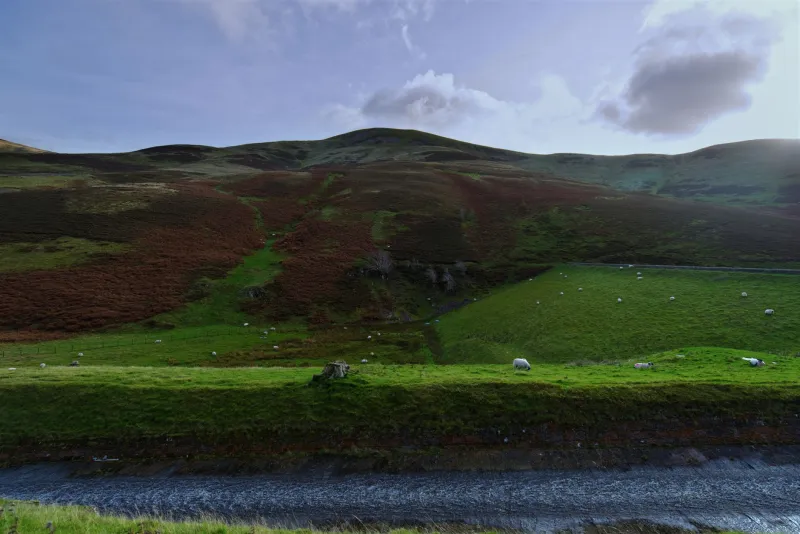
Quicke is part of a quiet revolution sweeping through Britain's dairy landscape. From the Welsh mountains to the Somerset levels, a new generation of cheesemakers is rejecting the homogenised world of industrial production in favour of something more radical: cheese that tastes of somewhere.
Ancient Moulds, Modern Missions
The movement isn't just about flavour — though the difference between farmhouse and factory is profound. It's about reclaiming knowledge that was nearly lost, preserving breeds of cattle that supermarkets deemed unprofitable, and maintaining connections between food and place that industrial agriculture has severed.
At Hafod Creamery in west Wales, Sam Holden tends to his herd of Ayrshire cows with the devotion of a shepherd. The breed produces less milk than modern Holsteins, but their output is richer, more complex, better suited to the traditional cheddar-making techniques Holden learned from his grandfather.
 Photo: Hafod Creamery, via www.hoodamath.com
"We could triple our production if we switched breeds and modernised the process," he explains, watching his cattle graze the windswept hills above the Teifi valley. "But then we'd be making something different entirely. We'd be making product, not culture."
The distinction matters. Traditional cheesemaking is a seasonal art, responding to the changing composition of milk as cows move from winter hay to spring grass to summer wildflowers. Industrial production flattens these variations, standardising flavour and texture year-round.
Raw Milk, Real Risk, Radical Politics
Many of Britain's most distinctive cheeses depend on unpasteurised milk — a choice that puts makers at odds with food safety regulations designed for large-scale production. The decision to work with raw milk isn't taken lightly; it requires intimate knowledge of animal health, impeccable hygiene, and constant vigilance.
"It's not about being reckless," insists Rachel Yarrow, whose Cornish Yarg has become a symbol of the county's culinary renaissance. "It's about understanding that pasteurisation doesn't just kill harmful bacteria — it kills the beneficial ones too. The ones that create flavour, that connect the cheese to the land."
The debate over raw milk reveals deeper tensions about risk, regulation, and who gets to decide what constitutes acceptable food. For traditional cheesemakers, pasteurisation represents a kind of cultural homogenisation, erasing the subtle differences that make regional varieties distinct.
Caves, Cellars and the Alchemy of Time
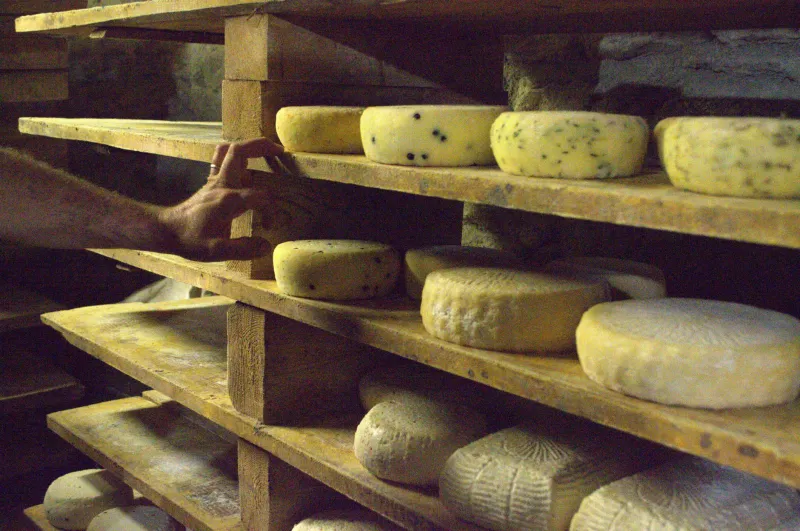
The revival of traditional cheesemaking has also sparked renewed interest in the environments where cheese matures. Ancient caves in Cheddar, converted railway tunnels in Bath, purpose-built aging rooms that mimic the conditions of medieval monasteries — each space imparts its own character to the developing cheese.
At Westcombe Dairy in Somerset, Tom Calver has spent years perfecting the conditions in his aging rooms, adjusting humidity and temperature to encourage the growth of specific moulds and bacteria. His traditional cheddar develops a natural rind that protects the interior while allowing it to breathe and evolve.
 Photo: Westcombe Dairy, via i.pinimg.com
"Cheese is a living thing," he explains, running his hands along wheels that have been aging for eighteen months. "It's constantly changing, developing complexity. You can't rush it, you can't force it. You just have to create the right conditions and trust the process."
Community, Identity and the Politics of Place
Perhaps most significantly, the farmhouse cheese revival is reconnecting communities with their agricultural heritage. Many of today's artisan makers are not traditional farming families but newcomers drawn by the combination of craft, culture, and connection to place.
The Selles family moved to the Scottish borders specifically to make cheese, learning traditional techniques from local farmers before developing their own distinctive varieties. Their success has helped revive interest in the region's dairy heritage while creating employment and attracting food tourists.
"We're not trying to recreate the past exactly as it was," explains Charlotte Selles. "We're taking the best of traditional knowledge and adapting it for contemporary life. We're creating new traditions while honouring old ones."
The Future in Every Bite
As Brexit reshapes Britain's relationship with European food regulations and climate change forces adaptation in farming practices, artisan cheesemaking offers a model of resilience and authenticity. These makers prove that small-scale, place-based production can compete with industrial alternatives — not on price or convenience, but on something more valuable: meaning.
Every wheel of farmhouse cheese represents a choice — to value craft over efficiency, terroir over standardisation, community over commodity. In an age of global supply chains and anonymous products, these makers are fermenting something precious: a taste of home.