The Drowned Library: What Britain's Bogs Have Been Quietly Keeping for Us
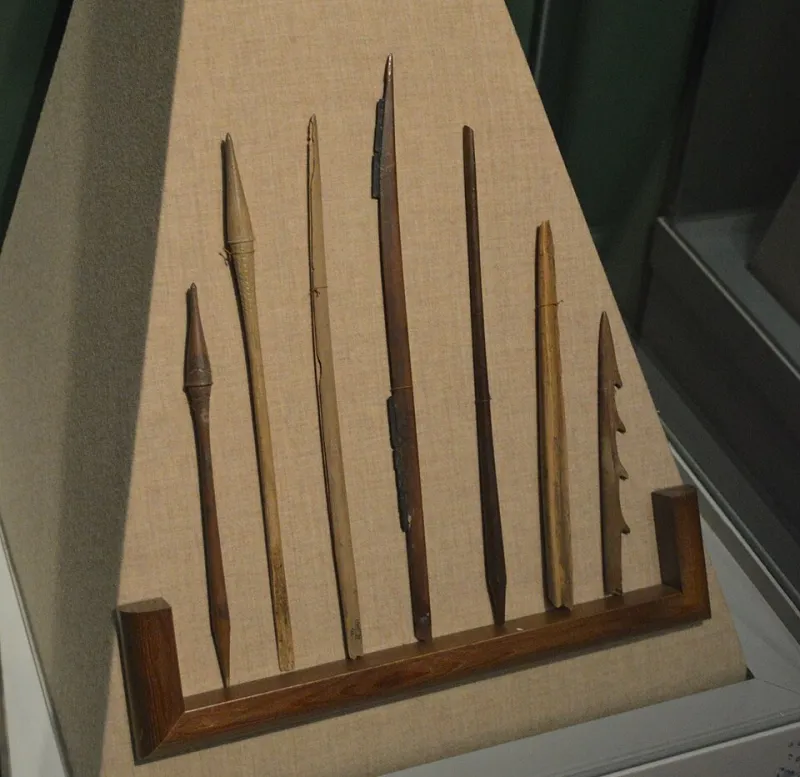
Photo: Лапоть, CC0, via Wikimedia Commons
The Drowned Library: What Britain's Bogs Have Been Quietly Keeping for Us
The block of butter is roughly the size of a house brick. It's pale, slightly waxy, and — if you could somehow get past the thousands of years it has spent in an Irish bog — still faintly, disconcertingly fragrant. It sits in a museum case in Dublin, but its cousins have turned up in Scottish peat banks, in Welsh upland mosses, in the soft dark margins of English fens. Bog butter is one of the stranger recurring discoveries of British and Irish archaeology: food, deliberately buried, preserved by the peat's extraordinary chemistry, waiting.
Waiting, as it turns out, for us to start asking the right questions.
What Peat Actually Does
Peat is an unusual preservative. Its acidity, combined with cold temperatures and the absence of oxygen in waterlogged conditions, creates an environment that arrests decomposition almost entirely. Organic materials that would vanish within years in normal soil can survive for millennia in peat — wood, leather, textile, bone, and flesh included.
This is why Britain's bogs have yielded not only butter but bodies. The so-called bog bodies — Lindow Man, discovered in Cheshire in 1984, being the most famous English example — are not simply archaeological curiosities. They are people, preserved in extraordinary detail, their skin and hair and stomach contents intact, speaking to us across thousands of years about diet, ritual, violence, and the texture of lives that left almost no other trace.
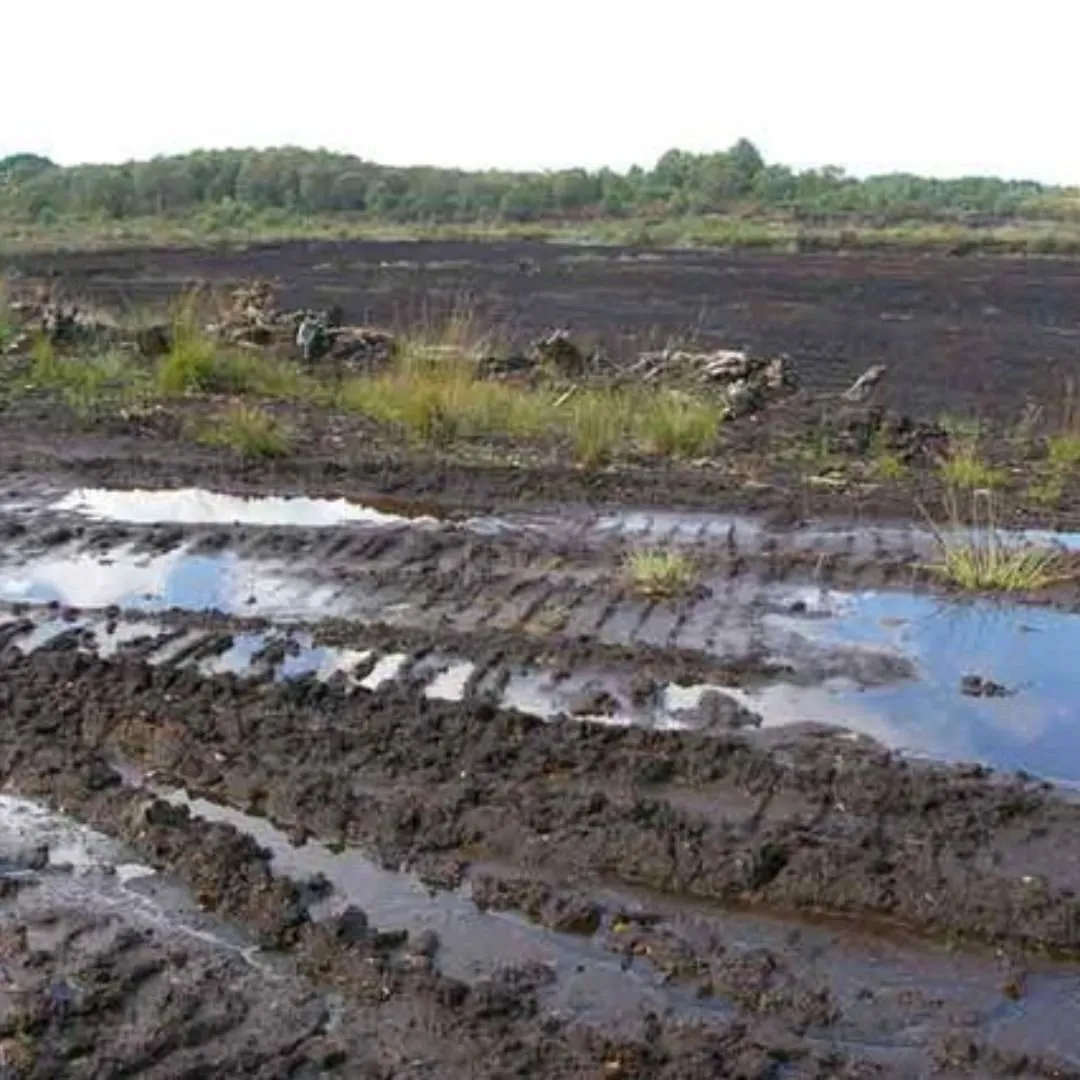 Photo: Lindow Man, via images.squarespace-cdn.com
But the bogs have also preserved something less dramatic and, in some ways, more revealing: the ordinary material culture of communities that had no writing, no stone buildings, no lasting monuments. The things they buried, lost, or deliberately offered to the water tell us how they ate, how they travelled, and — increasingly, thanks to a remarkable set of recent discoveries — how they made music.
Sounds From the Mud
In 2004, a bronze horn was recovered from a bog in County Down. It was over 2,000 years old. It was also, after careful cleaning and analysis, playable — or at least reproducible. Experimental archaeologists and instrument makers worked together to understand its acoustics, and the sounds they produced were unlike anything in the modern musical repertoire: deep, resonant, slightly unpredictable, with a quality that several musicians described as feeling ancient in a way that goes beyond metaphor.
Britain's bogs have produced similar finds. Wooden pipes, fragments of what appear to be frame drums, and the remains of stringed instruments have all emerged from peatland contexts across Scotland and northern England. None of these objects come with instructions. None are accompanied by notation or description. What they offer instead is a physical starting point — dimensions, materials, wear patterns — from which craftspeople and musicians can begin the speculative, painstaking work of reconstruction.
Anna Ferris, a Northumberland-based instrument maker who works primarily in traditional materials, has spent several years engaging with bog-find replicas. 'The challenge isn't just making an object that looks right,' she explains. 'It's trying to understand how it was played, what it was played with, what it was played alongside. You're working with enormous gaps. But the gaps are informative too. They tell you something about what wasn't preserved — and why.'
The Trackways Beneath Our Feet
Not everything in the bogs is small. The Sweet Track, discovered in the Somerset Levels in the 1970s, is a Neolithic timber walkway stretching nearly two kilometres across what was once a vast wetland. Dated to around 3,800 BCE, it is one of the oldest engineered roads in the world. It was built with considerable skill — ash, oak and lime planks laid on a frame of crossed poles — and it connected two areas of higher ground across a landscape that would otherwise have been impassable for much of the year.
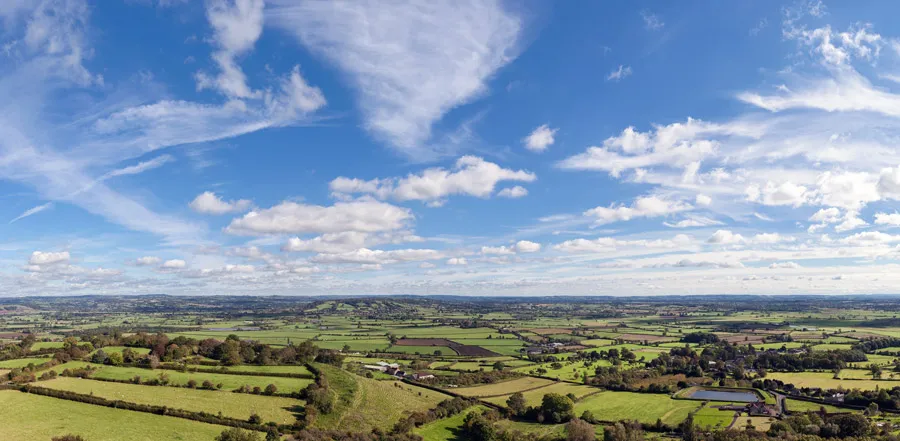 Photo: Somerset Levels, via www.wildlifeworldwide.com
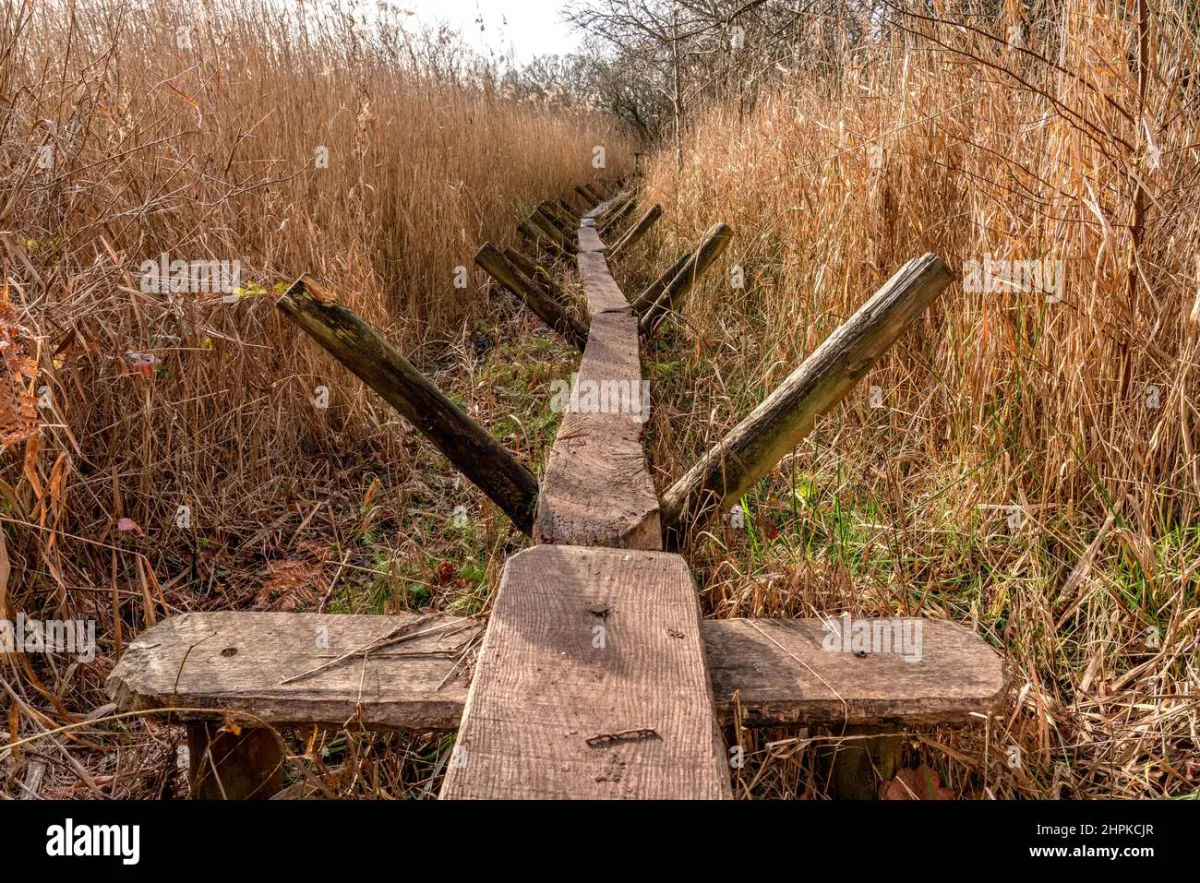 Photo: The Sweet Track, via www.alamy.com
The Sweet Track is not unique. The Somerset Levels alone have yielded dozens of prehistoric trackways, representing centuries of communal effort to maintain routes through difficult terrain. These are not the works of a disorganised, hand-to-mouth society. They are evidence of planning, coordination, and a relationship with the wetland landscape that was sophisticated and sustained.
For archaeologist Dr Callum Bates, who has worked on trackway sites in both Somerset and the Scottish Highlands, this is the point that tends to get lost in popular accounts of prehistoric Britain. 'We talk about bogs as marginal land,' he says. 'But for the people who built these trackways, the wetland was central. It was a resource, a route, a place of ritual significance. The bogs weren't the edge of the world. They were part of how the world worked.'
Eating From the Archive
The bog butter question has attracted its own dedicated community of researchers and, more recently, adventurous food historians. Analysis of recovered samples has revealed that the butter was sometimes mixed with plant material — watercress, wild garlic, other herbs — before burial. Whether this was for preservation, flavour, or ritual purpose remains contested, but it has prompted a broader investigation into what people in these islands were actually eating before the Romans arrived with their olive oil and garum.
Some traditional food practitioners have begun experimenting with recipes derived from bog finds. It's a necessarily speculative enterprise — you cannot simply replicate a 3,000-year-old recipe from a lump of preserved fat — but the experiments have produced results that are, by several accounts, genuinely interesting. Herbs that grow on or near peatland, combined with dairy products prepared using traditional methods, create flavours that are distinctive and surprisingly complex.
The point is not to recreate the past with impossible accuracy. It's to use the physical evidence as a starting point for understanding — and to acknowledge that the people who buried that butter were not simple. They had preferences. They had techniques. They had, in all likelihood, opinions about what tasted good.
The Living Bog
There is an urgency to all of this that goes beyond academic interest. Britain's peatlands are under pressure — from drainage, from agriculture, from extraction, and from the long-term effects of a changing climate. As peat dries out, its preservative properties deteriorate. Objects that have survived for millennia can be lost within years once the conditions that protected them are disturbed.
Conservation bodies are working to restore degraded peatlands across the country, and the ecological arguments for doing so are well established — peat stores enormous quantities of carbon, supports distinctive and fragile habitats, and plays a significant role in water management. But there is a cultural argument too, and it deserves to be made plainly: the bogs are an archive. They are holding, in their cold dark water, pieces of who we were. Once they're gone, those pieces go with them.
Anna Ferris puts it simply, back in her workshop in Northumberland, where a half-finished replica of a bog-find pipe sits on the bench beside her. 'Everything we know about these people, we've had to dig out of the ground. The bogs have been doing the preserving for us, without being asked. The least we can do is return the favour.'