Eight on the Rope: The Tug-of-War Crews Holding On to Britain's Agricultural Soul
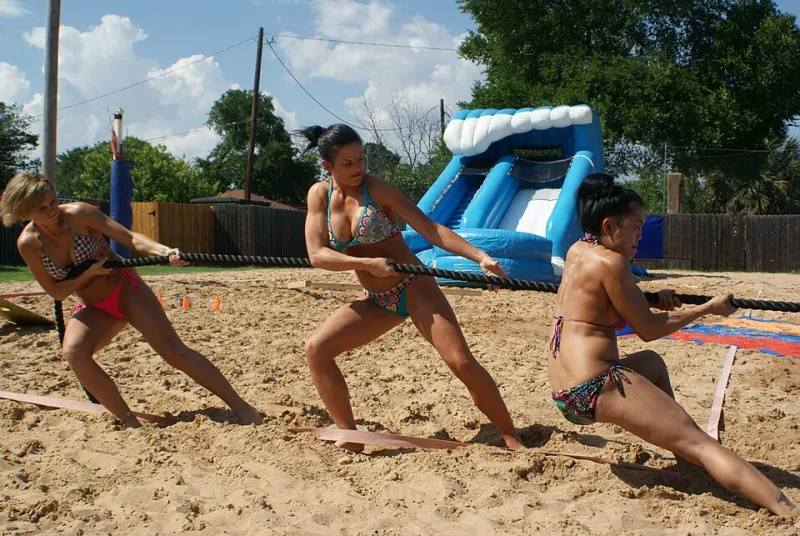
Photo: MarkScottAustinTX, CC BY-SA 2.0, via Wikimedia Commons
Eight on the Rope: The Tug-of-War Crews Holding On to Britain's Agricultural Soul
Let's be clear about what competitive tug-of-war actually involves. Eight people. A rope. A patch of ground that is almost always either wet, rutted, or both. The objective is to drag the opposing team across a centre line through a combination of coordinated strength, technique, and a collective refusal to give an inch. It lasts, at the elite level, somewhere between thirty seconds and several agonising minutes. It leaves you breathless, muddy, and sometimes horizontal. And it is, in ways that take a little while to fully appreciate, one of the most interesting expressions of rural British sporting culture still actively practised.
Tug-of-war has been a feature of British agricultural shows, village fêtes, and Highland Games for as long as anyone can reliably document. It appeared in the Olympic Games between 1900 and 1920. It was, for much of the twentieth century, a standard feature of school sports days and regimental competitions. And then, quietly, it began to disappear — from school curricula, from county sports programmes, from the cultural foreground. What remains is a community of competitors who are, by and large, getting on with it anyway.
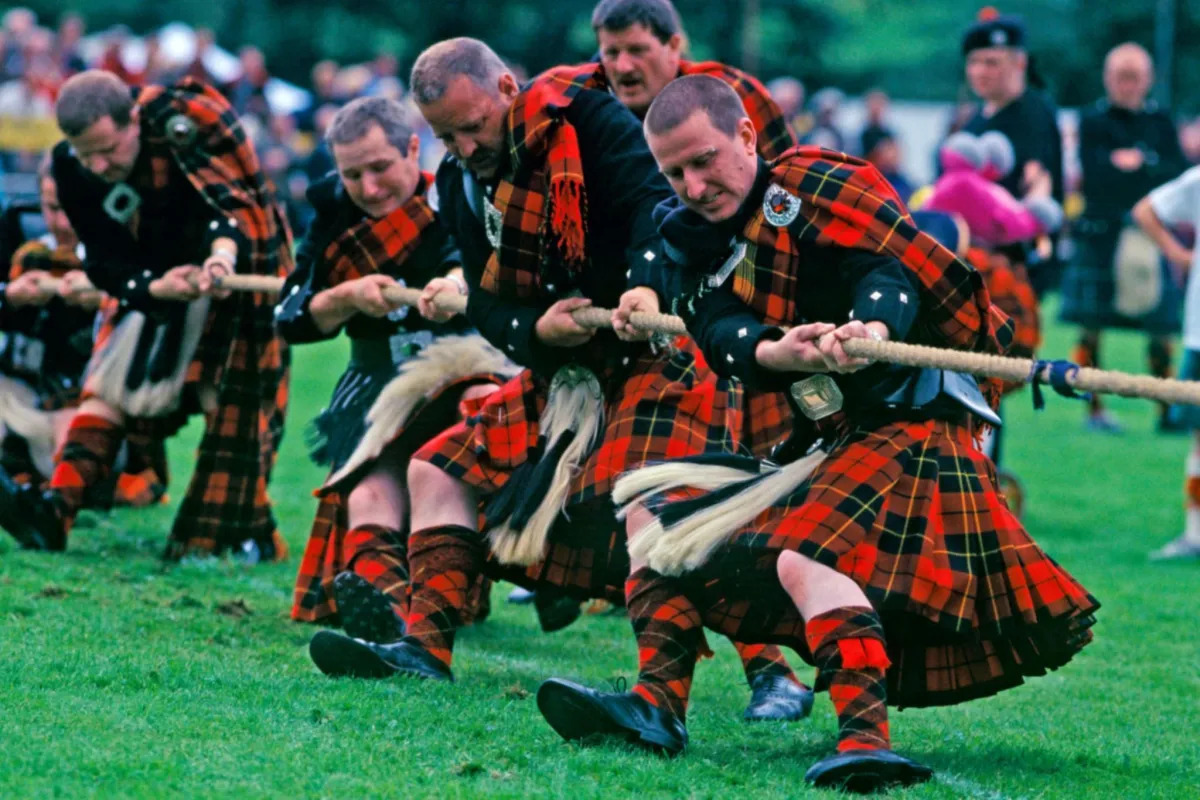 Photo: Highland Games, via i.pinimg.com
Where the Tradition Lives
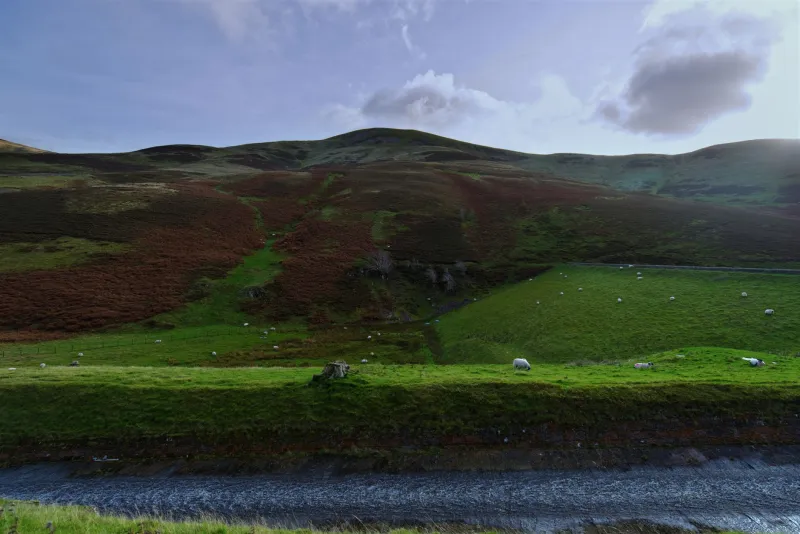
In the Borders region of Scotland, the tug-of-war competitions attached to the annual agricultural shows have a continuity that stretches back well over a century. Teams from farming families compete against teams from neighbouring farms, rivalries running across generations in the way that only genuinely rural sporting competitions can manage. The names on the entry forms change — sons replacing fathers, nephews replacing uncles — but the teams themselves persist, their identities tied to specific farms and valleys in ways that make the competition about something considerably larger than sport.
"My grandfather pulled for this team," says a competitor from a Roxburghshire farm team, coiling a rope in a field behind an agricultural show marquee. "My dad pulled for it. I pull for it. There's nobody telling us we have to. It's just what we do."
In Wales, the sport has maintained particular strength in the agricultural communities of mid-Wales and the Marches, where teams train seriously through the winter months and compete at a level that would surprise anyone who thinks of tug-of-war as a casual garden party game. Welsh teams have represented Britain in international competition, and the technical sophistication of the best teams — the footwork, the body position, the coordinated response to the anchor's commands — is genuinely striking to watch.
More Than Muscle
One of the persistent misconceptions about competitive tug-of-war is that it's simply a test of brute strength — that the bigger team wins. In reality, the sport rewards coordination and technique over raw power in ways that take years to properly develop. The ability of eight people to move as a single unit, to absorb a surge from the opposing team without breaking position, to time a collective pull with precision: these are skills that must be practised, drilled, and refined.
For farming communities, this collective dimension has always resonated with something deeper than sport. Agricultural life has historically depended on cooperative labour in ways that urban life simply doesn't — harvests, sheep gathers, the building of dry stone walls. Tug-of-war, in this context, is not an abstraction of those values but a direct expression of them: eight people, each trusting the others completely, working as a single organism.
"You learn very quickly who you can rely on," says the coach of a rural Shropshire team that has competed at county level for over thirty years. "And that's not a bad thing to know about your neighbours."
The Institutional Pressure
The Tug of War Association, the sport's governing body in England, will tell you with measured diplomacy that the landscape is challenging. County associations that once organised regular competitive leagues have folded or merged. The removal of tug-of-war from school sports programmes — partly driven by health and safety concerns that practitioners find baffling — has cut off the natural pipeline of young participants. The sport receives no lottery funding to speak of, and its profile in mainstream sporting media is essentially nonexistent.
This institutional thinning is real, and its effects are felt at the grassroots level. Teams that once competed in a thriving local circuit now sometimes travel considerable distances to find competitive fixtures. Agricultural shows that dropped tug-of-war from their programmes during the lean years of the 1990s and 2000s have not, for the most part, restored it. The sport is contracting at the organisational level even as individual teams maintain their commitment.
What's interesting is that this contraction has not, in many rural areas, produced the sense of crisis you might expect. Teams that have been pulling together for decades have a certain equanimity about their situation — a pragmatism that probably comes with the territory when your sporting tradition is rooted in farming communities that have always known how to carry on regardless.
Signs of Something Shifting
There are, tentatively, some reasons for optimism. The revival of agricultural shows as community cultural events — a trend accelerating since the pandemic — has brought tug-of-war back onto the programme at several venues that had dropped it. Social media, unlikely as it might seem, has given some teams a visibility they'd never previously had: videos of competition pulls, particularly from Highland Games, have found audiences well beyond the sport's existing community.
In Yorkshire, a newly formed team drawing members from a community of young farmers in the Dales began competing last year after watching footage of a Scottish competition online. They are, by their own cheerful admission, not very good yet. But they're training twice a week and have already entered their first county fixture. Their anchor — a twenty-three-year-old who farms sheep with his parents above Wharfedale — seems unconcerned about the sport's broader institutional difficulties.
"We just wanted something to do together that meant something," he says. "Turns out pulling a rope with your mates is pretty hard to beat."
Eight on the rope. Boots in the mud. The centre line holding. It's not complicated, and perhaps that's precisely the point.