Fire, Lime and Living Memory: The Quiet Revolution Awakening Britain's Ancient Kilns
When Stone Breathes Fire
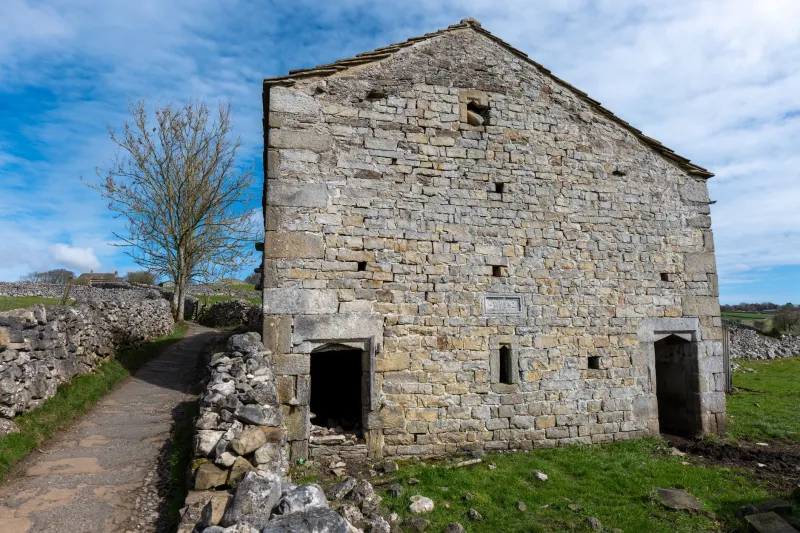
The first thing that hits you is the heat. Standing beside the newly fired lime kiln at Catrigg Force in the Yorkshire Dales, the temperature radiates from the ancient stone structure like a living thing. Inside, limestone and coal burn at over 1,000 degrees Celsius, transforming rock into quicklime just as it has for nearly three centuries. But this isn't industrial archaeology — this is resurrection.
 Photo: Catrigg Force, via img.freepik.com
"When we lit this kiln for the first time in forty years, half the village turned out," says Margaret Thornton, whose grandfather worked these very stones until the 1960s. "You could see it in people's faces — suddenly they remembered what this place used to sound like, smell like, feel like when it was alive."
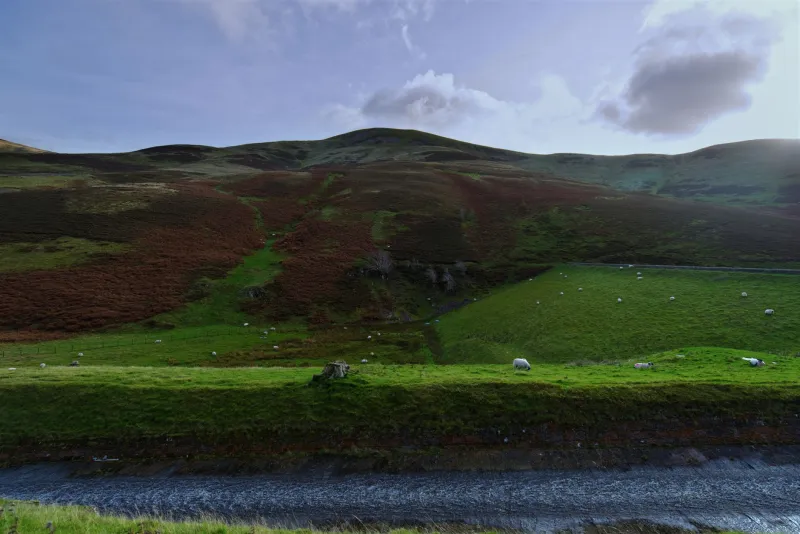
Across Britain, from the limestone country of the Peak District to the chalk downs of Sussex, a quiet revolution is taking place. Derelict lime kilns that have stood cold and silent for decades are being coaxed back to working life by communities determined to understand what their ancestors knew by heart.
 Photo: Peak District, via media.radaronline.com
The Architecture of Industry
Britain's lime kilns are monuments to necessity. Built into hillsides wherever limestone and coal could meet, these towering stone cylinders once powered the nation's agriculture and construction. Lime mortar built our cathedrals. Lime plaster lined our cottages. Lime spread on fields sweetened sour soil and made marginal land fertile.
"Every kiln tells the story of its landscape," explains Dr James Whitfield, who has spent fifteen years documenting working kilns across northern England. "The stone came from here, the coal from there, the finished lime went to specific farms and building sites. They're like three-dimensional maps of how communities actually worked."
The kilns themselves are architectural marvels — thick-walled cylinders that could withstand enormous heat, with carefully engineered draw holes for removing finished lime and charging points for loading fresh stone. Many were built into natural hillsides, creating the distinctive 'pot kiln' profile that still punctuates landscapes from Cumbria to Cornwall.
But by the 1960s, industrial lime production had moved to massive modern plants. The village kilns fell silent, their fires cold, their purpose seemingly obsolete.
Learning the Language of Fire
At Hoffmann Kiln in Langcliffe, a team of volunteers has spent three years learning to read the subtle signs that separate successful lime burning from expensive disaster. The knowledge seems almost mystical — how to judge the colour of flames in daylight, when to add fresh coal, how to maintain the delicate balance between heat and airflow that transforms limestone into quicklime.
 Photo: Hoffmann Kiln, via assets.mycast.io
"My great-uncle could tell you everything about a burn just by looking at the smoke," says David Moorhouse, whose family worked kilns in this valley for four generations. "Blue smoke meant one thing, yellow another. The sound the stones made when you poked them with an iron bar — that told you if they were properly calcined or if you needed more heat."
This intimate knowledge was passed down through families and work gangs, encoded in dialect words and local customs that made little sense outside their specific context. When the kilns closed, that knowledge seemed to vanish overnight.
But it didn't disappear entirely. Working with elderly former lime burners, the new generation of kiln keepers is slowly reconstructing both the technical craft and the cultural memory that surrounded it. They're discovering that lime burning was never just about chemistry — it was about community rhythm, seasonal work patterns, and the deep satisfaction of transforming raw stone into something useful.
More Than Industrial Heritage
For the communities embracing kiln revival, this isn't simply about preserving industrial heritage. It's about reconnecting with a way of life that valued local materials, traditional skills, and the kind of patient craft knowledge that can't be googled.
"When we fire the kiln, it brings people together in a way that's almost ceremonial," observes Sarah Mitchell, who helps coordinate the revival project at Ingleborough. "The children come to watch the loading, the older residents share stories about when their fathers worked here, and everyone stays to see the first flames."
The lime itself finds new purpose too. Heritage buildings across Britain desperately need traditional lime mortar for authentic restoration. Organic farmers are rediscovering lime's role in sustainable agriculture. And the slow, meditative process of lime burning offers something increasingly rare — work that connects hand and mind, tradition and innovation.
The Future of Fire
As climate change focuses attention on sustainable building materials and local production, these ancient kilns may represent more than nostalgia. Lime production using local stone and traditional methods has a far smaller carbon footprint than industrial alternatives. The buildings constructed with traditional lime mortars last for centuries rather than decades.
"We're not trying to turn back the clock," insists Tom Bradley, who leads the Malham Kiln Project. "But we are trying to remember what worked. These kilns fed communities for hundreds of years. That's not something you throw away lightly."
On a crisp autumn evening in the Dales, as the first stars appear above Catrigg Force, the kiln glows like a beacon. Tomorrow, when the fire has done its work and the stones have cooled, there will be fresh quicklime — white as snow, caustic as memory, and alive with the same chemical potential that built Britain's villages, stone by careful stone.
The kilns are burning again. And with them, something essential about who we are and where we come from flickers back to life.