Floating Galleries: The Canal Artists Painting Britain's Moving Heritage
Roses, Castles, and Floating Lives
In a workshop overlooking the Coventry Canal, Jenny Morrison dips her brush into cadmium red and begins the delicate work of bringing a rose to life. Not just any rose — this is a canal rose, bold and stylised, painted with techniques passed down through generations of boat families who decorated their floating homes with an art form found nowhere else in Britain.
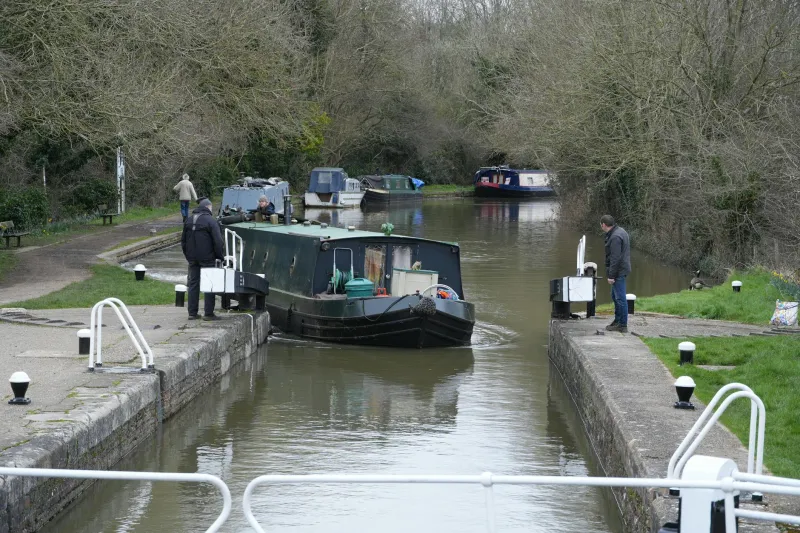
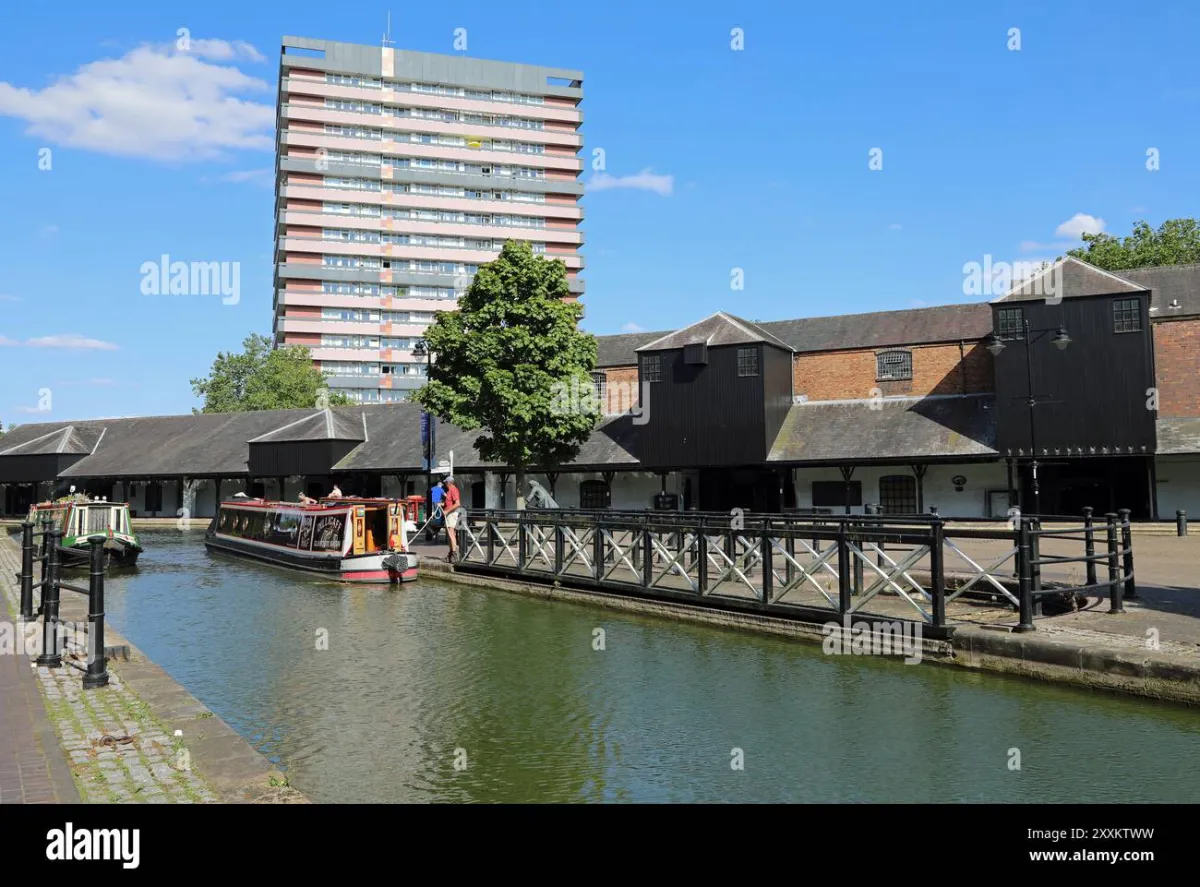 Photo: Coventry Canal, via c8.alamy.com
The narrowboat stern she's working on belongs to the Hazel, a 1930s working boat that once carried coal from the Midlands to London. Today, it's being lovingly restored by its new owners, but they've come to Morrison for something money can't buy in any art shop: authentic traditional decoration that connects their boat to the great waterway culture that once made Britain's canals a highway of commerce and community.
"People see the bright colours and think it's just pretty decoration," Morrison explains, adding delicate highlights to rose petals with practised precision. "But every element means something. The roses represent love of home, the castles represent security and aspiration. This isn't folk art — it's the visual language of a whole way of life."
The Floating Folk
To understand canal art, you need to understand the people who created it. From the late 18th century onwards, entire families lived aboard narrowboats, carrying cargo the length and breadth of Britain's waterway network. With only seven feet of width and perhaps sixty feet of length to call home, every inch of space was precious, every surface an opportunity to create beauty in the midst of hard, often dangerous work.
The boat families — known as "Number Ones" when they owned their boats, or "Butty People" when they worked for carrying companies — developed a culture entirely their own. Children were born on the water, learned to walk on gently rocking decks, and grew up speaking a dialect peppered with words from the many communities they encountered along the towpaths.
Their art reflected this nomadic lifestyle: portable, practical, and unmistakably theirs. Roses and castles adorned not just the boats themselves but every piece of equipment — water cans, coal buckets, cabin stools, even the brass horse brasses that decorated the working animals. It was a way of claiming beauty and identity in a world that often saw the boat people as outsiders.
Masters of the Brush
Today's canal artists work in a tradition that nearly died with the commercial waterways. When motor transport killed the carrying trade in the 1960s, it seemed the distinctive roses-and-castles style would disappear with the working boats. But a combination of heritage enthusiasm and genuine artistic passion has kept the tradition alive, evolved, and surprisingly vibrant.
Tony Brooks has been painting boats for forty-three years, learning his craft from the old-timers who worked the cut in its final commercial decades. His workshop in Braunston — the heart of the canal network — is part museum, part working studio, filled with the tools and materials that define traditional boat decoration.
"The old painters had maybe twenty minutes to decorate a water can," Brooks explains, demonstrating the swift, confident strokes that create a perfect castle in seconds. "They were working for families who needed their gear back quickly, who couldn't afford to wait around. You learned to paint fast, paint bold, and paint right the first time."
The speed is remarkable to watch. Traditional canal art isn't about careful, detailed realism — it's about capturing the essence of roses, castles, and landscapes with bold, confident strokes that can be read clearly from across a busy wharf. The style has more in common with fairground art or pub signs than with gallery painting, designed to catch the eye and declare ownership in a world where your boat was your entire identity.
The New Navigators
While some artists focus on strict historical accuracy, others are pushing the tradition in new directions. On the Oxford Canal, I meet Sarah Welsh, whose boat Artemis showcases what she calls "evolved traditional" decoration. The roses are still there, the castles too, but they're joined by contemporary elements that reflect modern canal life — solar panels painted to look like decorative panels, LED lights incorporated into traditional scroll work.
"The boat families never stopped evolving," Welsh argues, touching up a section where traditional roses merge seamlessly with Art Deco-inspired geometric patterns. "They adapted to new materials, new technologies, new times. Why should the art be frozen in aspic?"
Her approach reflects a broader debate within the canal community about authenticity versus evolution. Purists argue for strict adherence to traditional patterns and techniques. Progressives see the art as a living tradition that should reflect contemporary canal life. Most practitioners, like Welsh, try to find a middle ground that honours the past while acknowledging the present.
Floating Studios
Some of the most interesting work happens on the boats themselves. Mobile workshops cruise the network, offering painting services to boat owners who want authentic decoration but lack the skills to do it themselves. These floating studios are workshops, galleries, and cultural centres rolled into one, carrying the tradition to every corner of Britain's 2,000-mile waterway network.
I spend a day aboard Paintwork, a converted narrowboat that serves as both home and studio for artist couple Mark and Linda Chester. Their boat is a riot of colour, every available surface decorated with roses, castles, and the intricate scroll work that frames traditional canal art. But it's also a working studio, equipped with everything needed to tackle major restoration projects.
"We're not just painting boats," Linda explains, mixing colours on a palette balanced on the boat's tiny side deck. "We're keeping alive the visual culture of the waterways. Every boat we paint is a moving gallery, carrying the tradition to places where people might never otherwise encounter it."
Their current project is the restoration of Friendship, a 1920s working boat that spent decades carrying coal before being abandoned in a backwater. The new owners want it returned to working condition, complete with authentic decoration that reflects its commercial heritage.
The Community Canvas
What strikes you most about the canal art scene is how communal it remains. Boat rallies and waterway festivals become impromptu art fairs, where painters demonstrate techniques, share materials, and critique each other's work. The annual Traditional Boat Gathering at Ellesmere Port attracts artists from across Europe, all united by their passion for this uniquely British art form.
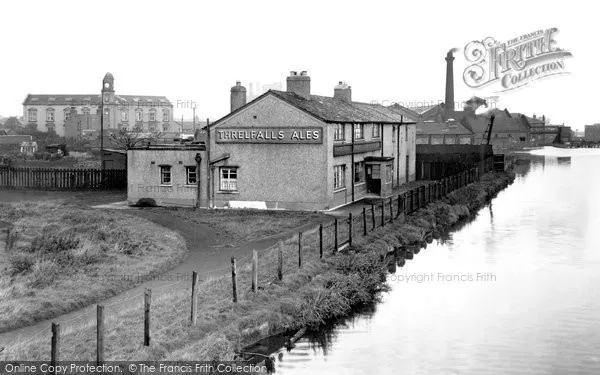 Photo: Ellesmere Port, via photos.francisfrith.com
Young artists learn alongside veterans, absorbing not just painting techniques but the stories that give meaning to the roses and castles. Children who grow up on the modern canal network learn to paint their names in the flowing script that adorns traditional boats, connecting them to generations of boat children who did the same.
Beyond the Towpath
The influence of canal art extends far beyond the waterways themselves. Its bold, confident style has inspired contemporary artists, influenced textile design, and found its way onto everything from tea towels to pub signs. But the authentic tradition remains firmly rooted in the boats and the people who love them.
As the sun sets over the Coventry Canal, Jenny Morrison steps back to admire her finished work. The Hazel's stern now blooms with roses that would have been recognised by any boat family of the past century, painted with techniques that connect modern canal dwellers to their floating ancestors.
"Every boat tells a story," Morrison reflects, cleaning her brushes in the canal water. "Our job is to make sure those stories are told in the right language — the language of roses and castles, of pride and belonging, of a culture that refused to be ordinary even when the world told it to stay in its place."
In a Britain increasingly dominated by mass production and digital culture, the canal artists represent something precious: a tradition that remains resolutely handmade, personal, and connected to the landscape itself. Their floating galleries cruise Britain's waterways like mobile museums, carrying the visual DNA of a unique way of life into an uncertain future, one perfect rose at a time.