The Smoke Keepers: Britain's Vanishing Curing Shed Tradition
Where Time Moves with the Smoke
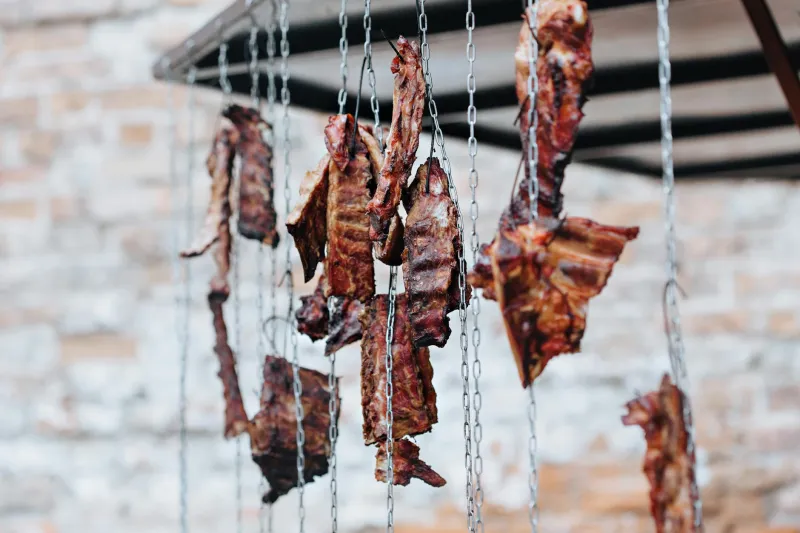
The sweet, woody scent hits you first — oak smoke mixed with salt air and something indefinably ancient. Inside Jimmy MacLeod's stone-built smokehouse on the Isle of Skye, sides of salmon hang like amber curtains in the golden haze. The fire beneath has burned continuously for three days, fed with oak chips that Jimmy's grandfather split by hand.
 Photo: Isle of Skye, via farm1.staticflickr.com
"Temperature's everything," Jimmy murmurs, adjusting a damper with the unconscious precision of someone who's tended these fires for forty years. "Too hot and you cook the fish. Too cool and it spoils. You learn to read the smoke like weather."
Jimmy represents a dying breed — the independent curers who still work by instinct, season, and inherited knowledge rather than digital thermometers and industrial schedules. Across Britain, perhaps a hundred such operations remain, scattered from Shetland crofts to Devon farmyards, each maintaining traditions that stretch back to when preserving food meant survival.
The Salt Roads
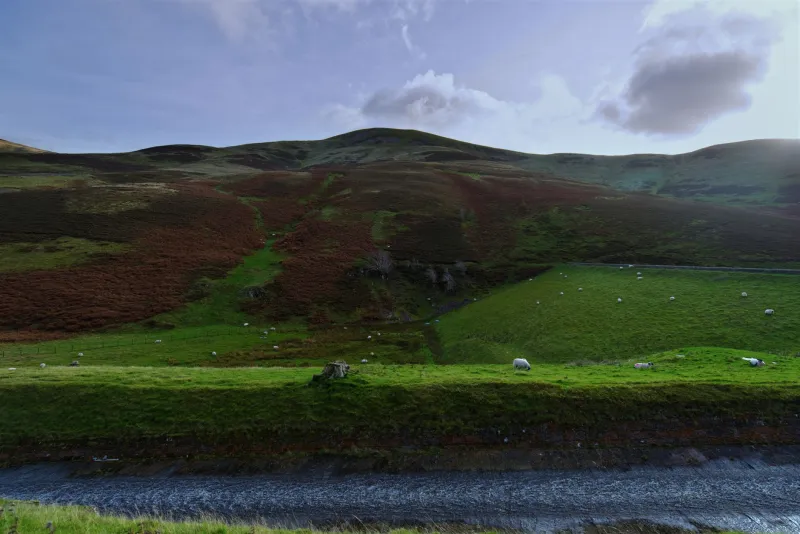
In the Yorkshire Dales, Margaret Hargreaves tends a curing shed that's processed mutton for six generations. The stone building, tucked into a fold of moorland near Grassington, looks unremarkable from outside. Within, however, legs of Swaledale lamb hang in precisely controlled conditions that Margaret's great-great-grandmother established in 1847.
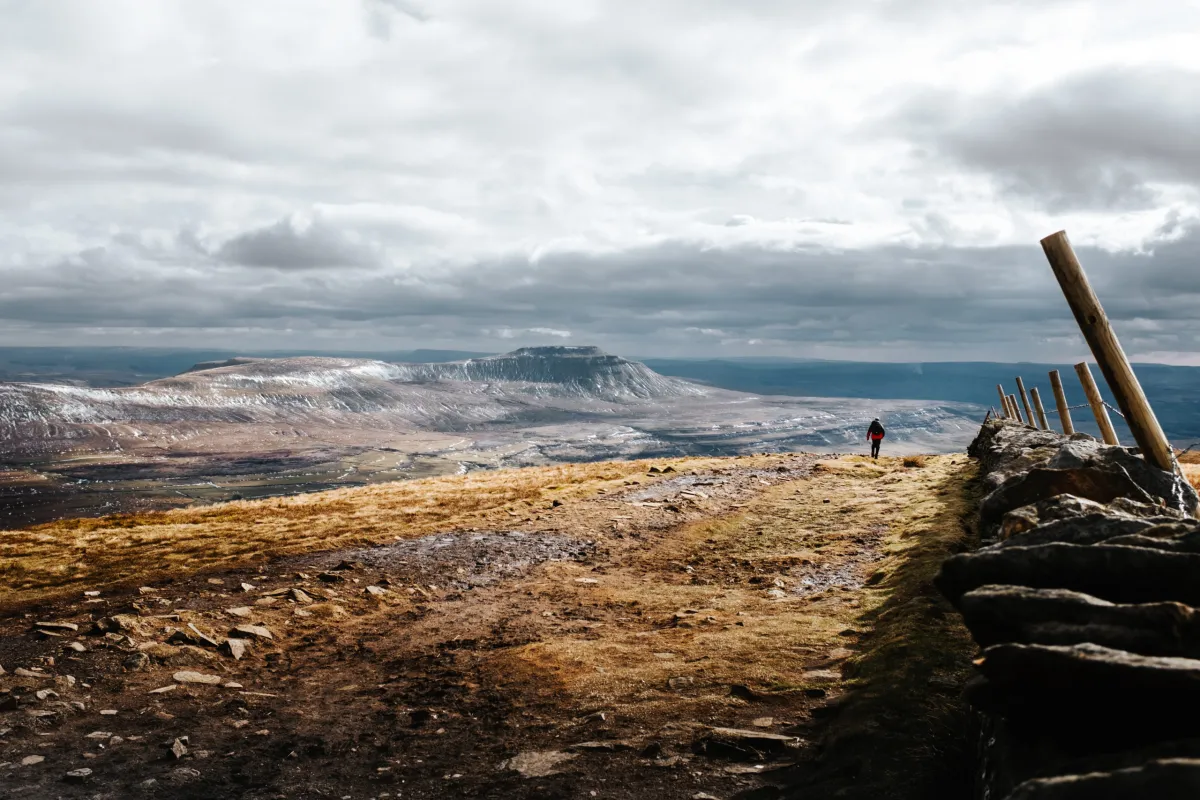 Photo: Yorkshire Dales, via i2.wp.com
"Salt-cured mutton isn't fashionable anymore," Margaret admits, running her hands along a ham that's been curing for eight months. "But it's what kept our ancestors alive through winter. The knowledge is too precious to lose."
Margaret's process follows patterns established when the Dales supplied preserved meat to industrial cities. Sheep slaughtered in November hang until spring, slowly transforming under carefully managed salt and airflow. "You can't rush it," she explains. "The meat tells you when it's ready."
The shed maintains its own microclimate — beneficial moulds that Margaret's family has cultivated for generations. "Scientists could probably analyse what lives in these walls," she laughs, "but I just know it works. My grandmother taught me to recognise good mould from bad by smell and colour."
Learning the Language of Smoke
Down in Devon, retired fisherman Peter Westcott has spent retirement mastering the art of smoking eels — a tradition his father abandoned when refrigerated transport made fresh fish profitable year-round. Peter's small operation in a converted farm building represents both revival and preservation.
"Dad always said eel-smoking was finished," Peter reflects, checking the colour of eels that have been cold-smoking for two days. "But I kept thinking about the taste, the tradition. Seemed wrong to let it die completely."
Peter learned through experiment and occasional guidance from elderly fishermen who remembered the old ways. "There's no manual for this," he explains, adjusting vents that control airflow through his custom-built kiln. "You learn by making mistakes, by tasting, by watching how the fish changes."
The eels come from local rivers — silver eels caught during their autumn migration to the Sargasso Sea. "Different waters produce different flavours," Peter notes. "River eels taste of their environment — chalk streams, peaty moorland water, tidal reaches. The smoking enhances what's already there."
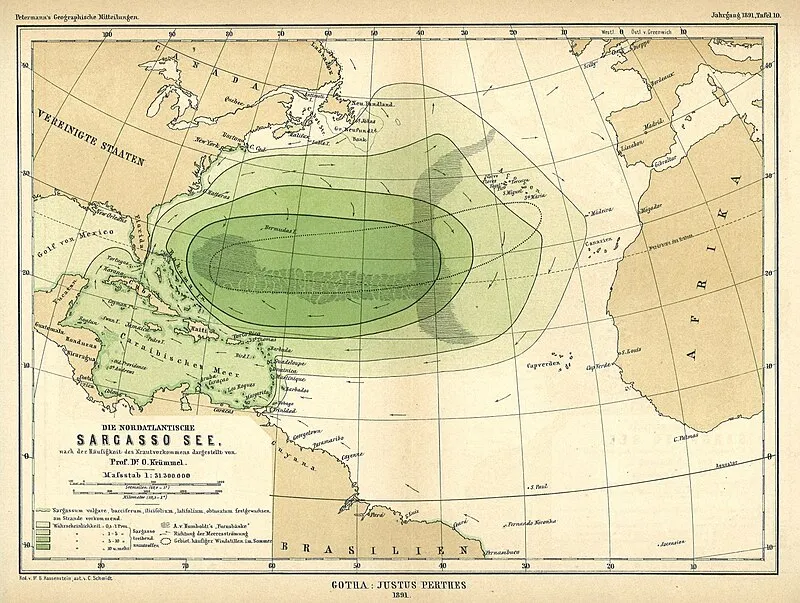 Photo of Sargasso Sea, via Wikidata/Wikimedia Commons
The Chemistry of Preservation
What unites these diverse practitioners is deep understanding of transformation processes that industrial food production has largely forgotten. Their work sits at the intersection of chemistry, microbiology, and intuitive knowledge accumulated over centuries.
"Modern food preservation prioritises safety and consistency," explains Dr. Sarah Collins, a food historian who studies traditional curing methods. "These artisan curers prioritise flavour and cultural continuity. They accept risks that commercial producers can't."
The risks are real — botulism, spoilage, contamination. Traditional curers manage these dangers through knowledge systems that combine scientific principles with empirical observation. "They understand salt gradients, moisture levels, bacterial cultures," Dr. Collins notes. "They just express that understanding differently."
Many traditional curers resist modern monitoring equipment, preferring sensory evaluation developed over decades. "I can tell more from touching and smelling than any thermometer could measure," insists Jimmy MacLeod. "The fish talks to you if you listen."
Passing the Torch
The greatest challenge facing traditional curing isn't regulation or competition — it's succession. Most operations remain family businesses where knowledge transfers informally across generations. When that chain breaks, centuries of accumulated wisdom disappears.
"My daughter lives in London, works in finance," sighs Margaret Hargreaves. "She understands the value of what we do, but she's not interested in taking over. I can't blame her — it's hard work for uncertain returns."
Some curers are adapting, taking on apprentices from outside their families. Peter Westcott teaches weekend workshops for amateur food preservers and professional chefs seeking authentic techniques. "It's not the same as growing up with it," he acknowledges, "but it's better than letting the knowledge die."
Younger apprentices often bring fresh perspectives to ancient practices. "They ask questions I never thought to ask," admits Jimmy MacLeod, who's training a former chef in traditional smoking methods. "Why this temperature? Why oak instead of beech? Sometimes I realise I'm doing things because that's how I was taught, not because it's necessarily best."
The Taste of Place
What drives people to preserve these labour-intensive traditions in an age of industrial convenience? For many practitioners, it's about maintaining connection to landscape, season, and local identity.
"Our smoked salmon tastes of Skye," Jimmy MacLeod explains. "The fish feed in these waters, the oak grows in these hills, the salt comes from these tides. You can't replicate that in a factory."
This terroir — the French concept that links food to its geographical origin — extends beyond ingredients to process. Traditional curing sheds develop unique microclimates that influence flavour in ways industrial facilities cannot replicate.
"Every old smokehouse has its own character," notes Peter Westcott. "The wood, the stone, the accumulated smoke — it all contributes to the final product. When these places disappear, that uniqueness vanishes forever."
Smoke Signals
As Britain's food culture increasingly values provenance and authenticity, traditional curing operations find new appreciation. Restaurants seek their products, food enthusiasts make pilgrimages to taste genuine traditional preservation, and younger generations discover flavours their ancestors took for granted.
"People are hungry for real food with real stories," observes Margaret Hargreaves, wrapping salt-cured mutton for a London restaurant. "Our lamb connects people to this landscape, this history. That's worth preserving."
Yet the window for maintaining these traditions remains narrow. Each practitioner who retires without passing on knowledge represents irreversible loss. Each curing shed that closes silences voices that have spoken in smoke and salt for centuries.
In their patient tending of fires and careful monitoring of ancient processes, Britain's remaining traditional curers maintain more than food preservation techniques. They preserve ways of knowing, of tasting, of connecting with the land that shaped their ancestors' lives.
As long as smoke still rises from these humble buildings, the conversation between past and present continues — measured not in words but in the slow alchemy that transforms raw ingredients into edible heritage.