Footsteps and Folk Songs: The Ancient Art of Walking Your Parish Back to Life
Where the Land Knows Your Name
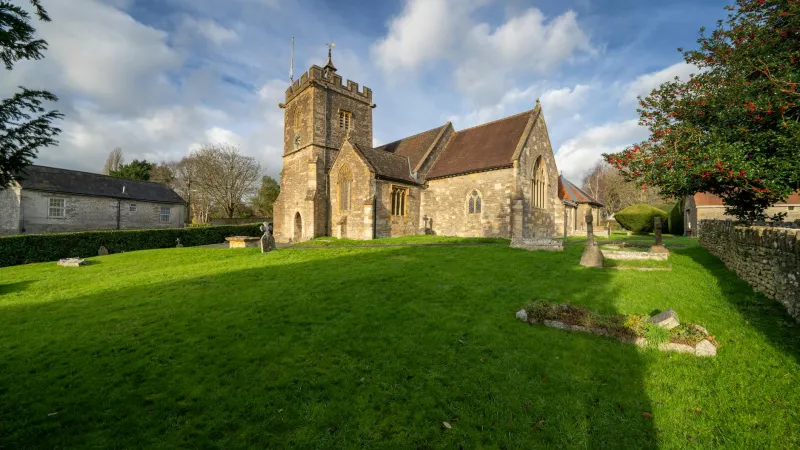
At dawn on Ascension Day, forty-three people gather outside St. Bartholomew's Church in the Oxfordshire village of Brightwell-cum-Sotwell. They carry willow switches, song sheets, and thermos flasks. Most importantly, they carry on a tradition that predates the Norman Conquest: the annual beating of the parish bounds.
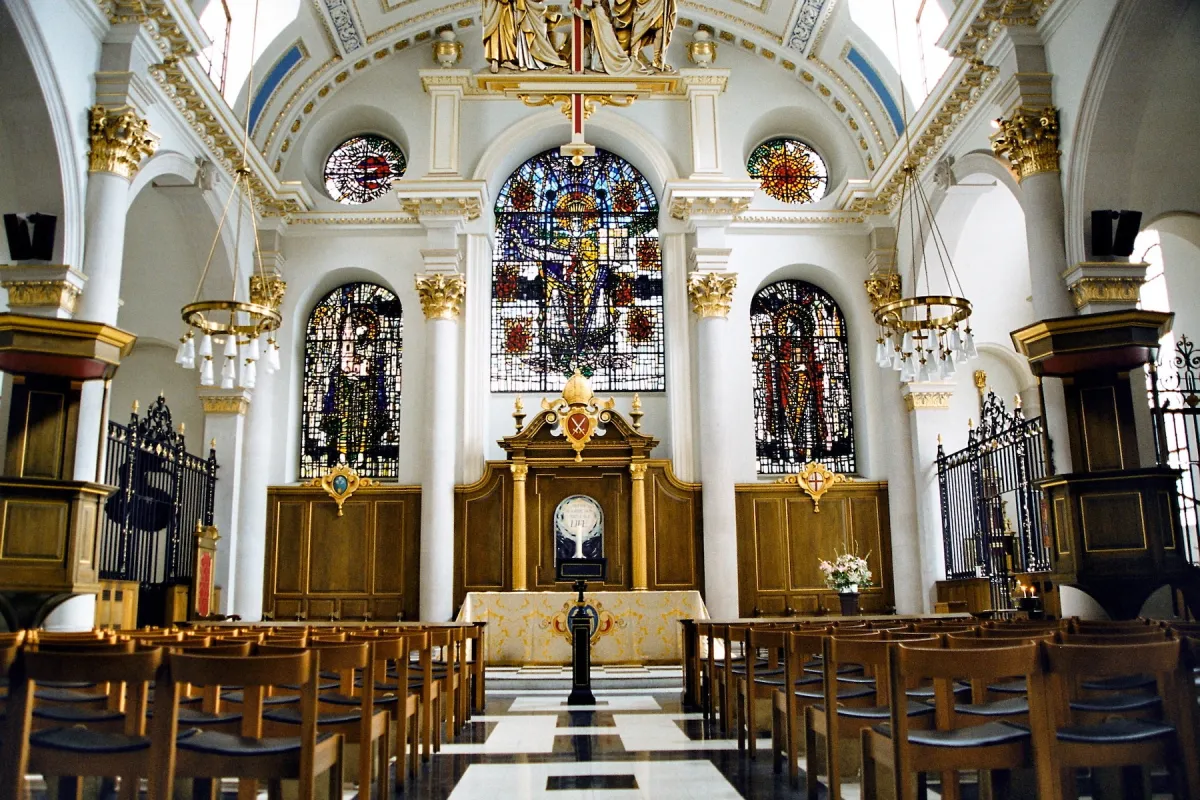 Photo: St. Bartholomew's Church, via www.thecityofldn.com
"Right then," announces parish clerk David Marsh, consulting a hand-drawn map that's been updated annually for decades. "First stop is Mackney Corner, where we'll give the boundary stone a proper thrashing and young Charlie here will learn why the brook belongs to both parishes and neither."
Twelve-year-old Charlie Henley looks skeptical, but he's about to participate in one of England's most enduring rituals — a ceremonial walk that literally defines community belonging through shared footsteps, ancient songs, and the deliberate act of marking territory.
Across England and Wales, dozens of communities have quietly revived this tradition, turning what began as medieval property disputes into something more profound: collective acts of place-making in an increasingly rootless world.
The Old Ways of Knowing Where
Beating the Bounds emerged in medieval England as a practical solution to a legal problem. Before detailed maps and formal surveys, communities needed ways to remember and defend their territorial limits. The solution was elegantly simple: walk the perimeter together, marking significant points with ceremony, song, and sometimes violence.
"It was never just about boundaries," explains Dr. Catherine Phythian-Adams, a historian of English rural customs at Leicester University. "It was about creating collective memory, about ensuring everyone in the community knew exactly where they belonged and where they didn't. The physical act of walking together created social bonds that lasted long after the day was over."
The tradition typically took place on Ascension Day or during Rogation Week, when communities would process around their parish limits, stopping at boundary stones, ancient trees, and other landmarks. At each point, the bounds would be literally 'beaten' with willow switches or sticks, often accompanied by prayers, songs, or the reading of ancient charters.
Children played a crucial role, sometimes being 'bumped' against boundary stones or even ducked in streams to help them remember the exact locations. The mild discomfort was considered a small price for ensuring the next generation would know their parish limits by heart.
Songs, Stones, and Shared Memory
In Brightwell-cum-Sotwell, the modern version retains many traditional elements while adapting to contemporary sensibilities. No children are bumped against stones, but they're still expected to touch each boundary marker and learn the ancient rhymes that encode local geography.
"Here's where the three parishes meet," chants the group at a weathered stone post, following words that have been repeated for centuries. "Brightwell, Sotwell, Mackney sweet, where the waters three do greet." The doggerel may be simple, but it embeds complex territorial knowledge in memorable verse.
Folk musician Sarah Matthews has joined today's walk, carrying a concertina and a collection of traditional bounds-beating songs. "These weren't just processions," she explains during a rest stop beside the Thames. "They were musical events. Each community had its own songs, its own way of celebrating its particular landscape."
She strikes up 'The Bounds of Our Parish,' a traditional air that she's adapted with local place names. As voices join in, the song becomes something more than entertainment — it's a collective assertion of belonging, a musical map that connects feet to ground to community identity.
Revival in the Digital Age
The revival of bounds-beating reflects a broader hunger for authentic connection to place. In Hay-on-Wye, the tradition was revived in 2018 after a gap of nearly forty years, led by local historian Geoff Morris and the town's folk music society.
"We live in an age where you can know exactly where you are anywhere in the world with a device in your pocket," Morris observes as he leads a group along the ancient track that marks Hay's eastern boundary. "But GPS can't tell you why this particular stream matters, or which family has farmed this field for three generations, or where your great-grandfather courted your great-grandmother. That kind of knowledge only comes from walking, from stories, from shared experience."
The Hay walk attracts participants from across the Welsh borders, many drawn by the combination of history, exercise, and community. Unlike many heritage activities, bounds-beating feels genuinely participatory rather than performative.
"It's not about dressing up or pretending to be medieval," says participant Jenny Williams, a retired teacher from Hereford. "It's about using an old form to address a very modern problem — how do we know where we belong? How do we create community in a world that seems designed to isolate us?"
The Politics of Walking
Bounds-beating inevitably raises questions about territory, ownership, and access. Many parish boundaries cross private land, requiring negotiations with farmers and landowners. Some communities have had to modify their routes, but most find that the tradition creates more connection than conflict.
"The landowners are usually curious rather than hostile," reports David Marsh from Brightwell. "Many of them join the walk when it crosses their property. They're as interested as anyone in understanding the historical boundaries of their land."
The tradition also highlights questions about who belongs to a community and who doesn't. Modern bounds-beating groups generally welcome anyone interested in participating, but the ritual still carries undertones of inclusion and exclusion that reflect deeper social tensions.
"We're walking lines that were often drawn to exclude as much as include," acknowledges Dr. Phythian-Adams. "But the revival groups tend to use the tradition as a way of opening up community rather than closing it down. The walk becomes a way of saying 'this is our place, and you're welcome to share it.'"
Lessons from the Boundary
Back in Brightwell-cum-Sotwell, the morning walk is drawing to a close. The group has covered nearly eight miles, touching dozens of boundary markers, singing traditional songs, and sharing stories about local history. Young Charlie Henley, initially skeptical, is now leading the final procession back to the church.
"I never knew there were so many old stones and hidden paths around here," he admits. "And I never knew Mrs. Patterson could sing like that, or that Mr. Davies used to be a surveyor, or that the big house used to have its own brewery."
This is perhaps the real point of bounds-beating: not just marking territory, but creating the social knowledge that turns geography into community. In an age of increasing mobility and digital connection, the simple act of walking a shared boundary together offers something irreplaceable — the deep satisfaction of knowing exactly where you belong.
"We live in the same place," reflects David Marsh as the group gathers for traditional ale and cake in the church hall, "but until you walk it together, until you learn its stories and sing its songs, you don't really share it. That's what the old tradition understood, and that's what we're trying to remember."
As more communities rediscover this ancient practice, they're finding that the best way to understand where you are is still the oldest way: step by step, song by song, boundary by boundary, together.