Where Chalk Meets Rain: The Secret Artists of Britain's Disappearing Street Circles
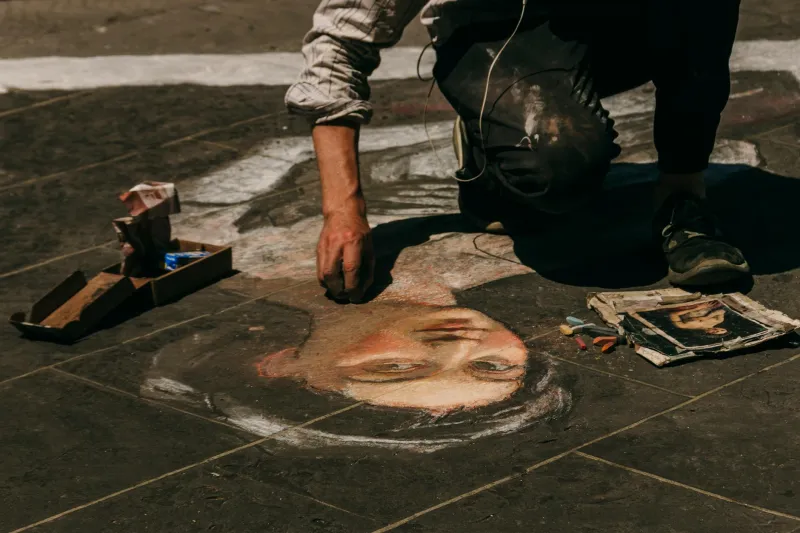
The Art That Welcomes Rain
On the cobbled streets of Burnley, Margaret Ashworth kneels beside a perfect circle of white sand, her weathered hands tracing patterns that will be gone by morning. Around her, children from the local primary school watch as she demonstrates the Lancashire tradition of 'sanding' — an ephemeral art form that has marked seasonal celebrations in northern England for centuries.
"My grandmother always said the best art doesn't try to last forever," Margaret explains, sprinkling another handful of sand into an intricate Celtic knot. "It's about the moment, the making, the community that gathers to watch. When the rain comes, that's not destruction — that's completion."
This philosophy underpins a scattered but persistent tradition across Britain: the creation of temporary street art tied to seasonal festivals, parish celebrations, and community gatherings. From the elaborate chalk mandalas that still appear outside certain Cornish churches during harvest time to the mysterious symbols painted on Edinburgh's Royal Mile during Hogmanay, these vanishing artworks represent one of our most overlooked folk traditions.
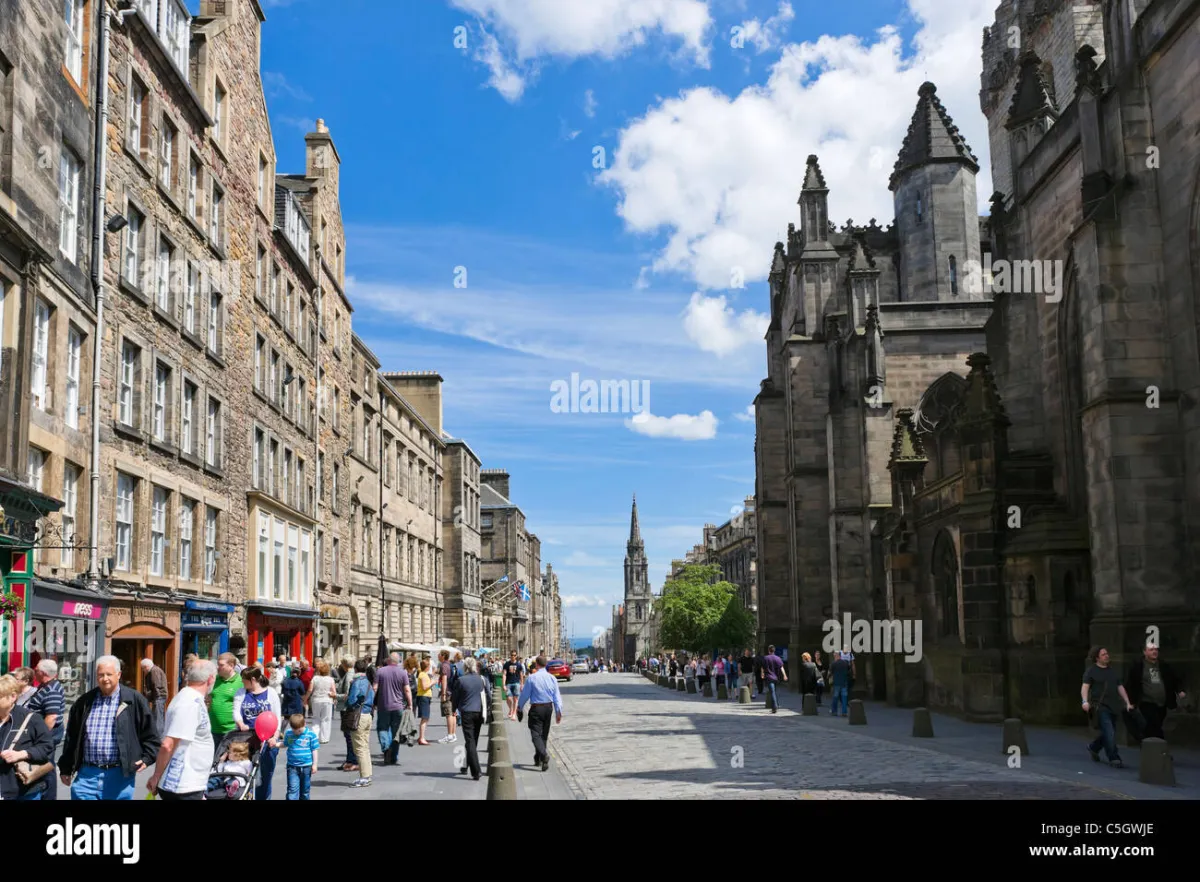 Photo: Edinburgh's Royal Mile, via c8.alamy.com
From Sacred Geometry to Street Theatre
The roots of Britain's ephemeral street art stretch back to pre-Christian customs, when communities marked seasonal transitions with temporary symbols drawn in earth, ash, and natural pigments. Dr. Sarah Pemberton, a folklore researcher at Cardiff University, traces the tradition through medieval guild processions, where craftsmen would mark their route with chalk symbols that told stories of their trade.
 Photo: Cardiff University, via www.mysociety.org
"These weren't just decorations," she explains. "They were a form of territorial marking, community storytelling, and spiritual practice all rolled into one. The temporary nature wasn't a limitation — it was the point. Each festival, each season, required fresh marks, fresh participation, fresh commitment from the community."
In Scotland, the practice evolved into the 'close painting' tradition, where tenement courtyards were adorned with elaborate temporary murals during major celebrations. Agnes MacLeod, 78, remembers her mother organising the women of their Glasgow close to create intricate patterns using whitewash, clay, and crushed brick.
"Every Hogmanay, every wedding, every funeral — we'd gather in the evening before and paint the walls," she recalls. "Flowers, Celtic knots, sometimes just beautiful abstract patterns. By the next week, the rain and wind would have taken it all away, but that was fine. It meant next time, we could start fresh."
The New Chalk Circle Movement
Today, a quiet revival is taking place in villages and towns across Britain. In Dent, Yorkshire, the local history society has revived the Whitsun tradition of chalk circles, teaching children the geometric patterns their great-grandparents once knew by heart. In Totnes, Devon, a group called the 'Seasonal Scribes' creates temporary mandalas outside the town's ancient churches, using locally sourced materials that reflect the changing seasons.
"We're not trying to recreate the past exactly," says Tom Bradley, a founding member of the Totnes group. "But we're drawing on those same impulses — the need to mark time passing, to create something beautiful together, to accept that not everything has to be permanent to be meaningful."
The materials remain largely traditional: chalk from the South Downs, sand from Lancashire quarries, ochre from Devon's red earth, charcoal from coppiced woodland. Each region's palette reflects its geology and history, creating artworks that are literally of the place they celebrate.
Why Impermanence Matters
For practitioners, the ephemeral nature of the art isn't a bug — it's a feature. In an age of digital permanence and concrete monuments, there's something radical about creating beauty designed to disappear.
"We live in a culture obsessed with preservation," argues Dr. James Hartwell, who studies ritual and community at Durham University. "But these traditions remind us that some of the most profound human experiences are about letting go. The art exists in the making, in the gathering, in the shared understanding that this moment won't come again."
This philosophy resonates particularly strongly with younger practitioners. In Bristol, a group of art students has begun creating chalk murals that celebrate the city's industrial heritage, knowing that each piece will be washed away by the next rain.
"There's something liberating about art without ego," explains 22-year-old participant Zoe Chen. "No gallery walls, no price tags, no permanent legacy to worry about. Just the community that gathers to watch, to help, to be part of something that exists for a moment and then becomes memory."
Circles in the Digital Age
Interestingly, social media has given new life to these vanishing traditions. Photographs of temporary chalk circles and seasonal street art circulate widely online, creating digital permanence for physically ephemeral works. Rather than diminishing the tradition, many practitioners see this as evolution.
"The photograph isn't the art," insists Margaret Ashworth, still leading sanding workshops in Burnley after three decades. "The art is the cold morning, the aching knees, the children asking questions, the satisfaction of stepping back and seeing something beautiful that wasn't there before. The photo just reminds us that it happened."
The Future of Fleeting Art
As Britain's communities seek new ways to connect with place and tradition, these ephemeral practices offer something unique: a form of cultural expression that requires presence, participation, and acceptance of impermanence. Unlike heritage that must be preserved or protected, chalk circles and seasonal street art invite active recreation, fresh interpretation, community involvement.
"Every time we lay out a new circle, we're not just remembering the past," reflects Tom Bradley. "We're creating it again, fresh, for this moment, this season, this particular gathering of people. When the rain comes, it takes away the chalk, but it leaves the experience. And that's something you can't wash away."
In car parks and courtyards, on village greens and city streets, Britain's ephemeral artists continue their quiet work. They create beauty designed to disappear, art that welcomes its own ending, traditions that survive precisely because they refuse to be preserved. In a world of permanent records and lasting monuments, perhaps that's the most radical act of all.