Grain, Place, and the Long Memory: How Britain's Micro-Breweries Are Digging Up the Past
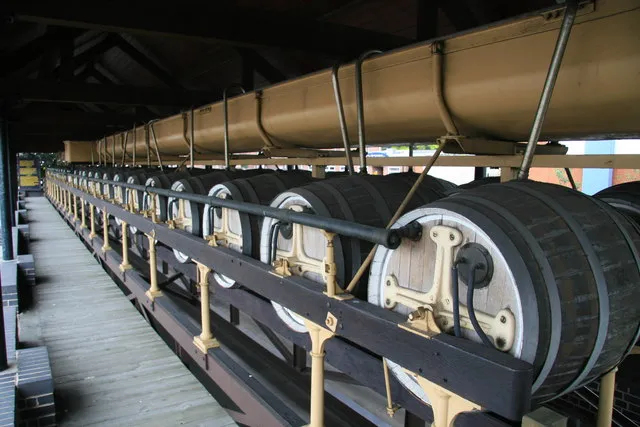
Photo: Chris Allen, CC BY-SA 2.0, via Wikimedia Commons
There's a beer currently being brewed in a former millhouse on the edge of the Yorkshire Dales that contains yarrow, sweet gale, and a small amount of juniper berry. It doesn't taste like anything you'd find on a supermarket shelf. It doesn't taste like much you'd find in a pub, either. It tastes, according to the people who've drunk it, like somewhere specific — like moorland after rain, like the particular mineral sharpness of Dales water, like something you half-remember without being able to say why.
That's more or less the point.
Before the Hop
For most of British brewing history, hops were either unavailable or unaffordable. Before they became dominant in the sixteenth century, brewers used a blend of herbs and botanicals known as gruit — a mixture that varied wildly from region to region depending on what grew locally. Yarrow, bog myrtle, mugwort, heather, ground ivy: these were the flavourings that made British ale taste of the landscape it came from.
Then hops arrived from the Low Countries, gradually standardised flavour across the country, and the old gruit traditions largely disappeared. Not entirely — heather ale persisted in Scotland, and various herbal ales survived in rural pockets — but the rich regional diversity of pre-hop British brewing was mostly lost.
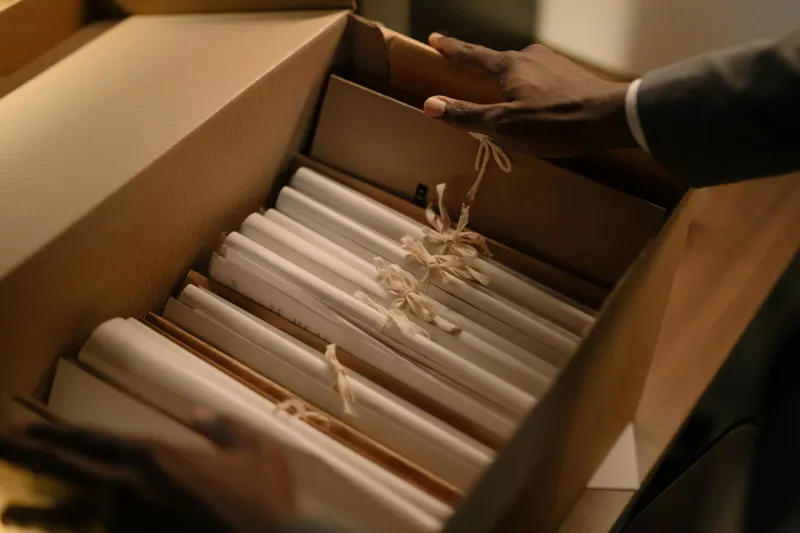
Sarah Lindqvist, who co-runs the millhouse brewery with her partner and two other members of their community collective, has spent three years piecing together what gruit ales from the Yorkshire Dales might actually have tasted like. Her sources include monastic brewing records held at the Borthwick Archive in York, estate accounts from a seventeenth-century manor near Settle that itemise herb purchases, and the work of botanical historians who've mapped historical plant distribution across the region.
"You're never going to get it exactly right," she says, pouring a glass of something amber and slightly hazy. "The barley varieties are different, the water chemistry isn't identical, the herbs have been growing in different conditions for centuries. But you can get close enough to understand what it was doing — what the experience of it was."
The Archive as Recipe Book
This kind of brewing-as-research is happening in pockets across the country, and the people doing it have learned to look in unusual places. In Shropshire, a collective called the Marches Malt Circle has been working through the account books of a Victorian malthouse that operated near Ludlow until 1923. The records include not just quantities of grain but notes on quality, on the weather conditions during harvesting, on the complaints of local innkeepers about particular batches.
From these records, they've reconstructed a Victorian-era pale ale specific to the Teme Valley — using a heritage barley variety sourced from a seed bank in Suffolk, malted to a specification drawn from the old account books, and hopped with a variety that was common in the region in the 1880s and has since been revived by a small number of specialist hop growers in Herefordshire.
"It's not a gimmick," says Tom Farrell, one of the collective's founding members, firmly. "We're not doing this for the novelty. We're doing it because there was a genuine beer culture here — a flavour that people in this valley grew up with and that disappeared when the big breweries consolidated everything in the 1960s and 70s. That's worth trying to understand."
The Marches Malt Circle sells its beers at local farmers' markets and through a handful of pubs in the area. Demand has grown steadily. More interestingly, the project has attracted the attention of local historians and food geographers who've started contributing their own archival research to the collective's recipe development.
Fermentation as Community Memory
In Fife, a different kind of recovery project is underway. The St Monans Brewing Society — a loose collective of about fifteen people, most of whom have day jobs entirely unrelated to brewing — has been focusing on the small-scale coastal ale traditions of the East Neuk fishing communities. These were ales brewed at home or in small commercial operations that served the fishing fleets, and they were shaped by the particular demands of that life: high-calorie, relatively low-alcohol by modern standards, and often brewed with whatever was available.
Member Ailsa Drummond, a retired teacher, found a handwritten brewing log in a box of papers left to a local archive by a fisherman's family. It covered brewing from 1887 to 1914 and contained recipes, notes on failures, and occasional observations about the quality of local barley. It's become the cornerstone of the society's research.
"What strikes you when you read it," Ailsa says, "is that beer was completely ordinary. It wasn't a treat or a craft product. It was food. It was part of how you sustained yourself through a hard winter. Understanding that changes how you think about what you're making."
The society's beers are not commercially available. They brew for themselves, for community events, for the occasional local festival. The point isn't commercial — it's connective. Several members have traced family connections to the fishermen whose recipes they're working from.
What Gets Recovered
None of this is straightforward nostalgia. The people involved in these projects are, almost without exception, clear-eyed about the limits of what they're doing. You cannot fully recover a lost food tradition. The ingredients have changed, the water has changed, the people drinking it have changed. A gruit ale drunk by a medieval monk in a Yorkshire valley was experienced in a context so different from our own that any comparison is partial at best.
But what you can recover — and this seems to be what drives the brewers, the archivists, and the community members who gather around these projects — is a relationship with place. A sense that the landscape you live in has flavours, that those flavours have histories, that those histories belong to you as much as to anyone.
The beer from the millhouse in the Dales tastes like somewhere specific. In a country where so much of what we consume has been deliberately detached from its origins, that turns out to be a remarkable thing to offer someone.