Threads in the Archive: The Village Historians Stitching Communities Back Together
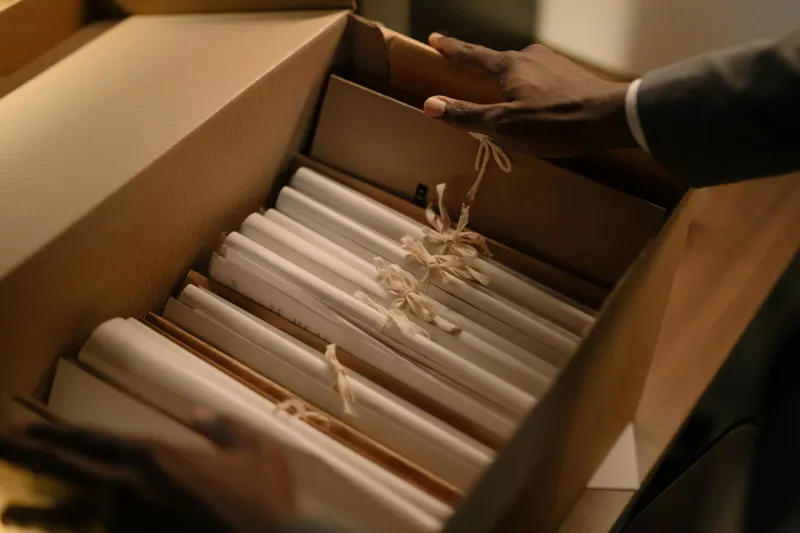
The ledger is enormous — roughly A2 in size, its spine cracked and its pages the colour of old tea. It records baptisms in a Shropshire parish from 1742 to 1819, each entry in a different hand, some entries meticulous and copperplate-precise, others cramped and hurried, ink blotted where the quill was pressed too hard. Margaret Howell, retired schoolteacher and now the de facto keeper of this particular archive, handles it with the careful reverence of someone who understands exactly what's at stake.
"People think genealogy is about finding out if you're related to someone famous," she says, not looking up from the page she's transcribing. "It's not. It's about understanding that you come from somewhere. That's the thing people are actually hungry for."
The Hall as Archive
Village halls across Britain have always served multiple purposes — polling station, dance floor, disaster relief centre, jumble sale venue. But increasingly, they're becoming something else: informal repositories of local memory, the places where history is being actively worked on by people who are not professional historians and are none the worse for it.
The genealogy and local history groups that meet in these spaces are almost always volunteer-run, almost always underfunded, and almost always doing work of genuine significance. They digitise crumbling parish registers before the ink fades entirely. They cross-reference census records, tithe maps, and estate accounts to reconstruct the social fabric of communities that have changed almost beyond recognition. They record oral histories from elderly residents before that knowledge walks out of the world for good.
The Shropshire group Margaret helps coordinate has, over six years of weekly meetings, created a searchable database of over forty thousand local records spanning four centuries. They've identified previously unknown connections between families who thought themselves unrelated. They've located the descendants of individuals commemorated on the village war memorial who had no idea their great-uncle or grandfather was being remembered there. They've reunited people, in a sense, with their own dead.
Finding the Story Behind the Name
What separates the best of these groups from a simple data-entry exercise is the interpretive work they do around the raw records. Names and dates are the skeleton; the flesh is the context that local knowledge provides.
This is where the amateur status of many of these researchers becomes a genuine advantage rather than a limitation. A professional archivist working at county level might know the broad history of the region but will rarely know that the field behind the Methodist chapel was traditionally called the Retting Ground because it's where flax was soaked before processing — and that this explains why three generations of a particular family show up in the records as linen-workers rather than farmers, despite living in an overwhelmingly agricultural parish.
Local knowledge, accumulated over lifetimes of living somewhere, is the interpretive key that unlocks the records. The volunteers bring it in abundance.
In a Northumberland village, a retired miner named Alan has spent eight years reconstructing the working lives of the men who laboured in the collieries that once defined the area. His database now includes not just names and dates but the specific seams men worked, the accidents they survived or didn't, the wages they earned relative to regional averages. It's economic history from the ground up, and it's changing the way the community understands what it actually was.
"People around here think of themselves as a farming community now," he says. "But two generations back, almost every man in this village went underground. That's who we are. That's where we came from. I think people need to know that."
The Emotional Weight of Discovery
No one who's worked in these archives for long is surprised by the emotional intensity of the discoveries they facilitate. Family history touches something deep, and the moment when a thread of connection snaps into place — when someone realises that the woman listed in an 1871 census as a domestic servant is her great-great-grandmother, not just a name in a ledger but a person who woke up cold on winter mornings and worried about money and loved people who have since been entirely forgotten — that moment can be genuinely overwhelming.
Margaret describes a woman in her sixties who came to one of their open days having grown up in care, with no knowledge of her biological family. Over several sessions, the group helped her trace a line back through adoption records, workhouse admissions, and eventually parish registers to a family that had lived in the same county for at least two hundred years. "She just sat there and cried," Margaret says. "Not sad crying. Something else. Like something had been settled."
This is, arguably, what these groups are really doing — not just preserving history but actively creating a sense of belonging in communities that have often been fragmented by economic change, demographic shift, and the general loosening of social ties that has characterised the last half-century of British life.
Digitisation and Its Discontents
The push to digitise is both necessary and complicated. Necessary because physical records are deteriorating — humidity, light, handling, insects, and simple age are destroying irreplaceable documents at a rate that should alarm anyone who cares about local history. Complicated because digitisation requires resources these groups rarely have, and because the process of deciding what gets digitised and what doesn't involves judgements that carry real consequences.
The Genealogical Society networks that link many of these local groups have been working to standardise practices and pool resources, but progress is uneven. Some county archives have been exemplary partners, providing scanning equipment and technical support. Others have been indifferent or obstructive, citing concerns about copyright, data protection, or simply lacking the staff to engage.
And there's a subtler concern too. Digitisation makes records searchable and shareable, which is largely wonderful. But it also strips away the physical context — the feel of the paper, the smell of the ink, the marginal notes and crossings-out that tell you as much as the main text. The best groups understand that the digital record is a tool, not a replacement for the original, and they work to preserve both.
Why the Village Hall Matters
There's something important about the fact that this work happens in the village hall rather than the county archive or the university library. It happens in a public, community space, accessible to anyone, run by people who live in the same streets as the people they're researching. That situatedness — that groundedness in place — is part of what gives it its particular character and value.
People who would never enter a formal archive will come to a village hall on a Tuesday evening and find themselves drawn into a conversation about their own past. They discover they're part of longer, stranger, more interesting stories than they knew. They discover neighbours they didn't know they had — people who share surnames, or land, or trades, or tragedies with their own families going back generations.
The archive, in these hands, becomes not a place where the past is kept separate and preserved behind glass, but a living resource that changes how people understand their present. That's a remarkable thing to happen in a draughty room with folding chairs and an urn of slightly too-strong tea.
But then, remarkable things have always happened in village halls.