Hands That Remember: The Hereditary Healers Bridging Ancient Touch and Modern Pain
The Touch That Travels Through Time
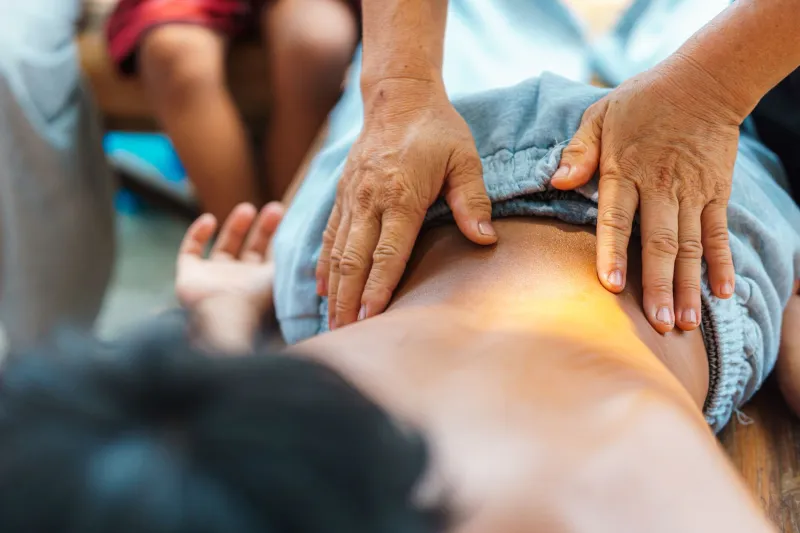
In a cottage tucked between the Brecon Beacons and the English border, Margaret Davies places her weathered hands on a farmer's twisted shoulder. No appointment was made, no forms filled out. Word simply travels — as it has for three centuries in her family — that the Davies hands can coax bones back into their proper places.
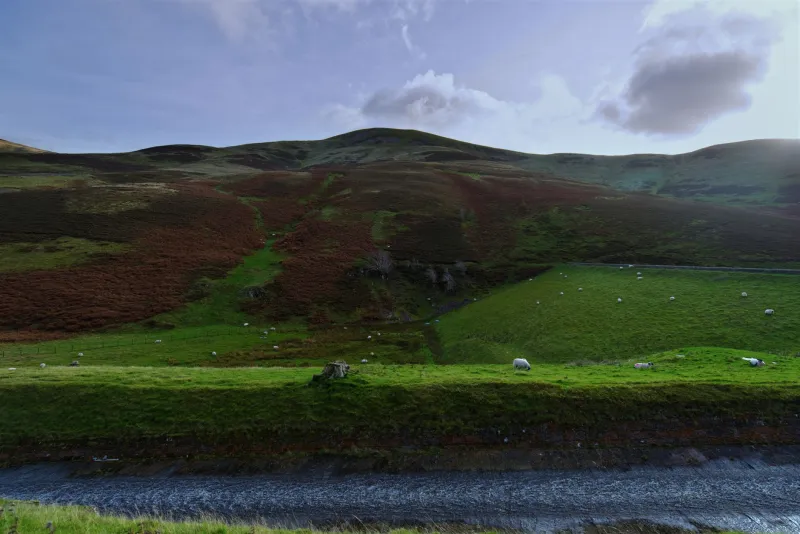
 Photo: Brecon Beacons, via cdn.wallpapersafari.com
"My great-grandmother never called it bone-setting," Margaret explains, her fingers moving with inherited certainty across tendons and joints. "She'd say she was 'putting things right.' That's all we've ever done."
This is Britain's shadow medical system — a network of hereditary healers whose knowledge flows not through textbooks but through bloodlines. Long before the NHS, before physiotherapy became a profession, before X-rays revealed the skeleton's secrets, these families were the ones people turned to when something went wrong with the body's mechanics.
Where Official Medicine Meets Ancient Knowing
The survival of bone-setters speaks to something deeper than mere tradition. In farming communities across the Welsh Marches, the Peak District, and the Yorkshire Dales, these practitioners represent continuity in an era of constant medical revolution. They're living bridges between the time when healing was inseparable from community, and our current age of appointments, referrals, and waiting lists.
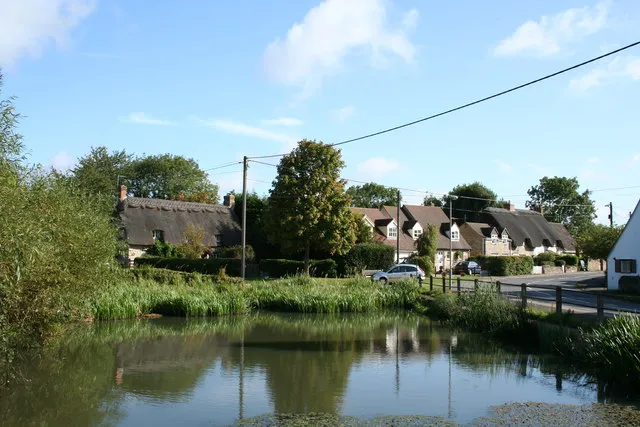
 Photo: Welsh Marches, via s2.pictoa.com
Tom Hartley, whose family has been "putting folk right" in Cumbria for five generations, sees a steady stream of visitors to his fell-side farm. Shepherds with shoulders wrenched from wrestling sheep. Dry-stone wallers whose backs have seized from years of lifting limestone. Office workers who've driven up from Manchester, drawn by word-of-mouth testimonials that no amount of physiotherapy could match what Tom's grandfather's grandfather knew by touch alone.
"People come because something's not working," Tom says simply. "Modern medicine's brilliant at the big things — surgery, medication, diagnosis. But sometimes what's needed is older than all that. Sometimes it's just knowing how a joint wants to move."
The Grammar of Bones
What these practitioners possess is a vocabulary of the body written in a language older than medical Latin. Their hands read stories in the way a shoulder blade sits, the angle of a wrist, the tension held in a neck. It's knowledge that can't be googled or learned from YouTube tutorials — it lives in the fingertips and travels through generations like a family recipe.
Sarah Williams, whose Welsh grandmother taught her to "listen with her hands," describes the craft as part archaeology, part intuition. "You're feeling for what shouldn't be there, what's moved from where it belongs. Your hands learn to recognise the difference between muscle that's tired and muscle that's protecting something. Between a joint that's stuck and one that's genuinely damaged."
This tactile literacy extends beyond mere technique. The bone-setters speak of reading the person as much as the injury — understanding that a twisted ankle might be connected to a hip that's been compensating for months, that chronic shoulder pain could stem from the way someone holds tension when they're worried.
Trust in the Time of Regulation
The persistence of these practitioners raises uncomfortable questions about the boundaries of legitimate healing. They operate in the margins — not quite medical, not quite alternative therapy, but something older and more rooted than either. Most refuse payment beyond donations, seeing their gift as something that belongs to the community rather than to them personally.
Yet people continue to seek them out, often after exhausting conventional options. The testimonials are remarkably consistent: problems that had persisted for months suddenly resolve after a single session. Chronic conditions that had resisted professional treatment improve dramatically under hands that learned their craft not in university lecture halls but at kitchen tables, watching grandparents work.
"I don't compete with doctors," insists David Roberts, whose family has served farming communities around Hay-on-Wye for generations. "I'm not treating diseases or prescribing medicines. I'm just helping bodies remember how they're supposed to work. That's not medicine — that's older than medicine."
The Living Chain
Perhaps most remarkably, these traditions continue to pass from generation to generation. In an age when traditional crafts struggle to find apprentices, the bone-setters quietly train their children and grandchildren, ensuring the knowledge doesn't die with them.
The learning process is intimate and entirely practical. Children grow up watching, feeling, gradually developing the sensitivity that distinguishes a true practitioner from someone merely going through the motions. They learn to recognise the subtle signs that indicate when something can be helped and when it needs professional medical attention — a crucial distinction that separates responsible practice from dangerous quackery.
"You can't teach this from a book," explains Margaret Davies, whose own daughter is slowly learning the family gift. "Your hands have to develop memory. You have to feel hundreds of shoulders, thousands of joints, before you begin to understand what normal feels like. Then you can recognise what's not right."
Belonging to the Body
In a healthcare system increasingly dominated by technology and specialisation, the bone-setters represent something irreplaceably human — the healing power of informed touch, of being truly seen and felt by another person. Their persistence suggests that for all our medical advances, we still crave the simple comfort of hands that know what they're doing.
They remind us that healing was once inseparable from community, that bodies were understood through relationship rather than diagnosis. In their quiet cottages and farm kitchens, they maintain a different conversation about health — one that speaks of balance rather than pathology, of bodies that want to work properly if only someone knows how to ask them.
As the NHS faces mounting pressures and waiting lists grow longer, these hereditary healers offer not an alternative to modern medicine but a complement to it — a reminder that some forms of knowledge can only be passed from hand to hand, from heart to heart, through the unbroken chain of human touch.