Petals and Prayer: The Sacred Art Hidden in Britain's Village Flower Festivals
The Cathedral of Roses
Step through the oak doors of St Michael's in Little Thornham on a July morning, and you'll find yourself in a different world. Where wooden pews usually stand in orderly rows, cascading arrangements of delphiniums rise like blue waterfalls. The font overflows with cottage garden roses, their scent mixing with centuries of incense and candle wax. Above the altar, a harvest scene crafted entirely from local wildflowers tells the story of this Norfolk village's agricultural year.
This is Thornham's annual flower festival, and like hundreds of similar events across England, it represents something far more sophisticated than village prettification. Here, in the space of a weekend, an entire community transforms their parish church into a living gallery — one that speaks in the ancient language of flowers to tell stories both sacred and profoundly local.
"People think it's just about making things look nice," says Jenny Hartwell, who has coordinated Thornham's festival for twenty-three years. "But watch how families work together, see how the arrangements connect to our local history, notice how every flower choice carries meaning. This is folk art at its most democratic."
The Grammar of Blooms
Britain's flower festival tradition emerged in the Victorian era, when the language of flowers reached its most elaborate expression. But village festivals developed their own vernacular — one that spoke not in drawing-room sentiment but in agricultural reality and local pride.
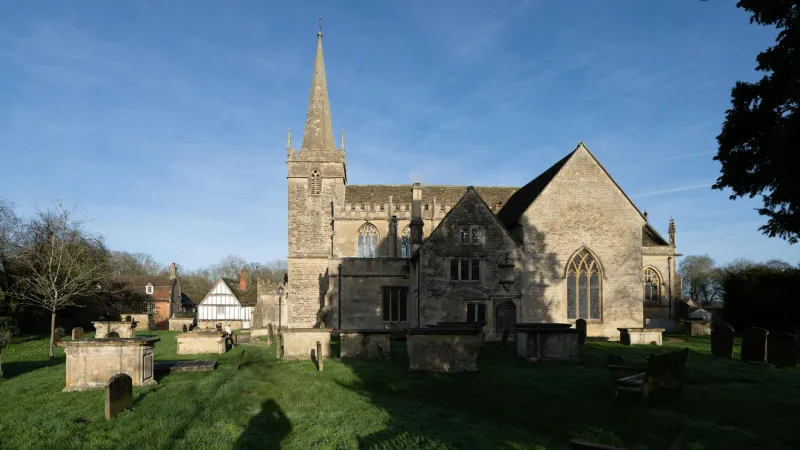
At St Andrew's in Wickhampton, the festival has celebrated the village's market garden heritage for over sixty years. Each display uses flowers and vegetables grown within the parish boundary, creating arrangements that are part artistic expression, part local advertising, and part collective memory.
 Photo: St Andrew's in Wickhampton, via static.oktoberfest-tv.de
"My grandmother started the tradition of using only what we grow ourselves," explains Robert Marsh, whose family has contributed prize-winning displays since the 1960s. "It means every arrangement tells you something real about this place — what grows here, what we're good at, what we're proud of."
The symbolic vocabulary varies from village to village, but common themes emerge. Wheat sheaves honour agricultural heritage. White flowers remember the departed. Native wildflowers celebrate local landscapes. And always, always, there's the subtle competition between families, streets, and farming dynasties that gives these displays their creative edge.
Hands Across Generations
Watch a flower festival in preparation, and you'll witness something remarkable: four generations working side by side, each contributing different skills to a shared vision. Children strip leaves and sort stems. Teenagers provide strong backs for heavy lifting. Adults orchestrate the complex logistics of timing, transport, and design. And it's often the oldest hands that possess the most precious knowledge — which flowers last longest without water, how to make delicate stems stand strong, where to find the perfect ferns and mosses that give arrangements their wild authenticity.
"The techniques get passed down like family recipes," observes Dr Helen Morrison, who has studied flower festivals across the West Country. "There are ways of wiring delphiniums that I've seen nowhere else except in certain Somerset villages. Methods for preserving colour in dried grasses that seem to exist only in particular families."
At St Mary's in Chipping Norton, the festival attracts contributors from three counties, but the core team consists of women whose mothers and grandmothers shaped the same displays decades earlier. They work with an intuitive understanding of space, colour, and seasonal rhythm that would be the envy of any art school.
The Democracy of Beauty
What makes flower festivals unique among British cultural traditions is their radical inclusivity. Unlike morris dancing or bell ringing, which require specific skills and regular commitment, flower festivals welcome anyone who can hold a stem. The woman who grows prize dahlias works alongside the child gathering dandelions. The retired headmaster's elaborate topiary sits next to a simple jar of kitchen garden herbs contributed by a young mother.
"It's the most democratic art form we have," argues cultural historian Sarah Pemberton. "No formal training required, no expensive equipment, no gatekeepers deciding who's good enough. Just bring what you can grow or gather, and add it to the whole."
This democratic spirit extends to the viewing experience too. Flower festivals draw visitors who would never normally enter a church — families on cycling holidays, garden enthusiasts, local history buffs, and tourists following the unofficial festival trail that weaves through England's villages each summer.
Sacred Space, Living Art
The church setting adds profound layers to the artistic experience. These aren't gallery spaces designed for display, but working buildings where weekly worship continues around the elaborate arrangements. The juxtaposition creates something unique — contemporary folk art in dialogue with centuries of faith, community creativity blessed by ancient architecture.
"There's something about filling a sacred space with living beauty that touches people very deeply," reflects Reverend Michael Thornby, whose Cotswold parish hosts one of England's most ambitious festivals. "The flowers are ephemeral — they'll be wilted and gone in a few days. But for this brief moment, the building becomes a celebration of everything that grows and blooms and makes life beautiful."
The temporary nature of the art form adds to its poignancy. Unlike paintings or sculptures, flower festival displays exist only for days before petals fall and stems wither. This built-in mortality gives the festivals an urgency and preciousness that permanent art can rarely match.
Seeds of the Future
As Britain's villages grapple with aging populations and weakening community bonds, flower festivals represent something precious — a tradition that naturally adapts while preserving its essential spirit. Younger families are bringing contemporary design sensibilities to traditional formats. Environmental awareness is encouraging native plant displays and sustainable growing practices. And social media is connecting festival organizers across the country, sharing techniques and inspiration.
"The tradition isn't frozen in time," notes Jenny Hartwell as she surveys Thornham's latest festival. "Each year brings new ideas, new participants, new ways of seeing familiar flowers. But the heart remains the same — people coming together to make something beautiful that celebrates where they live."
As evening light filters through stained glass windows, illuminating a thousand carefully placed blooms, it's clear that Britain's flower festivals represent something remarkable: a living tradition where art, community, and place converge in arrangements as complex and beautiful as the villages that create them. Long may they bloom.