Songs for Learning, Rhymes for Remembering: The Educators Weaving Folk Wisdom Back Into Britain's Classrooms
When Numbers Had Names and Weather Had Voices
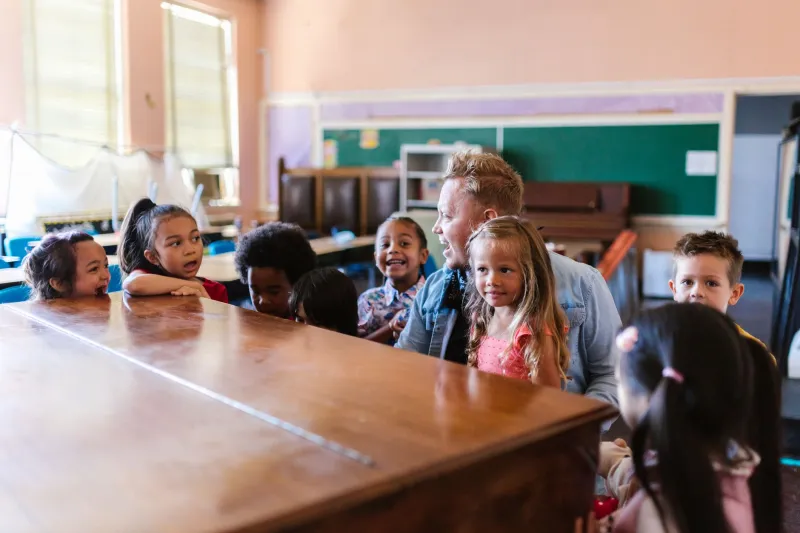
In a Victorian school building in the heart of Cornwall, thirty seven-year-olds are counting to twenty in a language their great-grandparents would recognise but their parents have never heard. "Onen, dew, tri, peswar..." The numbers roll off young tongues with surprising fluency, each syllable connecting these children to centuries of Cornish speakers who counted fish, counted sheep, counted the rhythms of their working lives in words that belonged to the landscape.
Their teacher, Emma Trelawny, learned these counting songs not from a textbook but from her grandmother, who remembered them from her own school days in the 1940s. "Before everything became standardised, children learned through songs that were specific to their place," Emma explains. "Cornish numbers, Welsh weather rhymes, Yorkshire dialect verses. The curriculum was alive because it came from where you lived."
Emma is part of a scattered but determined movement of educators who are deliberately weaving traditional folk pedagogy back into modern classroom practice. From the Shetlands to the Scilly Isles, teachers are rediscovering that some of the most effective ways to help children learn — and more importantly, to help them feel they belong somewhere — are methods that predate educational theory by centuries.
The Wisdom Hidden in Children's Games
At Moorside Primary in the Peak District, headteacher James Hartwell has transformed the school playground into a living laboratory of traditional games. During morning breaks, children play hopscotch patterns that mirror the dry-stone wall boundaries of local fields, sing skipping rhymes that encode the names of Derbyshire villages, and learn clapping games that teach the rhythm of local dialect.
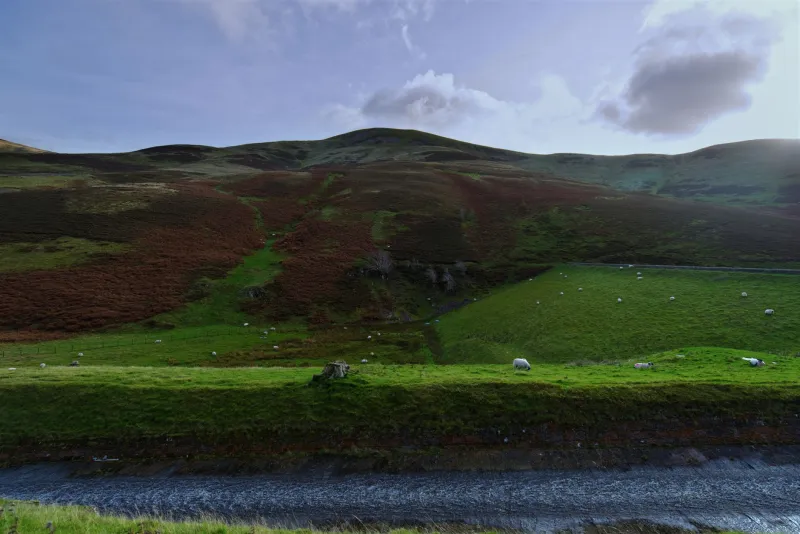
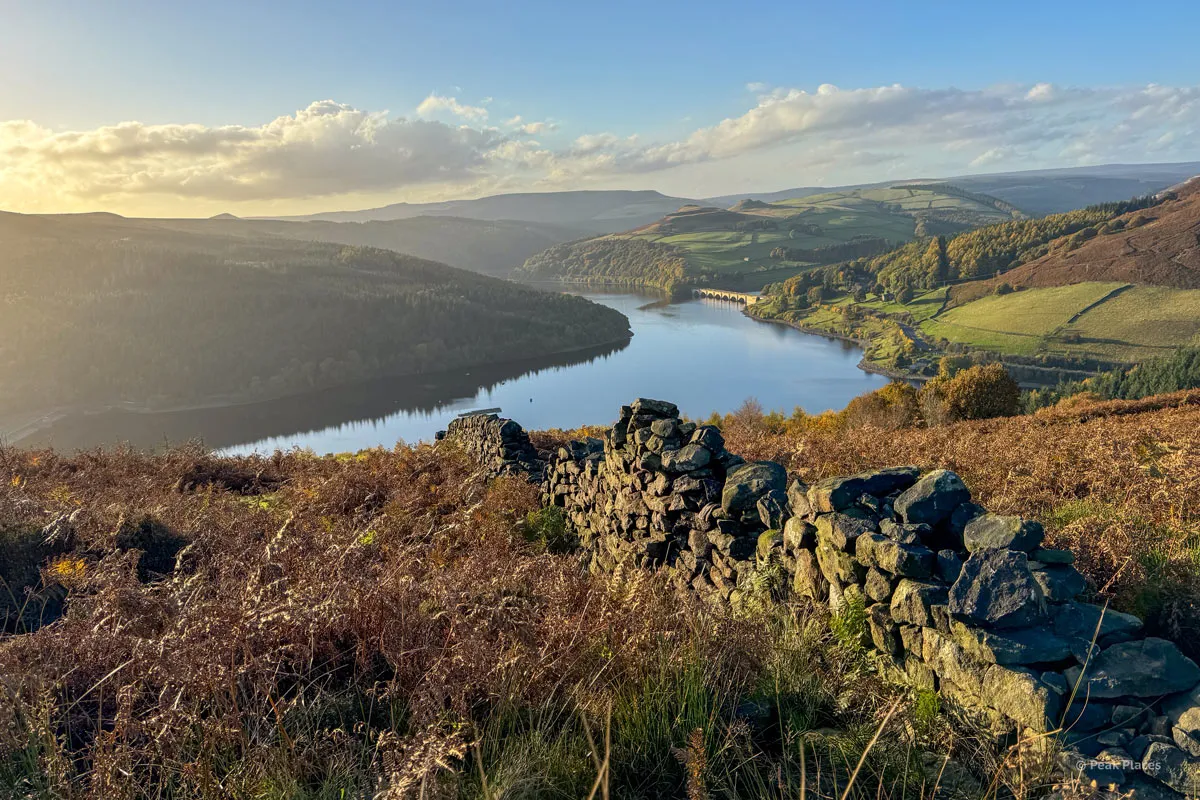 Photo: Peak District, via peakplaces.co.uk
"We realised we were teaching children about distant places and abstract concepts while ignoring the incredible richness right outside our door," James explains. "These traditional games aren't just entertainment — they're sophisticated learning tools that helped generations of children understand their world."
The transformation didn't happen overnight. James spent months interviewing elderly residents, gathering half-remembered songs and games that had been passed down through families for generations. He discovered counting rhymes that incorporated local landmarks, weather songs that predicted Pennine storms with uncanny accuracy, and playground games that taught children the names of plants, birds, and seasonal changes specific to their valley.
"Ring-a-ring-a-roses isn't just a nursery rhyme when you realise it's teaching children about the cycle of seasons," James points out. "'London Bridge is Falling Down' becomes a lesson in engineering and history. These aren't quaint relics — they're incredibly sophisticated educational tools that embed learning in memory through rhythm, repetition, and play."
Voices from the Valleys
In a Welsh primary school nestled in the Rhondda Valley, teacher Cerys Evans has made traditional Welsh folk pedagogy the foundation of her literacy programme. Her classroom walls are covered with weather lore in both Welsh and English, seasonal songs that mark the agricultural calendar, and counting rhymes that incorporate the names of local mountains and rivers.
 Photo: Rhondda Valley, via tr2storage.blob.core.windows.net
"Children were losing connection with Welsh not as a language but as a way of understanding the world," Cerys explains. "These old teaching songs don't just preserve words — they preserve ways of thinking, ways of seeing the landscape that go back centuries."
Her pupils learn to read the sky through traditional Welsh weather rhymes, understand seasons through songs that mark the farming year, and develop number sense through counting games that incorporate the rhythm of the Welsh language. The results, measured in both test scores and cultural confidence, have been remarkable.
"When children learn that their grandparents' language contains sophisticated knowledge about their environment, their whole relationship to learning changes," Cerys observes. "They stop seeing traditional culture as something old-fashioned and start understanding it as a form of intelligence."
The Science of Traditional Learning
What these educators have rediscovered aligns remarkably with current research on how children learn most effectively. The combination of rhythm, rhyme, movement, and place-based content that characterises traditional folk pedagogy creates multiple pathways for information to enter long-term memory.
At Fenland Primary in Cambridgeshire, teacher Michael Harrison has documented dramatic improvements in both mathematical understanding and environmental awareness since introducing traditional counting methods based on local agricultural practices. Children learn multiplication through rhymes that mirror the patterns of field drainage, develop spatial awareness through games that replicate the geometry of ancient field systems, and understand fractions through songs about sharing harvest yields.
"The old ways of teaching weren't primitive — they were incredibly sophisticated," Michael explains. "They understood something we forgot: that children learn best when information is embedded in their physical environment and cultural context. A counting song about local birds teaches numbers, nature study, and cultural identity all at once."
The effectiveness extends beyond individual subjects. Children who learn through traditional methods show improved social cohesion, stronger connections to their local environment, and enhanced cultural confidence. They develop what educators call "place-based identity" — a deep understanding of where they come from and how they fit into the continuing story of their community.
Resistance and Revival
Implementing folk pedagogy in modern classrooms requires navigating significant institutional resistance. Standardised curricula leave little room for place-specific learning, assessment frameworks struggle to measure cultural belonging, and many administrators worry that traditional methods won't prepare children for modern challenges.
"There's this assumption that anything old must be inferior to anything new," explains Dr. Sarah Williams, who studies traditional education methods at Cardiff University. "But we're discovering that some of these 'primitive' teaching methods are actually more effective than modern alternatives. They just work differently."
The teachers leading this revival have learned to frame traditional methods in contemporary educational language. Counting songs become "multi-sensory mathematical learning." Weather rhymes transform into "environmental science through oral tradition." Playground games evolve into "culturally responsive physical education."
"I don't present this as going backwards," says Emma Trelawny. "I present it as recovering sophisticated teaching methods that we abandoned too hastily. When children learn Cornish counting songs, they're not just preserving culture — they're accessing learning techniques that have been tested over centuries."
Seeds for the Future
Perhaps most importantly, these educators are training a generation of children who understand that wisdom can come from their own communities, not just from textbooks and screens. Pupils who learn through traditional methods develop stronger connections to elderly relatives, show increased interest in local history, and demonstrate enhanced environmental awareness.
"When a child learns that their grandmother's weather rhyme is more accurate than the Met Office forecast, their whole understanding of knowledge changes," observes James Hartwell. "They start to see their community as a source of learning, not just a place they happen to live."
The movement remains small but is growing steadily as teachers share methods and document results. Social media groups connect educators across Britain who are experimenting with place-based learning, while academic researchers increasingly validate traditional pedagogical approaches.
These classroom revolutionaries aren't trying to replace modern education but to enrich it with wisdom that predates educational theory. They understand that in an age of global connection, children need stronger roots in local soil. In their songs and games and rhymes, they're offering something invaluable: the knowledge that learning can be joyful, that wisdom lives in their own communities, and that the best education helps children understand not just how to succeed in the world, but how they belong to it.
In classrooms across Britain, ancient songs are teaching modern lessons, and children are discovering that the deepest learning happens when head, heart, and homeland sing in harmony.