Stone Reads Stone: The Wall-Builders Who Speak the Language of the Moor
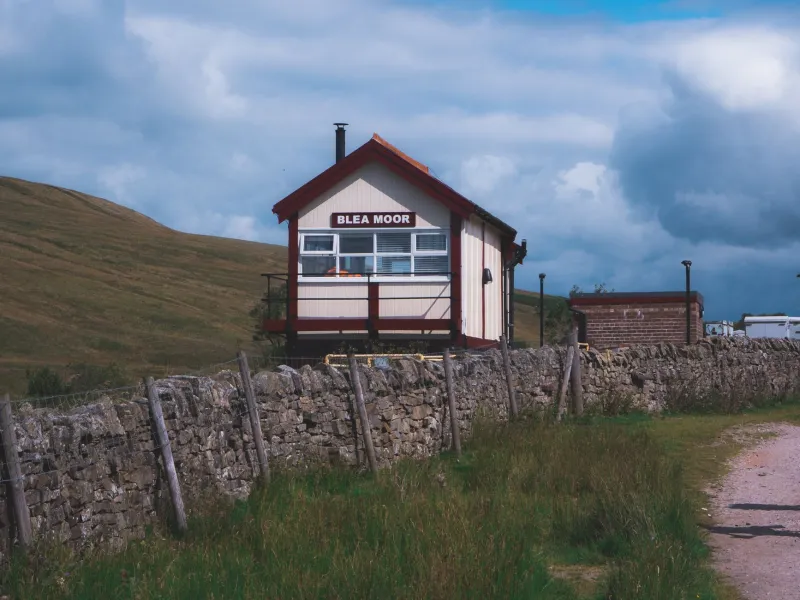
There's a moment, if you watch a skilled dry stone waller long enough, when you stop seeing someone building and start seeing someone reading. They'll pick up a stone, turn it once, set it down. Pick up another, hold it against the wall's face, tilt their head. The stone goes in. Not because of any measurement or marking. Because it fits. Because something in the hand knows.
It's a kind of literacy that doesn't live in books.
The Wall That Never Needed Cement
Dry stone walling is, at its most stripped-back, a feat of organised weight. No mortar binds these structures — they hold together through friction, balance, and the careful placement of each stone so that pressure travels downward and outward in a controlled, deliberate way. A well-built wall doesn't resist the land; it works with it. Frost heave, waterlogging, the slow creep of hill soil — a good wall accommodates all of it, flexing almost imperceptibly over decades rather than cracking under the rigidity that mortar demands.
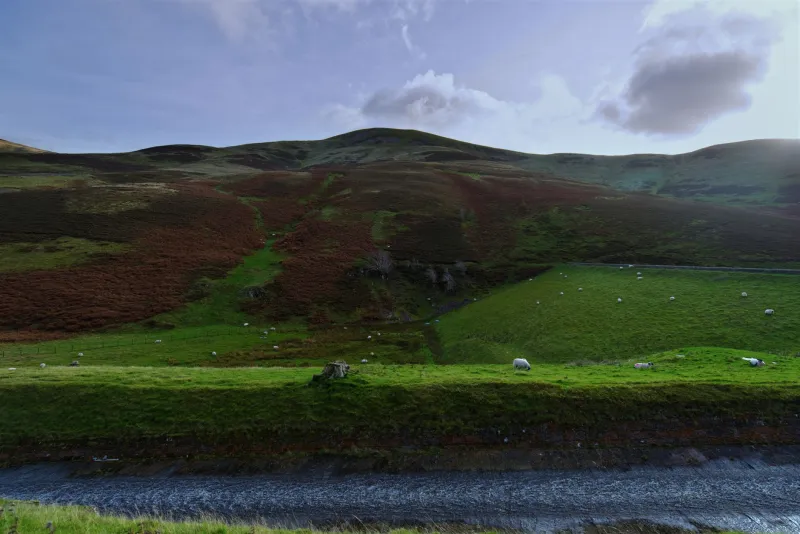
In the Yorkshire Dales, the Peak District, Cumbria, the Welsh uplands, and across the Scottish Borders, these walls stitch the landscape together in a way that's become so familiar it's almost invisible. We look at them without really seeing them. But they are extraordinary things — some sections dating back to the Bronze Age enclosure systems, others to the Parliamentary Enclosures of the eighteenth century, when vast swathes of common land were carved up and bounded in stone almost overnight.
To build one properly takes years of practice. To build one that will still be standing in two hundred years takes something harder to name.
What the Stone Tells You
Ask a veteran waller how they decide which stone goes where, and you'll get answers that resist easy summary. "You just know," is common. So is "it tells you." These aren't mystical claims — they're descriptions of a deeply embodied, pattern-based knowledge that has been refined over thousands of hours of physical work.
The selection process begins at the stone pile. Experienced wallers sort as they go, grouping by rough size and shape — hearting (the small infill pieces), throughstones (the long flat slabs that bind both faces of the wall together), and copestones (the topmost layer, often stood on edge, that caps and seals the whole structure). Each type has a function, and misidentifying them, or placing them in the wrong order, compromises the wall's integrity in ways that might not show for years.
The wall's batter — its slight inward lean from base to top — is judged by eye in the old tradition, though modern apprentices often use a batter frame to guide them. The base is always wider than the top. Always. That taper is what gives the wall its stability, distributing weight and resisting the lateral pressure of livestock and weather alike.
And then there's the reading of the local stone itself. Limestone behaves differently from gritstone. Slate splits along planes that sandstone doesn't. Fieldstone gathered from a cleared pasture has been shaped by different forces than quarried material. Each landscape produces its own particular vocabulary of rock, and the waller must become fluent in it — not just generally, but specifically, for the patch of ground they're working on that day.
A Revival From the Valleys Up
For much of the latter twentieth century, dry stone walling looked like a tradition in terminal decline. Agricultural mechanisation reduced the need for field boundaries. Cheaper fencing was faster to install. The skills passed down through farming families began to thin out, carried by fewer and fewer hands.
The Dry Stone Walling Association of Great Britain, founded in 1968, became one of the key organisations working to prevent that knowledge from dispersing entirely. Their certification scheme — running from novice to master craftsman level — gave the skill a formal structure, a way of being taught and assessed that didn't depend solely on family inheritance. It was a pragmatic response to a real crisis, and it worked, at least in part.
What nobody predicted was the surge of interest that's come in the last decade or so from people with no farming background at all. Young people — many of them from cities, many of them looking for something tactile and slow in a world that's become relentlessly fast and digital — have been turning up to walling courses in increasing numbers. Weekend workshops in the Dales are often oversubscribed. Apprenticeship inquiries have risen. Social media, improbably, has played a role: short videos of walls being built have accumulated millions of views, something about the patient, deliberate rhythm of the work proving unexpectedly hypnotic to viewers.
The Ethics of the Old Craft
There's a quiet philosophy embedded in dry stone walling that its practitioners often articulate without quite calling it that. The wall must be honest. Every stone does real work — there's nowhere to hide a bad placement behind a skim of mortar, no way to fudge a weak section and trust that the filler will compensate. The wall either holds or it doesn't, and if it doesn't, you'll know soon enough.
This transparency appeals to people who feel that much of modern construction — and perhaps much of modern life — lacks accountability. A dry stone wall is, in a very literal sense, a record of the decisions made by whoever built it. Those decisions are legible to anyone who knows how to look. Generations of wallers have read the work of their predecessors, noted where corners were cut, admired where exceptional care was taken.
It creates a strange kind of conversation across time.
Learning to Be Patient
The hardest thing to teach beginners, experienced wallers will tell you, isn't technique — it's pace. New students want to build quickly, to see the wall rising. They grab stones without sorting, place them without settling, and end up with something that looks like a wall but wobbles. The discipline of the craft is the discipline of slowing down enough to really look at what you're working with.
"The wall teaches you," is something you hear often in walling circles. It's not a passive process — the wall pushes back, resists, reveals your mistakes in real time. It demands attention in a way that rewards full presence. Practitioners often describe a meditative quality to long hours of walling, a state of focused quiet that's become rare in contemporary working life.
Perhaps that's part of what's drawing people back. Not nostalgia exactly, but a hunger for work that is legible, honest, and physically real — work whose results will outlast the worker by centuries, standing on a hillside long after every digital record of our current moment has corrupted and been lost.
The stone doesn't need backing up. It just needs placing right.