When the Tide Turns the Wheel: The Extraordinary Engineers Bringing Britain's Lost Mills Back to Life
The Mills That Danced With the Sea
Twice daily, as the North Sea retreats from the Suffolk coast, something extraordinary happens at Woodbridge Tide Mill. The ancient oak wheel, silent for decades, begins to creak and turn. Water rushes through carefully restored sluices, powering massive millstones that once fed entire villages. For a few precious hours, this 800-year-old building remembers what it was built to do.
 Photo: Woodbridge Tide Mill, via cdn-img2.iporntv.net
This is no museum piece grinding decorative flour for tourists. This is industrial archaeology at its most ambitious – the complete resurrection of a technology so ingenious, so perfectly adapted to Britain's coastal rhythms, that its near-extinction feels like a collective act of forgetting.
"Tide mills represent one of humanity's most elegant solutions to the problem of reliable power," says David Mills (the surname is purely coincidental), a retired marine engineer who has spent fifteen years coaxing Woodbridge back to life. "They worked when there was no wind for windmills, no flowing water for conventional mills. They turned the sea itself into a battery."
Masters of Time and Tide
The principle behind tidal milling is breathtakingly simple. At high tide, water floods through specially designed sluices into a large pond behind the mill. As the tide recedes, the trapped water is released through the mill wheel, providing up to six hours of grinding time with each tide cycle. Two tides daily meant round-the-clock production, weather permitting.
Britain once boasted over 200 tide mills, clustering around every suitable estuary from the Severn to the Humber. They were technological marvels of their age – some featured wheels over 30 feet in diameter, others incorporated sophisticated gear systems that would challenge modern engineers.
The Domesday Book records tide mills at Dover, while medieval chronicles describe vast operations at Battersea and Greenwich. These weren't quaint rural curiosities but major industrial installations feeding London's growing population.
"A good tide mill could process twenty tons of grain per day," explains Dr. Martin Watts, Britain's leading authority on traditional mills. "They were the power stations of their age, absolutely crucial to local food security."
The Great Silence
The decline came gradually, then suddenly. Steam power offered reliability that tides couldn't match. Improved transport made local milling less essential. Urban expansion swallowed waterfront sites. By 1950, virtually every tide mill in Britain had fallen silent.
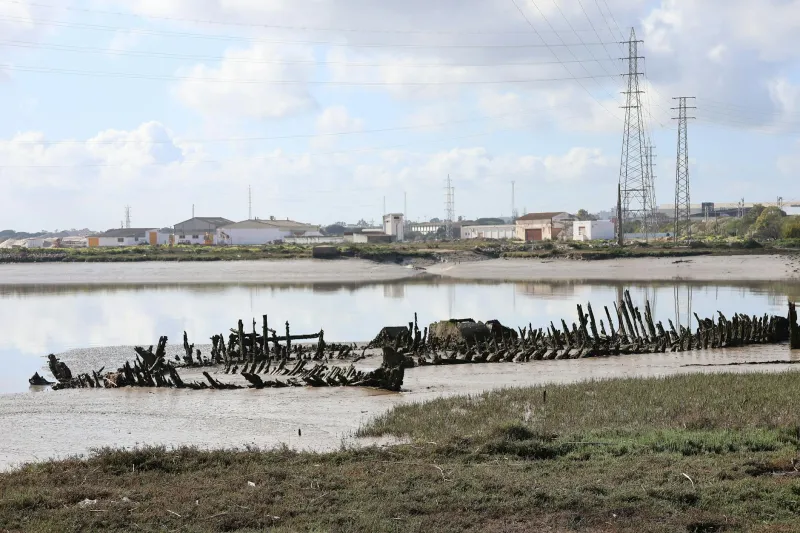
Many simply crumbled into their muddy creeks. Others were converted to yacht clubs, restaurants, or private homes. A few became museums, their machinery frozen in time but forever still.
At Eling, on Southampton Water, the last commercially operating tide mill in England ground its final sack of flour in 1975. The great wheel stopped turning, and with it died a direct link to over a millennium of British ingenuity.
The Resurrection Men
Today, scattered around Britain's coast, a remarkable group of individuals are refusing to accept that silence. They call themselves millers, engineers, heritage enthusiasts – but they're really resurrection men, bringing the dead back to life.
At Carew in Pembrokeshire, volunteer teams work every weekend restoring what was once the largest tide mill in Wales. At Beaulieu in the New Forest, the National Motor Museum has committed to returning their 18th-century mill to working order. At Eling, the wheel turns again thanks to a dedicated trust that has spent thirty years perfecting their restoration.
These aren't simple preservation projects. Restoring a tide mill means understanding hydraulic engineering, traditional carpentry, blacksmithing, and millstone dressing. It means working in tidal conditions, often knee-deep in estuary mud, racing against both high water and dwindling budgets.
Against the Tide
"Every restoration is an act of faith," says Sarah Jenkins, project manager at Carew Tidal Mill. "We're not just rebuilding machinery – we're recreating lost knowledge. Medieval millwrights didn't leave instruction manuals."
The challenges are formidable. Original timber has often rotted beyond repair, requiring new oak beams cut and seasoned using traditional methods. Iron wheel rims must be forged by blacksmiths using techniques barely preserved in living memory. Millstones, quarried from specific geological formations, cost thousands of pounds each.
Funding remains perpetually precarious. Heritage lottery grants provide initial capital, but ongoing maintenance requires constant fundraising. Volunteer labour is essential, but finding people with relevant skills becomes harder each year.
Climate change adds another layer of complexity. Rising sea levels and increased storm activity threaten structures already vulnerable to coastal erosion. Some mills may need to choose between historical accuracy and survival.
More Than Machinery
Yet for those involved in these restorations, the work represents something far deeper than mechanical preservation. They're reviving an entire relationship between human communities and natural rhythms.
"When you work with tides, you surrender control," reflects David Mills, watching Woodbridge's wheel turn with the measured certainty of centuries. "You can't demand power – you must wait for it, work with it, respect it. That's a profound lesson in an age of instant everything."
The restored mills are becoming focal points for their communities in ways their builders never anticipated. School groups visit to learn about renewable energy and local history. Engineers study tidal mechanics that remain relevant to modern marine technology. Artists find inspiration in the marriage of human ingenuity and natural force.
The Turning Tide
As Britain grapples with energy security and environmental sustainability, these ancient mills offer unexpected relevance. Modern tidal energy projects echo principles perfected centuries ago in Suffolk creek beds and Hampshire salt marshes.
"Our ancestors solved the intermittency problem that still challenges renewable energy," notes Dr. Watts. "They built storage into the system from the beginning. We could learn from that."
Perhaps that's why these restoration projects feel so urgent, so necessary. They're not just preserving the past but recovering wisdom we may need for the future. In an age of digital everything, there's something profoundly grounding about machinery that turns with the tide, that connects human needs directly to natural rhythms.
As evening falls over Woodbridge, the tide begins to ebb and the great wheel slows to a stop. Tomorrow, it will turn again, as it has for eight centuries, as its restorers hope it will for centuries more. In that patient revolution lies something essential about Britain's relationship with the sea – not conquered, not ignored, but partnered with in the ancient dance of work and tide.