White Gold From the Tide: The Ancient Alchemy of Britain's Hand-Raked Salt
The Tide's Ancient Gift
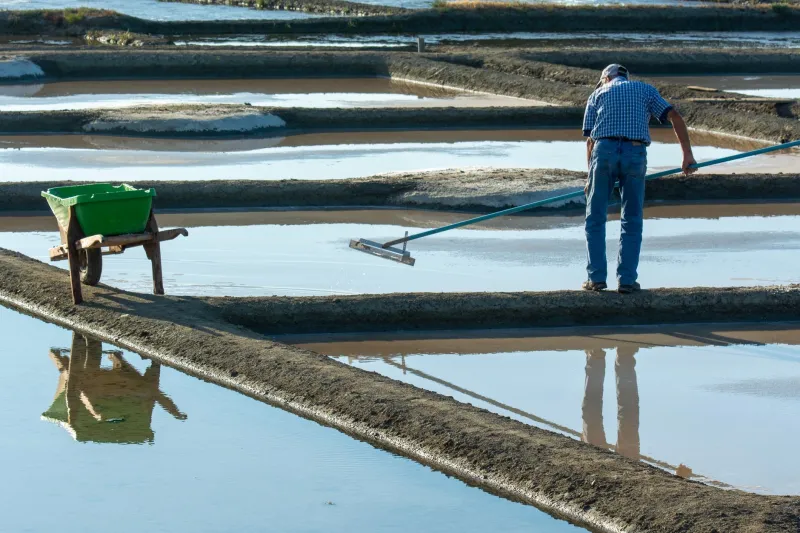
At first light on the Essex marshes, while the rest of Britain reaches for the coffee pot, Steve Osborn is already knee-deep in seawater. His wellington boots squelch through centuries-old mud as he checks the wooden channels that will, if the wind and weather align, transform today's tide into tomorrow's salt.
 Photo: Essex marshes, via emea-dam.audi.com
"People think salt comes from underground," Steve says, adjusting a wooden sluice gate with movements that mirror his grandfather's grandfather. "But for most of human history, it came from the sea. These marshes fed London's salt trade for a thousand years before rock salt made us redundant."
Steve is part of a small but determined revival — producers across Britain's coastline who are reclaiming the ancient craft of hand-raking sea salt. From the Solent's sheltered inlets to the wind-scoured flats of Morecambe Bay, they're rebuilding a relationship with the tides that industrial extraction severed decades ago.
 Photo: Morecambe Bay, via a.allegroimg.com
Reading the Water's Mood
The craft begins long before the salt crystals form. It starts with understanding water — not as H2O but as a living system that changes with season, weather, and lunar cycle. The salt-makers speak a vocabulary most of us have forgotten: spring tides and neap tides, the difference between water that's "clean" and water that's "working."
On the Solent, where the Isle of Wight creates a complex dance of currents, Marcus Drummond has spent fifteen years learning to read the moods of his patch of sea. His salt pans — shallow rectangular pools carved into the shoreline — fill and empty according to rhythms that predate the Gregorian calendar.
"The Romans knew this coast," Marcus explains, stirring seawater with a wooden rake that could have been carved in any century. "They built their salt works here because this particular stretch of water has the right mineral balance. Too much river water and you get bitter salt. Too much open sea and it takes forever to crystallise. This spot is perfect."
The knowledge required is encyclopaedic. Salt-makers must understand wind patterns that concentrate or dilute brine, recognise the colour changes that signal when evaporation is proceeding correctly, know by touch when crystals are ready for harvesting. They work with thermometers and hydrometers, but ultimately trust senses honed by daily immersion in their craft.
The Alchemy of Evaporation
What happens in the salt pans is both utterly simple and endlessly complex. Seawater enters shallow rectangular pools during high tide, then sits under sun and wind until pure water evaporates, leaving behind concentrated brine. When the solution reaches saturation point, salt crystals begin forming — first as a thin skin on the surface, then as larger pyramidal structures that sink to the bottom.
The timing is everything. Harvest too early and you get wet, unusable sludge. Wait too long and the crystals grow coarse and bitter. The sweet spot — when the salt forms perfect flakes that dissolve instantly on the tongue — lasts perhaps six hours.
"You're working with forces you can't control," explains Janet Morrison, whose Northumberland salt works operates in the shadow of Bamburgh Castle. "The tide doesn't care about your schedule. The wind doesn't respect your business plan. You learn to work with what the day gives you, or you don't last long in this game."
 Photo: Bamburgh Castle, via wallpapers.com
Her salt pans stretch along a sheltered inlet where monks once harvested salt to preserve fish for Lindisfarne Priory. The rectangular pools, lined with local clay and edged with reclaimed railway sleepers, look medieval but incorporate subtle modern refinements — adjustable sluices that give precise control over water depth, wind baffles that prevent contamination during storms.
The Taste of Place
What emerges from these hand-raked salt works bears little resemblance to the uniform white granules in supermarket packets. Each producer's salt carries the signature of its particular patch of coast — the mineral fingerprint of local geology, the influence of specific tidal patterns, the character of the seabed from which it rose.
Essex salt, drawn from waters that have absorbed centuries of Thames estuary minerals, carries subtle notes of iron and earth. Solent salt, influenced by chalk downs and ancient forests, tastes cleaner, sharper. Northumberland salt, harvested from waters that have swept across granite and sandstone, has a complexity that changes on the tongue.
"Industrial salt is sodium chloride, full stop," says Steve Osborn, holding a handful of his latest harvest to the light. The crystals catch the sun like fragments of glass, each one a perfect pyramid. "This is sodium chloride plus magnesium, plus calcium, plus trace elements from everything this water has touched on its journey to my pans. It's not just salt — it's distilled seascape."
The difference is immediately apparent to anyone who cooks. Where table salt can overwhelm, these hand-harvested salts enhance. They dissolve more readily, distribute more evenly, and carry flavours that complement rather than dominate. Chefs increasingly seek them out, recognising that ingredients this distinctive can elevate the simplest dishes.
Seasons of Salt
The salt-making calendar follows rhythms older than agriculture. Spring brings the year's first harvests as warming temperatures and lengthening days accelerate evaporation. Summer offers the most productive months, when consistent heat and reliable winds can turn seawater to salt in days rather than weeks.
Autumn harvests carry different characteristics — crystals formed in cooler temperatures grow more slowly, developing complex structures that trap pockets of concentrated brine. Winter, traditionally the season when salt works closed, now sees some producers experimenting with greenhouse covers and artificial heat, though purists insist that salt forced by artificial means lacks the character of naturally evaporated crystals.
"Each batch tells the story of the weather that made it," explains Marcus Drummond, showing visitors through his Solent salt works. "Salt made during a week of steady westerlies has a different texture from salt made during changeable weather. People think consistency is everything, but I'd rather have salt that tastes like the week it was born."
The Economics of Authenticity
Reviving hand-raked salt production requires more than romantic attachment to tradition — it demands a complete rethinking of what food production can be. Where industrial salt works measure output in thousands of tonnes, these artisan producers count their annual harvest in hundreds of kilograms. Where factories run continuously, salt pans work only when conditions align.
The economics work because the product is irreplaceable. Hand-raked salt commands prices that would be impossible for mass-produced alternatives — not because of marketing but because of genuine scarcity. Each batch represents weeks of waiting for the right combination of tide, wind, and weather. Each crystal forms according to laws of physics that can't be hurried or faked.
"We're not competing with table salt," insists Janet Morrison. "We're offering something that disappeared from British tables fifty years ago — salt that tastes like the sea it came from. Once people experience that, they understand why it costs what it does."
Custodians of the Coast
Perhaps most significantly, these salt-makers have become inadvertent guardians of coastal ecosystems. Their pans require clean water, stable shorelines, and predictable tidal patterns. They're among the first to notice changes in water quality, shifts in marine life, or disruption to natural processes.
Their presence also maintains access to stretches of coast that might otherwise be developed or abandoned. The salt works create a reason for these marginal lands to remain productive, ensuring that future generations will still be able to witness the ancient alchemy that transforms seawater into crystalline treasure.
In their patient attendance to tide and weather, these modern salt-makers embody a different relationship with the natural world — one based on partnership rather than domination, on working with natural rhythms rather than imposing artificial schedules. They remind us that some of Britain's most valuable products can't be mass-produced, only carefully coaxed from the marriage of human skill and natural abundance.